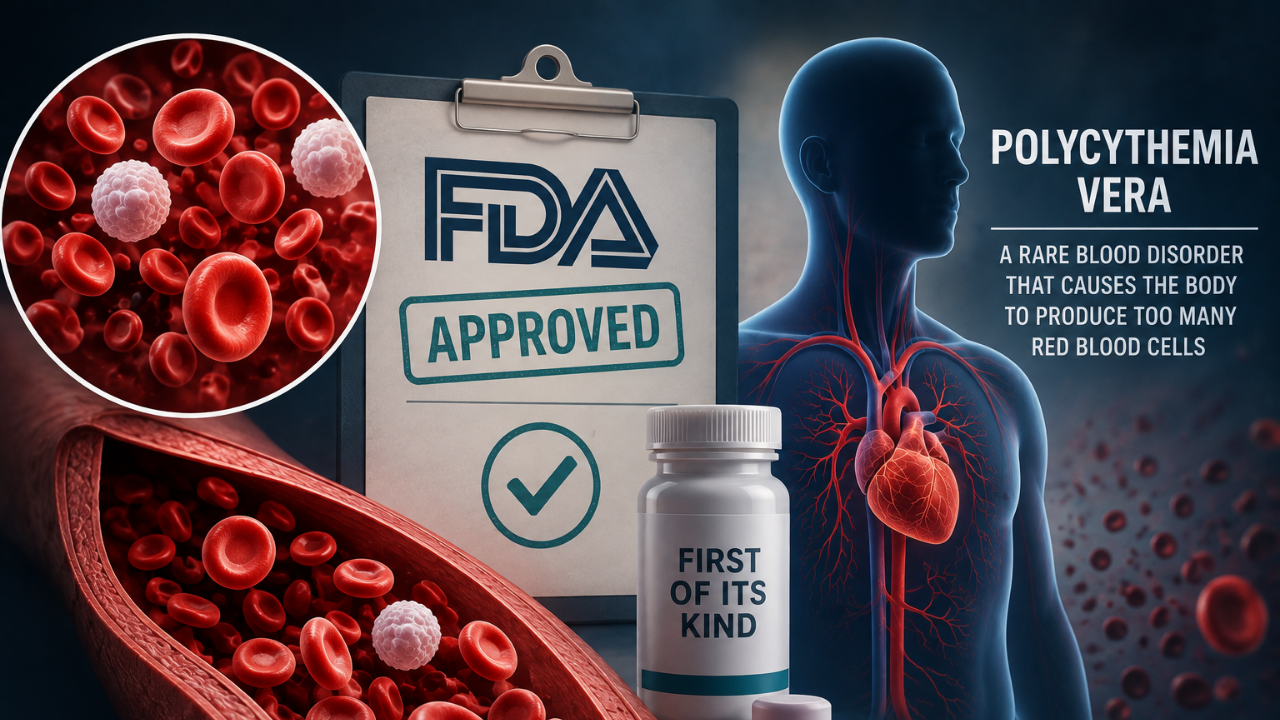
The US Food and Drug Administration (FDA) has approved Mimrylo (rusfertide) for adults with polycythemia vera (PV), a chronic disorder in which the body produces too many red blood cells. The drug is the first approved treatment for PV that mimics hepcidin, a naturally occurring hormone that regulates iron in the body.The approval, announced on August 28, is particularly significant for patients whose disease remains inadequately controlled despite existing treatment and who need frequent blood-removal procedures.When The Blood Becomes Too ThickPolycythemia vera belongs to a group of disorders in which the bone marrow produces blood cells excessively. In PV, the major problem is an overproduction of red blood cells.More red blood cells mean a higher proportion of cells circulating in the blood. This can make blood thicker and increase the risk of blood clots, stroke and heart attack.That is why doctors pay close attention to a patient's hematocrit, which represents the proportion of blood made up of red blood cells.One of the major treatment goals is to keep hematocrit below 45%, which helps reduce cardiovascular risks.Also read: Sweetener In Sugar-Free Gum Linked To 57% Higher Heart Attack And Stroke Risk: What Is Xylitol?Why Do Patients Need Their Blood Removed?One of the traditional ways of controlling PV is removing some blood. The procedure, called phlebotomy, involves taking blood from a vein, reducing the number of circulating red blood cells and bringing hematocrit down.But for some patients, this can become a recurring routine. They may need repeated blood draws even while receiving standard treatment. That burden is one reason the new drug has attracted attention. “People living with polycythemia vera have long faced the challenge of managing a chronic blood disorder with frequent blood draws,” said Tanya Wroblewski, M.D., Director of the Division of Nonmalignant Hematology at the FDA's Center for Drug Evaluation and Research.She added, “Today's approval of Mimrylo offers a new, first-in-class option that has the potential to meaningfully reduce patient burden.”Also read: Norway’s King Harald V Dies At 89: What Is Hemolytic Anemia?How Does Mimrylo Work? Mimrylo mimics hepcidin, a hormone that helps the body regulate how much iron is available. The bone marrow needs iron to manufacture haemoglobin and produce red blood cells. By limiting the iron available for new red blood cell production, rusfertide helps slow down the excessive production of red blood cells. The FDA's approval was based on the VERIFY trial, a phase 3 study involving 293 adults with PV who continued to require frequent phlebotomies despite standard treatment. Participants received either Mimrylo or placebo for 32 weeks.76.9% of patients receiving Mimrylo did not require a phlebotomy during weeks 20 to 32, compared with 32.9% of those receiving placebo, marking a substantial difference. Mimrylo is administered once a week as an injection under the skin, with the dose adjusted to help maintain hematocrit below 45%. The most common adverse reactions reported with Mimrylo were reactions at the injection site and anaemia, according to the FDA. The drug was granted priority review and approved to Takeda Pharmaceuticals America.