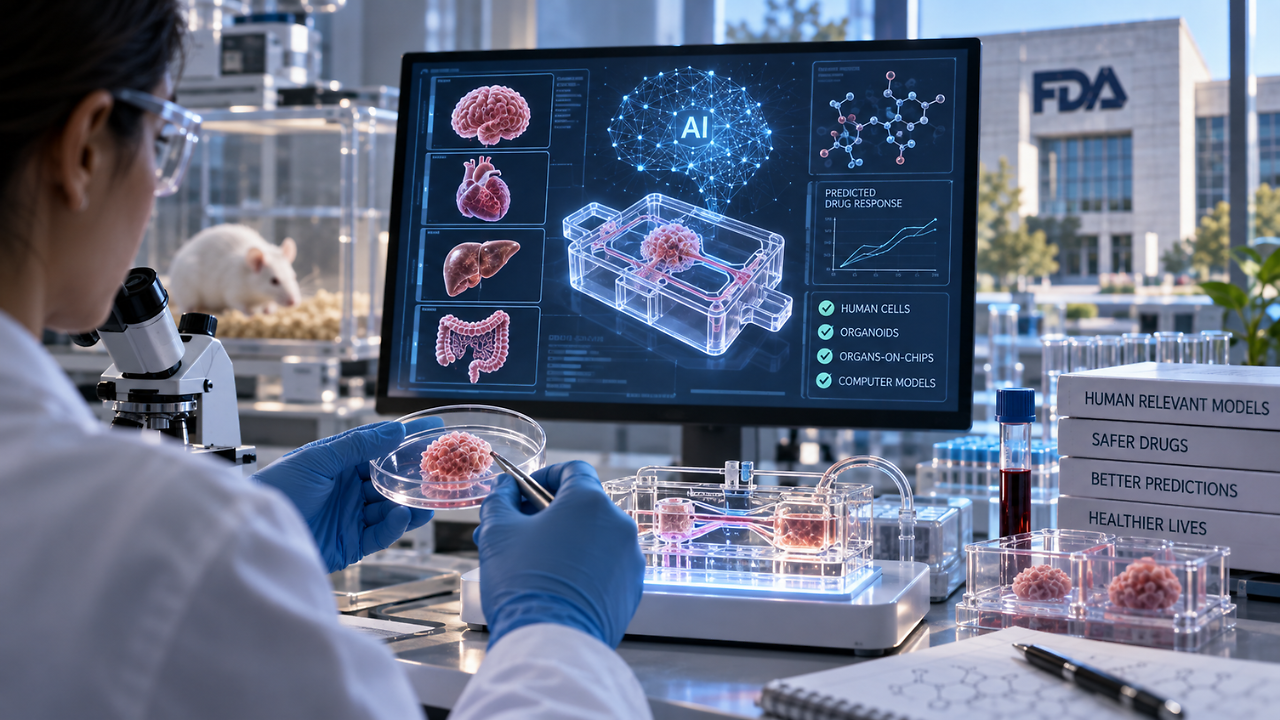
The US Food and Drug Administration (FDA) has a step towards reducing animal use in drug research, focusing on technologies like human organoids, organs-on-chips, artificial intelligence and computer modelling that may play a bigger role in deciding whether medicines are safe before they are tested in people.The move is part of the US Department of Health and Human Services's initiative declared on September 21 to shift biomedical research towards methods that reflect human biology more closely.As part of the changes, the FDA issued a rule updating its regulations to state that non-animal methods can be used where it is appropriate to assess the safety of drugs before human trials.“This new rule supports the Trump Administration’s push to explore ways to complement, or where appropriate, replace animal studies with methods that may better predict how medicines will actually affect people,” FDA Acting Commissioner Kyle Diamantas said.“Our goal is not to replace one rigid approach with another. It is to support rigorous, modern science — including animal studies when they remain appropriate and validated alternatives when they can provide the evidence needed to protect patients,” he added.Why Is FDA Moving Away From Animal-Based Studies?Animal testing has always been a central part of drug development for decades. But a drug behaving safely in an animal does not necessarily mean it will behave the same way in humans. This is partly because species differ in their biology, metabolism and immune responses.The FDA's new approach is built around New Approach Methodologies (NAMs), a term for covering laboratory and computational methods that can provide more accurate evidence without relying entirely on animals.The agency has already issued guidance on how developers can use and validate these methods. It has also created a database containing examples of NAMs used in FDA reviews.Also read: HHS Announces US FDA’s First AI Chief: Here’s What It Means For The Future Of Drug RegulationOrganoids May Replace Some Animal ExperimentsOrganoids are three-dimensional clusters of cells grown from human stem cells. They can replicate the structure and some of the function of organs.Researchers can grow models resembling parts of the liver, intestine, brain, kidney or other tissues and use them to test experimental medicines. This can allow scientists to study how human cells respond directly to a drug, including side effects.The HHS initiative includes plans for the NIH Clinical Center to develop a laboratory combining standardised human organoids with robotics, AI and advanced data systems.Also read: Donald Trump Wants Childhood Vaccines Split Into 5 Shots To Prevent Autism: But Is There Evidence?What Are Organs-On-Chips?Organs-on-chips, also called microphysiological systems, are small devices containing human cells that mimic aspects of an organ's structure and environment. Researchers can expose these cells to drugs and observe their responses in a controlled environment.For example, a liver-on-a-chip can help researchers investigate whether a drug damages liver cells, while other systems can model the interaction between different tissues.The FDA says newer approaches include human cells, organs-on-chips and computer models, provided they are appropriately suitable scientifically.Also read: Pennsylvania Measles Outbreak Crosses 700 Cases As State Seeks CDC HelpAI & Computational Models AI and computational models can analyse huge amounts of biological and drug data to predict how a medicine may behave in the human body.HHS' Advanced Research Projects Agency for Health is investing in computational approaches designed to assess drug safety and reduce dependence on animal experiments.The FDA's rule, however, does not prohibit animal studies. Instead, it does away with language that imply animal testing is the only acceptable way to test drugs and biomedical products.Non-animal studues can be used when they are scientifically appropriate for the particular drug and regulatory requirements.