
- Health Conditions A-Z
- Health & Wellness
- Nutrition
- Fitness
- Health News
- Ayurveda
- Videos
- Medicine A-Z
- Parenting
Vasai MBBS Student Saved A Fellow Passenger's Life On Goa-Mumbai Flight

Credits: Canva
A Vasai final-year MBBS student saved a fellow passenger in Goa-Mumbai Flight. As per a report by Lokmat Times, the incident took place on February 3 when a passenger on an Indigo flight that department from Dabolim Airport in goa at 3.50 pm started experiencing breathing difficulty. His condition worsened and he collapsed in the aircraft. This caused panic.
The cabin crew made an announcement asking if there were any doctors on board. Aryan Lolayekar, a final-year medical student from Mumbai's Vasai responded to the call. He was travelling on the same flight.
Lolayekar found that man's blood sugar levels had dropped significantly and that his heart rate had also slowed down. This caused him dizziness and led to loss of consciousness. Along with all this, the high altitude of the flight also posed a serious risk to his life.
The final-year medical student began administering first aid and used the emergency oxygen cylinder on board. He provided artificial respiration to stabilize the patient. In aa few minutes, the patient's condition improved.
The flight had a duration of 45 minutes. After the aircraft landed safely in Mumbai, IndiGo staff shifted the passenger to a hospital for further treatment.
Lolayekar's prompt actions earned him applauds and praises. Speaking on the incident, he said that he initially felt anxious when he saw the passenger's condition. However, he relied on his medical training to act quickly. He said that the timely use of oxygen proved to be crucial during the time.
How Does CPR Help In Emergency Cases?
Lack of CPR training is a significant barrier for most. While many know that CPR can save lives, not many are trained in doing that. One must be trained to carry out CPR safely.
A study found that only 18% of people had received CPR training within the last two years, which is crucial for skill retention. Although many people have received CPR training at some point in their lives, the skills may be outdated or forgotten.
To address this, some US states have made CPR training mandatory for high school graduation, and countries like Denmark and Norway have implemented similar requirements. In the U.S., CPR courses are widely available online and in-person, and many take just a few hours to complete. These courses teach individuals the basics of CPR, which involves performing chest compressions at a rate of 100 to 120 per minute and a depth of at least two inches.
Also Read: Know What to Do: CPR and AED Basics for Everyone
What IS CPR?
Cardiopulmonary resuscitation (CPR) is an emergency treatment that's done when someone's breathing or heartbeat has stopped.
The American Heart Association (AHA) recommends starting CPR by pushing hard and fast on the chest. The pushes are called compressions. This hands-only CPR recommendation is for both people without training and first responders notes AHA.
Position the person:
- Lay the person flat on their back on a firm, level surface.
Start chest compressions (hard and fast):
- Place the heel of one hand in the centre of the chest, between the nipples. Put your other hand on top and interlock your fingers. Keep your elbows straight and position your shoulders directly above your hands. Push straight down at least 2 inches (5 cm) at a steady rate of 100–120 compressions per minute—about the beat of “Stayin’ Alive.” Allow the chest to fully rise between compressions.
Give rescue breaths (if trained):
- After 30 compressions, tilt the head back and lift the chin to open the airway. Pinch the nose shut, seal your mouth over theirs, and give two breaths, watching for the chest to rise. If it doesn’t, reposition the head and try again.
Continue CPR:
- Keep alternating 30 chest compressions with 2 rescue breaths until emergency help arrives, an AED is ready to use, or the person shows signs of movement.
Cancer Is The 10th Leading Cause Of Death In Indian Children: Study

Leukaemia is one of the most common forms of childhood cancer. (Photo credit: iStock)
Cancer, a rare occurrence? Unfortunately, not anymore. According to recent findings from an analysis published in The Lancet, cancer is one of the top 10 causes of death among Indian children. This is an alarming statistic, signalling an under-recognised public health problem. Data in the Global Burden of Disease Study 2023 noted that even as infectious diseases decline, noncommunicable diseases like cancer are emerging as a serious threat to child survival and well-being. In India, this epidemiological shift is particularly concerning in the context of childhood cancers. Despite being rare, they are highly treatable when detected in the early stages—yet most cases are diagnosed late.
As per the Indian Council of Medical Research’s National Centre for Disease Informatics and Research (ICMR-NCDIR), childhood cancers accounted for 3–5 per cent of cancer cases reported in India in 2022. The country sees an estimated 50,000 to 60,000 cases every year among children aged 0–14 years. This makes it one of the highest burdens globally. In 2023, 377,000 cases of childhood cancer were reported globally, along with 144,000 deaths, according to The Lancet research paper.
Hidden cancer burden in India
When it comes to childhood cancers in India, leukaemia, or blood cancers, are the most common, followed by lymphomas and tumours of the central nervous system. Collectively, these categories comprise most cases of childhood cancers in the country. The statistics vary across regions, with Delhi reporting the highest number of cases due to better diagnostic facilities. However, experts believe that the actual burden is likely to be much higher. Incomplete cancer registration and limited access to proper diagnostic facilities in underserved and rural areas are to blame for delayed diagnosis.
Why is childhood cancer detected late in India?
Experts say that cancer deaths in India can largely be attributed to delayed diagnosis. Early symptoms of cancer in children include fatigue, fever, unexplained weight loss, and swelling in certain body parts. These symptoms are often overlooked, leading to delays at multiple levels. According to the ICMR 2022 factsheet, a significant proportion of children reach hospitals only at advanced stages of the disease. By then, treatment becomes more complex, more expensive, and less likely to succeed.
Access to cancer care for children
Access to cancer care for children is uneven in India. Paediatric oncology services are largely limited to hospitals in tier-one cities, forcing families from rural areas and smaller towns to travel in order to access proper treatment. This imbalance results in delayed care, especially for economically vulnerable families. Financial limitations are another barrier in the process—even if treatment costs are subsidised, expenses such as travel, accommodation, and loss of income can be overwhelming.
Read more: 41 million children aged 5-19 living with high BMI in India: Study
Irregular survival patterns
Globally, survival rates for childhood cancers exceed 80 per cent in high-income countries. In India, outcomes are uneven. The ICMR 2022 factsheet noted that survival depends on the stage of diagnosis, type of cancer, and where the child is treated. Hospitals in India are reporting improving survival rates for certain forms of cancer, such as acute lymphoblastic leukaemia. The ICMR factsheet also highlights the need for a dedicated approach to paediatric cancer care, including better infrastructure, trained doctors, and stronger referral systems.
Lehengas, Diets & Now Mounjaro: The New Must-Have For Indian Brides?

Indian brides are turning to Mounjaro to find a quick fix for their pre-wedding weight loss regimen. (Photo credit: AI generated)
Indian weddings are a global sensation for all the taam-jhaam—the outfits, the music, the madness, and the unmatched vibe. In an ever-evolving culture, several new trends become a part of the wedding buzz in India. At a time when weight-loss drugs are the talk of the town, it is no surprise that they, too, have joined the list of new must-haves for Indian brides. For many soon-to-be brides and grooms, the pressure to look a class apart is always high. Amid the madness of wedding preparations, brides and grooms often miss the gym—weight-loss drugs come to their rescue.
India's Mounjaro brides
Clinics in metropolitan cities like Delhi and Mumbai are introducing weight-loss treatments into their traditional pre-bridal and bridal packages. Bridal packages initially focused on hair care, skincare, hair styling, and grooming—but they have now expanded to include shots of Mounjaro, a popular weight-loss drug. Some wellness centres in the city have advertised that they offer customised programmes combining workout routines, nutrition, and medication to help clients achieve desired results.
Doctors have noticed a clear rise in such inquiries. Several specialists report that a significant portion of their patients seeking obesity treatments are engaged couples working within a fixed timeline. While medical professionals acknowledge this demand, many emphasise that such treatments should only be prescribed when medically appropriate, rather than purely for cosmetic reasons.
Read more: India To Strictly Inspect GLP-1 Drugs To Curb Misuse: Govt Flags Risks Amid Weight-loss Hype
The pressures of looking good at a wedding
Weddings in India are deeply rooted in tradition, elaborate, and often burdened by societal expectations around appearance. As a result, many resort to glycolic treatments, injections of Mounjaro, and sometimes even facial procedures for a bridal glow. However, weight-loss drugs serve a different purpose—they can boost a bride's confidence by helping her feel more comfortable in her own skin.
Others share similar experiences. Some individuals admitted that concerns about body image, often influenced by family expectations or societal standards, played a major role in their decision. In certain cases, weight became a factor in arranged marriage discussions, pushing individuals to seek faster solutions. However, most discontinued the injections shortly after their weddings.
Why are weight-loss drugs becoming so popular?
According to experts, the growing popularity of weight-loss drugs is linked to their increased availability. Globally, pharmaceutical companies have introduced their own versions of obesity treatments in India, and demand has risen drastically. At the same time, more affordable alternatives are being introduced by manufacturers to make these drugs accessible to a wider audience.
A word of caution
Despite the surge, experts warrant caution. Weight-loss drugs are intended to help clinically obese or significantly overweight individuals, as well as patients with type 2 diabetes and hypertension. These drugs are not meant to act as quick fixes for short-term aesthetic goals. Experts, therefore, stress the importance of using these drugs under expert guidance and supervision.
Misuse of weight-loss drugs
Doctors are also concerned about the misuse of weight-loss drugs—health authorities have started monitoring the sale and promotion of such medication, especially the cheaper versions on the market. Experts say that relying solely on these drugs instead of making essential lifestyle changes may not lead to sustainable results. For many, the appeal lies in convenience—maximum benefits with minimal effort. While these drugs may fit into a hectic routine, doctors continue to emphasise the need for a balanced approach to weight loss.
UK NHS To Offer Weight-loss Jab Wegovy For People At Risk Of Heart Attacks, Stroke
Credit: iStock
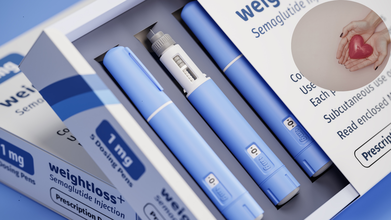
The UK National Health Service (NHS) is soon expected to roll out free weight-loss Wegovy jab to over a million people in England at risk of heart attacks and strokes.
The move is based on the recommendation of the National Institute for Health and Care Excellence (NICE), which said that overweight people with heart problems, or serious circulation problems in their legs, should have the weekly jab "as an extra layer of protection".
Developed by Danish drugmaker Novo Nordisk, Wegovy is primarily an antidiabetic medication used to treat Type 2 diabetes. People receiving the weight-loss drug Wegovy sustained weight loss for up to four years.
"We know that people who have already had a heart attack or stroke are living with real fear that it could happen again. The evidence from the clinical trial is compelling. It showed that people taking semaglutide alongside their existing heart medicines were significantly less likely to have another heart attack or stroke,” said Helen Knight, from NICE.
"Today's decision gives thousands of people in that situation an extra layer of protection, on top of the medicines they are already taking," she added.
Also read: Foundayo: US FDA Approves Eli Lilly’s GLP-1 Weight Loss Pill
Wegovy and Heart Risk
A November 2023 study, published in the New England Journal of Medicine, elicited a randomized clinical trial of tens of thousands of people, in which Wegovy - alongside existing heart medicines - was linked to a 20% reduced risk of heart attacks and strokes.
Importantly, benefits were seen early in the clinical trial, before significant weight loss occurred, suggesting the drug works directly on the heart and blood vessels, not just through weight loss, as per the NICE
The BBC reported that the UK faces a significant heart disease burden, and every year:
100,000 people get hospitalized due to heart attacks,
100,000 people experience a stroke
350,000 people live with peripheral arterial disease.
Sharon Hodgson, the health minister, said weight-loss drugs were a “gamechanger” and giving them to people at risk of heart attacks and strokes would be a “lifesaver”.
Also read: India To Strictly Inspect GLP-1 Drugs To Curb Misuse: Govt Flags Risks Amid Weight-loss Hype
Wegovy Is Top Weight-Loss Choice for US Teens
Only Wegovy has been approved by the US FDA for children aged 12 and older who are living with obesity. Since the approval in late 2022, the prescriptions have surged.
According to health data company Truveta, which reviewed medical records from 30 US health systems, prescriptions for Wegovy among teens jumped by 50 percent in 2024—rising from 9.9 per 100,000 adolescents in 2023 to 14.8 per 100,000 in 2024.
The first quarter of 2025 showed another increase, with the rate reaching 17.3 per 100,000.
- Follow Us :


© 2024 Bennett, Coleman & Company Limited