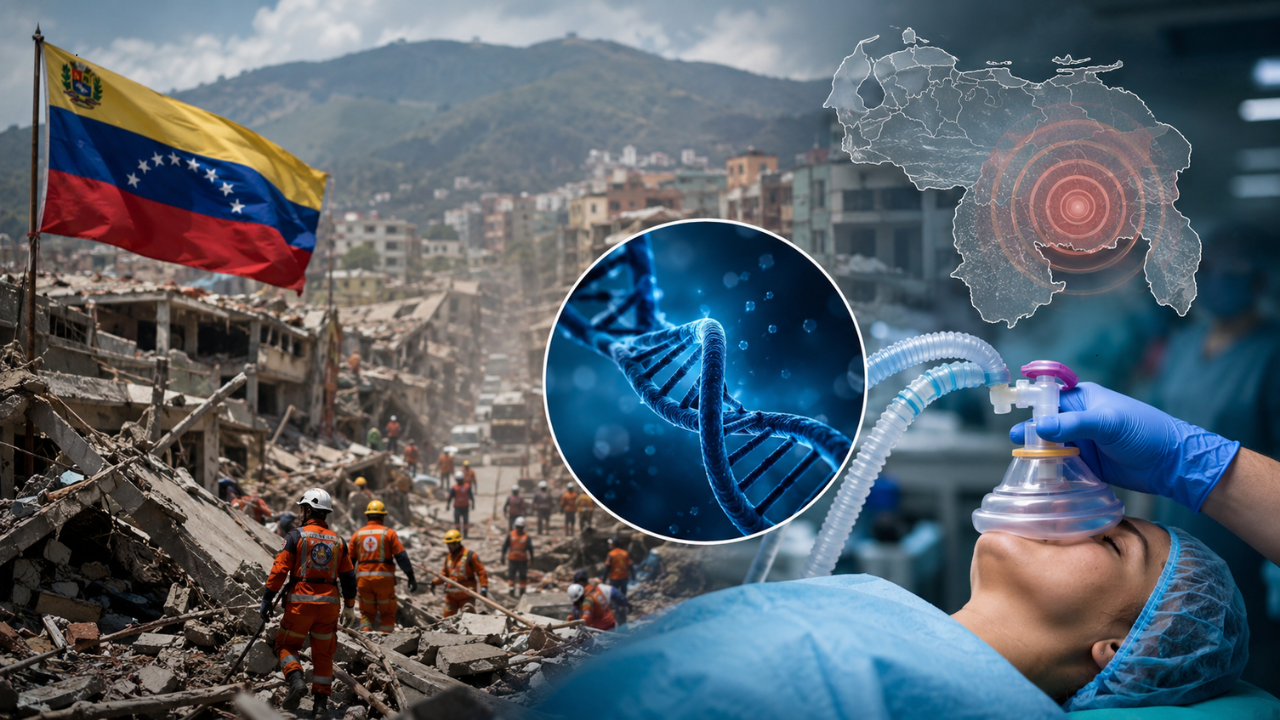
At least 1,450 people have lost their lives after two powerful earthquakes struck Venezuela last week. According to a missing persons website, nearly 50,000 people are still unaccounted for.As rescue efforts continue, experts are warning humanitarian teams about hidden medical risks that could complicate emergency care in the affected region.In a post on X, Jerome Adams, Professor at Purdue University, highlighted a newly identified rare genetic disorder—the mtND4 variant—found in some people of Venezuelan maternal lineage.According to Adams, the mitochondrial mutation may increase the risk of severe neurological complications or even death following general anesthesia.“Urgent alert for humanitarian teams responding to Venezuela earthquakes: Two powerful quakes struck a region tied to a newly identified rare genetic disorder in people of Venezuelan maternal lineage. This mitochondrial mutation (mtND4 variant) can cause severe neurologic complications or death after routine general anesthesia - especially sevoflurane.”Adams, who has been Former IN Health Commissioner and 20th US Surgeon General, said that adults and children of Venezuelan maternal ancestry have been affected by the genetic disorder and that most reported cases involved sevoflurane.\Suggesting safer alternatives, he said: “Use ketamine or propofol (with caution/monitoring) instead of volatile anesthetics like sevoflurane.” He further advised: “Avoid volatiles when possible until more data. Response coordinators & medical teams - please share widely with anesthesiologists on the ground!”Also read: New Book Examines Donald Trump's Health, Age Concerns; White House Responds Anesthesiology Groups Issue Safety AdvisoryEarlier this year, the American Society of Anesthesiologists (ASA) and the Society for Pediatric Anesthesia (SPA) issued a joint communication advising anesthesiologists to ask patients about possible maternal Venezuelan ancestry before administering anesthesia. The guidance stated that patients with direct maternal Venezuelan lineage should be considered at potential risk.Why This Genetic Mutation Is A ConcernAccording to experts, the mtND4 variant found in some Venezuelan populations has been linked to severe reactions following routine general anesthesia. The first known cases were reported in the early 2000s. The mutation is believed to increase the risk of catastrophic neurological complications in affected individuals.Around 40 cases have been documented worldwide, including six to eight cases in the United States. While most reported cases have involved children, the American Society of Anesthesiologists says the risk is not limited to pediatric patients and may also affect adults.Dr. Luis Rodriguez, an anesthesiologist at Nicklaus Children's Hospital in Miami and a fellow of the Florida Society of Anesthesiologists, said the first known cases emerged in the early 2000s after several members of a Venezuelan physician's family died following exposure to inhaled anesthesia. The cases occurred on different continents and years apart, Fox13News reported.For years, similar tragedies were considered isolated and unexplained. However, as medical societies in Chile, Venezuela, Spain, and the US began sharing data, a pattern emerged: the patients were previously healthy and shared Venezuelan maternal ancestry.Read More: Over 1 Million Children Referred for Mental Health Care in England, Anxiety Most Common ReasonOther Health Risks After The EarthquakesIn addition to the anesthesia-related concern, experts have also warned about mental health challenges, hygiene issues, and the heightened risk of infectious disease outbreaks among survivors.“Given Venezuela’s weakened public health infrastructure from past earthquakes in the region, I would worry about cholera, typhoid and other enteric bacteria, hepatitis A, measles, vector borne illnesses for those homeless and sleeping outdoors. But cholera would be my big worry,” Prof Peter Hotez, Texas Medical Center (TMC) Professor-Vaccine Scientist-Author wrote on X.“Venezuela’s damaged infrastructure + displaced populations create perfect conditions for rapid spread. Cholera is also my top concern due to water contamination risks, but typhoid, Hep A, measles, and mosquito-borne diseases (dengue, malaria) are also major threats for those sleeping outdoors. Urgent need for oral cholera vaccine, WASH interventions, and measles catch-up campaigns,” added Aftab Khan, a Board Certified Internal Medicine Physician, on X.