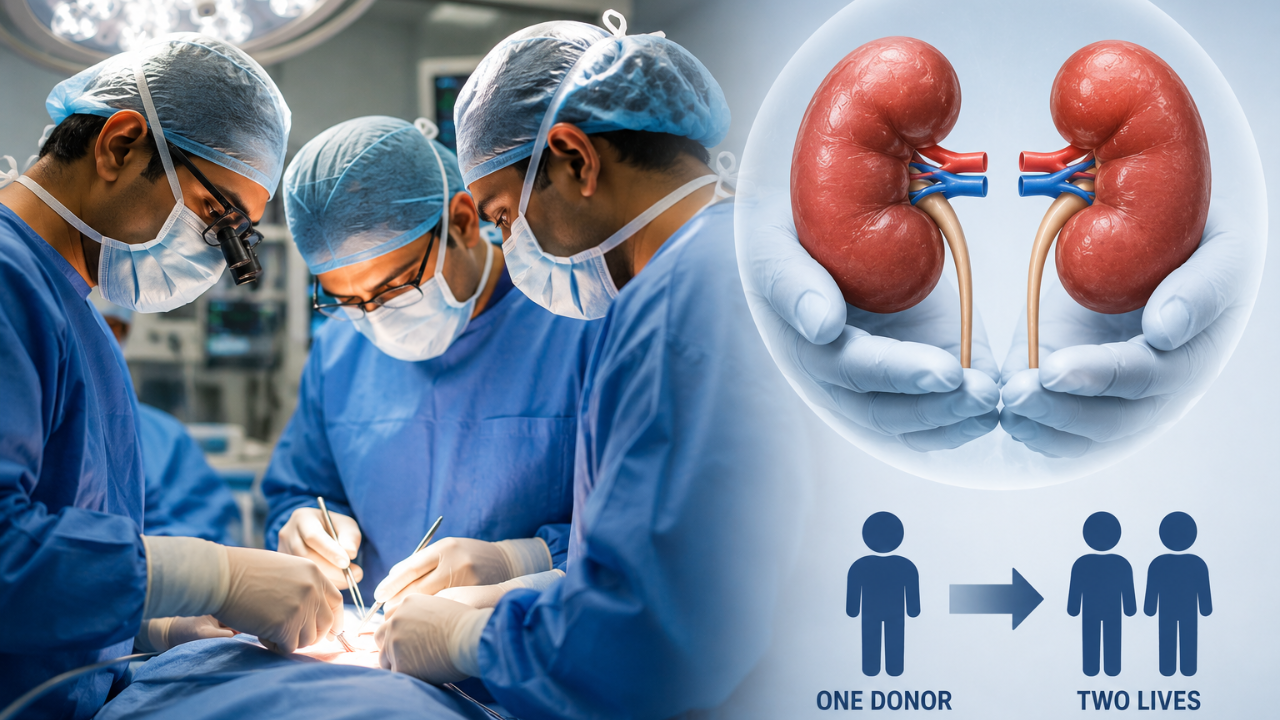
AIIMS New Delhi has successfully performed its second dual kidney transplant using organs from a marginal donor. The procedure highlighted a strategy that could help make greater use of kidneys that may otherwise be rejected for transplantation. The procedure was carried out on July 28 by a multidisciplinary team from the Departments of Surgical Disciplines, Nephrology, Anaesthesia, Transplant Immunology and the Organ Retrieval Banking Organisation (ORBO). The donor was a 70-year-old woman from Command Hospital, Chandimandir, Chandigarh. Because of her advanced age and the marginal characteristics of the donated kidneys, doctors transplanted both kidneys into a single 56-year-old woman. The organs were transported from Chandigarh to New Delhi by an Army helicopter. According to AIIMS, despite a cold ischaemia time of 12 hours, both kidneys were functioning immediately after transplantation. The recipient showed no complications after the transplantation and was discharged after 10 days with normal kidney function. What Is A Dual Kidney Transplant? In a conventional kidney transplant, one donated kidney is transplanted into a recipient. Meanwhile, in a dual kidney transplant both kidneys are placed into one patient from the same deceased donor. The approach is considered when the donor is older or the kidneys have characteristics that suggest that a single kidney may not provide sufficient function. In simple terms, two kidneys that have lower individual functional capacity may be able to provide adequate overall kidney function when transplanted together. Research has previously found that dual kidney transplantation can be a viable option for kidneys from older or marginal donors. Transplant teams carefully assess the donor organs and recipient before deciding whether using both kidneys together could provide adequate renal function.A 2025 analysis comparing single and dual transplantation from marginal donors also highlighted the potential of using kidneys from a deceased donor. Also read: The Hidden Cost Of Self-Medicating UTIs. How Antibiotic Misuse Is Fueling ResistanceNeed Of The Hour The milestone comes as India faces shortage of transplantable organs. India recorded 20,138 organ transplants in 2025, crossing the 20,000 mark for the first time, but the number of patients needing transplants remains far higher than the available organs. Recent reports has also highlight the country's mounting transplant needs that still remain unmet despite its position as one of the world's largest transplant centres by volume. This makes the ability to safely use organs from older or marginal donors particularly important. “Dual kidney transplantation from carefully selected marginal donors represents an important strategy for increasing the utilization of deceased-donor organs,” AIIMS said in the press release. AIIMS said the successful transplant demonstrates its efforts to “maximize the utilization of marginal donor organs” and help patients with end-stage kidney disease receive organs at the earliest.Also read: US HHS Action Against Kentucky Organ Donation Group Raises Questions About Transplant SafetyEncouraging Development The immediate functioning of both kidneys despite around 12 hours of cold storage is certainly encouraging. However, the patient’s discharge with normal kidney function represents an early outcome. Longer follow-up will be needed to determine how well the transplanted kidneys perform over the months and years ahead. The AIIMS team was led by Prof. Asuri Krishna, with support from the nephrology, anaesthesia, transplant immunology, ORBO and organ retrieval teams.