
- Health Conditions A-Z
- Health & Wellness
- Nutrition
- Fitness
- Health News
- Ayurveda
- Videos
- Medicine A-Z
- Parenting
Wegovy To Be Subsidized For Australians With Severe Obesity, Says Health Minister

Credits: iStock
Popular weight loss drugs have now dominated the market, especially with the US lowering its prices. In a new move, Australia now too will see, what many are calling a 'massive' reduction in the priced of Wegovy, another popular weight loss drug like Ozempic. The weight loss medicine will be subsidized, as it is set to be listed on the Pharmaceutical Benefits Scheme of Australia, or the PBS. This is for the patients with 'severe' obesity and cardiovascular diseases, which will save them thousands of dollars. However, the government warns that it will lump taxpayers with a 'very big bill'.
Health Minister Mark Butler noted that this weight loss drug will be available on the PBS for patients with an "established cardiovascular disease", which means someone who has had a heart attack or stroke, and has a BMI of 35 or higher, recommended by the Pharmaceutical Benefits Advisory Committee (PBAC) late last year.
What Is Wegovy?
Wegovy is a glucagon-like peptide-1 or GLP-1 medication, like Ozempic, which helps to suppress the individual's appetite, thus leading to weight loss. On Friday, as reported by ABC News, Butler said, "Right now, more than 400,000 Australians are paying market prices for one of the GLP-1s, and that is as much as $4,000 or $5,000 a year, which is obviously beyond the means of many Australians." Butler said that this is not "just a health issue for us, it is also an equity issue".
Obesity Issue In Australia
As per 2022 data, around 13 per cent of Australian adults live with “severe obesity,” defined as having a BMI of 35 or higher.
There is no confirmed timeline for when the drug will be added to the PBS, but once listed, eligible patients are expected to see a sharp drop in costs. From January 1, PBS medicines have been capped at $25 per prescription, or $7.70 for concession card holders.
However, Health Minister Mark Butler acknowledged that subsidising the drug would place a “very large financial burden” on taxpayers. His office declined to provide even an estimated cost, saying clearer figures would emerge once price negotiations with manufacturer Novo Nordisk begin.
In advice released in December, the Pharmaceutical Benefits Advisory Committee (PBAC) warned of a “significant risk” that people who do not meet both eligibility criteria—especially those meeting only one—may still seek subsidized access. To manage potential costs, the committee recommended a risk-sharing arrangement with the company.
Currently, Ozempic is the only weight loss drug available on the PBS for patients with type 2 diabetes, which is what GLP-1 medications were originally in the market for.
What Are The Experts Saying?
Dr Mark Mellor, the lead clinician at Perth Weight Clinic told ABC News that the criteria to avail the medicines were "deliberately narrow" to avoid a cost blow out.
Dr Mellor said the medication is especially effective for the two identified groups because it not only aids weight loss but also helps reduce the risk of future cardiovascular problems, potentially saving lives.
“The goal is to prevent another cardiovascular event or death from heart disease,” he said, adding that providing treatment to those who are eligible and willing “simply makes sense.”
After Indore Water Contamination, 5 More Indian States Report Similar Cases
Credits: iStock
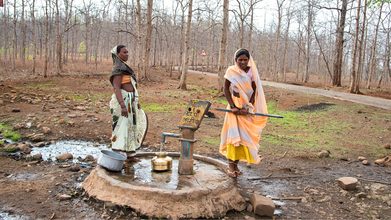
After Indore water contamination, whose epicentre is Bhagirathpura, that led to the outbreak of diarrhea, with confirmed E coli and Klebsiella bacteria in the water, similar cases form 5 different states have come up. Madhya Pradesh has again made it to the list, now, with Bhopal's water being contaminated.
Greater Noida, Uttar Pradesh : Water Contamination
Residents of Greater Noida's Delta 1 Sector fell ill after consuming contaminated drinking water. This has prompted health concerns and complaints of sewage mixing in the pipe line, said officials and residents.
The residents reported symptoms like vomiting, fever, stomachache and loose motion after consuming tap water in parts of sector on Tuesday and Wednesday. However, the officials of the Greater Noida Industrial Development Authority (GNIDA) denied mixing of sewage with portable water supply, claiming tests conducted so far has found the water to be clean. However, Harendra Bhati, a resident of Beta 1 Sector, society located nearby, claimed that sewage overflow is a common problem in several parts of Greater Noida, as reported by NDTV.
Gandhi Nagar, Gujarat: Water Contamination
In Gujarat's Gandhi Nagar, typhoid outbreak was traced to contaminated drinking water. Residents have been affected by sewage mixing into pipelines, which were meant to deliver clean water. Official from Gandhinagar Civil Hospital, as reported by The Indian Express said that many complaint of high grade fever, abdominal pain, nausea, and vomiting. Most of the patients are in the age group of 1 to 16.
“Various samples were taken and they showed fecal contamination,” reported The Indian Express.
Hyderabad, Telangana: Water Contamination
Four of Hyderabad's 6 water sources were found to be critically polluted, according to a study titled Assessment of Water Quality of Osmansagar, by the scholars of Maulana Azad National Urdu University (MANUU). Hyderabad draws 600 million gallons water per day from six major sources, they include: Osmansagar, Himayatsagar, Singur, Manjeera, Akkampally (Krishna) and Sripada Yellampalli (Godavari).
Very poor levels of pollutant have been found in Osmansagar, Himayatsagar, Krishna and Godavari. As per researchers, untreated sewage from nearby residential areas are reported to flow directly into the lake. the problem is worsened due to the surrounding industries as well as pesticides and fertilizers. The researchers noted: “Fecal contamination clearly points to serious health hazards."
Also Read: Indore Water Contamination Linked to E. coli and Klebsiella Bacteria — What Are They?
Rohtak and Jhajjar, Haryana: Water Contamination
Residents from Haryana's Rohtak and Jhajjar also reported that they have been receiving dirty, foul-smelling water, sometimes even black in color. This situation has forced many families to fetch daily use and drinking water from far away areas or purchase it from private tanker.
Mayank, JE (Civil) with the Public Health and Engineering Department, said in response to an online complaint that efforts are underway to trace the source of the contaminated water supply. The problem is likely to be resolved within seven to ten days, as preliminary findings suggest a damaged household connection, currently being identified through excavation and pipeline inspections.
Bhopal, Madhya Pradesh: Water Contamination
Groundwater samples collected from four locations in Bhopal have tested positive for E. coli bacteria. In response, the Bhopal Municipal Corporation has barred residents from using groundwater for any purpose.
Read: E. Coli Detected In Bhopal Groundwater: Symptoms To Watch And How To Stay Safe
Officials clarified that the contamination is restricted to underground water sources and has not spread to the treated piped water supplied across the city. According to ANI, civic teams have tested 1,810 water samples so far and inspections are still underway in all zones.
Delhi Isn't Just Breathing Toxic Air, But Also A Superbug That Resists Antibiotics
Credits: iStock
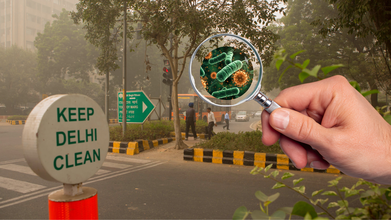
Delhi is not just breathing toxic air, but also a superbug through its air, which was found in a latest research conducted by the researchers are Jawaharlal Nehru University, published in Nature - Scientific Reports. Apart from the heavy particulate matter or the PM2.5, which are small enough to penetrate through one's bloodstream and cause blockage, Delhi's air also contains airborne bacteria, including staphylococci. The bacteria levels exceed the safety limit by 16-fold as provided by the World Health Organization (WHO).
According to scientists most of these bacteria are methicillin resistant and unaffected by multiple antibiotic classes. This has raised concerns about the hard to treat and life threatening air that people are breathing in Delhi, also responsible for causing respiratory infections. While Delhi's AQI may have improved in the past few days and come down to 'very poor' from 'severe', high levels of particulate matter still put many people at the risk of aggravated asthma and cardiovascular disease. However, the added finding of the antimicrobial resistant superbug also adds a new layer of threat to residents.
Many have left the city already due to the toxic air. Aflah Ul Haque, a 33-year-old Media and Communications PR consultant had been living in Delhi since 2017. However, in 2024, he considered to move out. While he did face difficulties to uproot himself from a metro city like Delhi, as it had become his comfort zone, it was a decision he had to take for a healthy life. Health and Me also previously reported stories of people who shifted or are actively considering shifting out of the city. Will more people consider the same move now that a superbug is found in the air? This is yet to be seen.
What Did PM Modi Say About Antimicrobial Resistance?
India is already fighting a battle with antimicrobial resistance or AMR, with the breakthrough of Zaynich, a drug to treat AMR, there is hope, however, one still needs to be extra careful. On December 28, 2025, Prime Minister Narendra Modi on the 129th edition of "Mann Ki Baat", spoke about AMR. He pointed out that this is a matter of concern and cited data from the Indian Council of Medical Research (ICMR) showing that antibiotics are becoming less effective against pneumonia and urinary tract infections. He also pointed out that in India, this is a crisis due to "thoughtless and indiscriminate use of antibiotics by people".
How Was The Study That Found Superbug In Delhi's Air Conducted?
In order to understand what people might be breathing in, the researchers collected air samples from a range of everyday locations across Delhi, such as:
- Crowded market areas
- Urban slum neighborhoods
- Residential apartments
- A sewage treatment plant located within the JNU campus
Both indoor and outdoor air samples were taken during summer, monsoon and winter to track how bacterial levels and resistance patterns shifted with the seasons.
Across every setting, airborne bacteria levels were far above the World Health Organization’s recommended safe limit for microbial exposure. In some winter samples, bacterial counts exceeded 16,000 colony-forming units per cubic meter, which is more than 16 times higher than the WHO guideline.
What raised even greater concern was the type of bacteria detected. Many belonged to the Staphylococcus group, which includes strains linked to skin infections, pneumonia, bloodstream infections and illnesses commonly acquired in hospitals.
According to the researchers, a large share of the airborne bacteria were identified as methicillin-resistant staphylococci (MRS), meaning they do not respond to commonly prescribed antibiotics. Among these:
73 per cent were multidrug-resistant, showing resistance to several classes of antibiotics
Many were resistant to macrolides, beta-lactams, trimethoprim, gentamicin and other commonly used drugs
Genetic analysis confirmed the presence of antibiotic resistance genes (ARGs)
Notably, 14 out of 36 multidrug-resistant samples carried the mecA gene, a well-known marker that makes bacteria resistant to methicillin and related antibiotics.
Why Is Winter Smog Linked To Drug-Resistant Bacteria?
The study showed that levels of airborne drug-resistant bacteria were highest in winter, while monsoon rains led to a sharp drop in outdoor contamination.
Researchers point to a few likely reasons:
- Poor air movement in winter traps pollutants and microbes near ground level
- High levels of particulate matter may give bacteria surfaces to cling to and spread
- Cooler temperatures and lower humidity allow bacteria to survive longer in the air
On the other hand, rainfall during the monsoon appears to clear bioaerosols from the air, reducing bacterial concentrations outdoors.
Telangana Flags Children’s Syrup After Toxic Adulteration Found: What Is Ethylene Glycol Poisoning?

Credits: Canva
The Telangana Drugs Control Administration on Saturday released an urgent advisory asking the public to immediately stop using Almont-Kid Syrup, a medicine commonly given to children for allergies, hay fever, and asthma, after it was allegedly found to be contaminated with Ethylene Glycol (EG), a highly poisonous chemical.
In an official notice, the DCA said it received an alert from the Central Drugs Standard Control Organisation (CDSCO), East Zone, Kolkata. A laboratory analysis flagged the syrup, which contains Levocetirizine Dihydrochloride and Montelukast Sodium, as adulterated.
Telangana Issues Notice For Children’s Syrup After Toxic Adulteration Found
The Telangana Drugs Control Administration (DCA) issued a warning advising people to stop using Almont-Kid Syrup after tests allegedly found Ethylene Glycol (EG) in the product. The syrup is commonly prescribed to children to relieve allergy-related symptoms such as sneezing, runny nose, itching, swelling, nasal congestion, and watery eyes. It is also used to manage asthma and certain skin allergies.
According to the DCA notice, the alert was triggered by a communication from the Central Drugs Standard Control Organisation (CDSCO), East Zone, Kolkata, following a lab report that declared the Levocetirizine Dihydrochloride and Montelukast Sodium Syrup as adulterated.
The DCA stated, “In light of the above, the public is hereby strongly advised to immediately stop the use of the above syrup, if in possession, and report the same to the nearest Drugs Control Authority without delay.” Officials have instructed Drugs Inspectors and Assistant Directors across Telangana to immediately inform retailers, wholesalers, distributors, and hospitals to freeze any available stock of the affected batch and ensure it is not sold or dispensed under any circumstances. The DCA has also urged members of the public to report if they have the syrup and to avoid using it altogether.
What Is Ethylene Glycol?
Ethylene glycol is a colourless, odourless, and low-volatility liquid, according to Science Direct. It has a low freezing point and a high boiling point, which is why it is widely used in antifreeze and de-icing products. Ethylene glycol has a sweet taste, which increases the risk of accidental ingestion, especially among children. Experts warn that untreated ingestion of ethylene glycol can result in severe illness and can be fatal, as per Cleveland Clinic.
What Is Ethylene Glycol Poisoning?
Ethylene glycol poisoning happens when the substance is swallowed. Once ingested, it is rapidly absorbed into the body, with peak levels usually reached within one to two hours. In the first 30 minutes to 12 hours, symptoms can resemble alcohol intoxication and may include dizziness, euphoria, slurred speech, nausea, vomiting, and problems with coordination. In severe cases, this stage can progress to seizures or coma due to the chemical’s direct toxic effects on the brain.
During the next phase, typically between 12 and 36 hours, the body breaks down ethylene glycol into harmful acids such as glycolic acid. This leads to metabolic acidosis, fast heart rate, rapid breathing, low calcium levels, muscle spasms, and possible heart failure. Without timely medical treatment, this stage can be life-threatening. Between 36 and 72 hours after ingestion, kidney injury may develop as oxalate crystals form, potentially causing acute kidney failure, reduced or absent urine output, brain swelling, and long-term organ damage.
Impact Of Ethylene Glycol Poisoning
Ethylene glycol poisoning can cause serious and potentially fatal complications because its toxic byproducts affect multiple organs. Some of the key impacts, as per Mayo Clinic, include:
Brain and Nervous System Damage: In the early phase, the toxin can cause confusion similar to intoxication, seizures, and coma due to its direct effect on the nervous system. Later on, acid buildup can lead to brain swelling and encephalopathy. If untreated, this may result in permanent brain damage, stroke-like symptoms, or death.
Heart and Lung Failure: Glycolic acid can trigger severe metabolic acidosis, leading to rapid or irregular heartbeats, dangerously high or low blood pressure, and heart failure. This may progress to fluid buildup in the lungs, breathing failure with deep and rapid breaths, and eventual circulatory collapse.
Kidney Damage: The formation of oxalate crystals in the kidneys can cause acute tubular necrosis, flank pain, blood in the urine, and reduced or stopped urine production. In some cases, acute kidney injury progresses to complete kidney failure, which may be permanent and require long-term dialysis or a transplant.
Multi-Organ Collapse: Ethylene glycol disrupts normal cellular function, leading to low calcium levels, muscle spasms, tremors, and lactic acidosis. In severe and untreated cases, this can result in shock, failure of multiple organs, and death.
Long-Term Consequences: People who survive ethylene glycol poisoning may experience lasting health problems such as chronic kidney disease, nerve damage, or heart complications. Outcomes are significantly worse when treatment is delayed or when the patient develops seizures, coma, or severe acidosis.
- Follow Us :


© 2024 Bennett, Coleman & Company Limited