
- Health Conditions A-Z
- Health & Wellness
- Nutrition
- Fitness
- Health News
- Ayurveda
- Videos
- Medicine A-Z
- Parenting
What Is Candida Auris Infection? The Deadly Superbug Spreading In US

Credits: iStock
As 2025 ends, more and more people are falling ill. With a surge in flu cases, and mystery disease like adenovirus, thousands of people are already infected. Now, a deadly fungus, also considered a superbug due to its resistance to all types of antibiotics. This is Candida auris.
Also Read: What To Know About The Super Flu Surge In US; 'It Will Likely Get Worse', Say Experts
What Is Candida Auris? The Superbug Resisting All Antibiotics
It is a type of invasive fungus that can cause deadly infections in people, especially with weakened immune system. As of now, it has infected at least 7,000 people across 27 US states, confirmed the data from the Centers for Disease Control and Prevention (CDC).
The fungus can spread easily in healthcare settings, especially in hospitals and nursing homes. It is also spreading at an "alarming" rate, says CDC. The Hill reported that some strains of the fungus are troublesome because they are resistant to all types of antibiotics that are commonly used to treat fungal infections.
Due to fungus's resistance to antibiotics, it is becoming difficult to contain. As of now, more than half of the states have reported clinical cases of Candida auris in 2025. Another factor that makes it more dangerous is that standard lab tests cannot detect it. In a CDC press release, a CDC epidemiologist Dr Meghan Lyman said, "The rapid rise and geographic spread of cases is concerning and emphasizes the need for continued surveillance, expanded lab capacity, quicker diagnostic tests, and adherence to proven infection prevention and control."
Origins Of Candida Auris - The Superbug
This was first discovered in 2009 in Japan from the ear canal of a patient. Since then, it has spread to many countries, including India, where it was identified as a major public health threat in 2014.
Also Read: New Year's Eve Safety Tips, Fire Departments Across US Share Ways To Welcome 2026 Safely
Can Anyone Fight Off This Superbug?
Healthy people could possibly fight off this infection on their own. However, the population vulnerable could find it more difficult to fight off this deadly fungus. Melissa Nolan, an assistant professor of epidemiology and biostatistics at the University of South Carolina told Nexstar, "If you get infected with this pathogen that’s resistant to any treatment, there’s no treatment we can give you to help combat it. You’re all on your own."
Like the mystery disease, adenovirus, this fungus too can survive on surfaces, said Nolan. “It’s really good at just being, generally speaking, in the environment. So if you have it on a patient’s bed for example, on the railing, and you go to wipe everything down, if in whatever way maybe a couple of pathogens didn’t get cleared, then they’re becoming resistant. And so over time, they can kind of grow and populate in that hospital environment," said Nolan.
Is This Superbug Only Limited To The US?
Studies show that this superbug is not just limited to the US, but is spreading globally. It has already been found in at least 61 countries and on 6 continents. The study also found that the fungus is becoming more and more drug resistant, all due to its ability to switch from a yeast-like growth to a filament-driven spread. It also contains a cell wall that has proteins and makes it easier to stick on human skin "like glue". This is what enables it to colonize the human cells.
Ebola: Suspected Cases in DR Congo Drop To 116 After Hundreds Ruled Out Of Infection, Says WHO
Credit: iStock
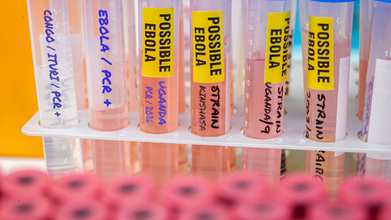
In a major relief amid the ongoing Ebola outbreak, the World Health Organization (WHO) said the number of suspected cases has dropped to 116 after hundreds were ruled out following investigation.
Earlier, the number of suspected cases had neared 1,000 in the Democratic Republic of Congo (DRC).
The global health agency said on Tuesday that there had been 48 deaths and six recoveries in Congo, Reuters reported.
In Uganda, there have been nine confirmed cases and one associated death, WHO spokesperson Christian Lindmeier told reporters in Geneva.
Later, Uganda's Ministry of Health confirmed six additional Ebola cases, bringing the country's total number of confirmed infections to 15.
The ministry said in a statement on X that all six newly confirmed cases were among contacts of previously confirmed patients.
Hundreds Of Suspected Cases Ruled Out
Lindmeier explained that the latest figures were significantly lower because hundreds of suspected cases had been discounted after further investigation.
"They have been cleared out and have either other diseases or have just had a fever and nothing else," he said.
Lindmeier added that the numbers would continue to fluctuate as more people are tested.
A suspected case includes anyone identified through surveillance systems or presenting with symptoms at a health facility. Confirmed cases include only those who test positive for the Bundibugyo strain of Ebola.
Last week, the WHO reported 906 suspected Bundibugyo Ebola cases in Congo, including 223 suspected deaths under investigation.
Subsequently, Jean Kaseya, Director-General of the Africa Centres for Disease Control and Prevention, told the Financial Times that more than 1,100 suspected cases were being investigated.
Testing has posed a major challenge during the outbreak because the commonly used Ebola diagnostic tests initially failed to detect the Bundibugyo strain, for which there is currently no approved vaccine.
Meanwhile, the US Centers for Disease Control and Prevention (CDC) website also listed 116 suspected cases and noted: "On May 29, the DRC Ministry of Health updated their total suspect case count to remove suspected cases that have been ruled out after investigation and suspected deaths that are pending the results of ongoing investigation."
Kenyans Protest Proposed US Ebola Treatment Facility
Also read: Western Australia Records 22 Mpox Infections In 2026; Seven Reported Last Week
The United States' plan to establish an Ebola treatment facility in Kenya has sparked public concern about cross-border infection risks and triggered protests.
The proposed 50-bed isolation centre would be staffed by US medical personnel and is intended to treat US citizens affected by the Ebola outbreak in the Democratic Republic of Congo.
Asked about the proposal during a White House briefing, Dr. Mehmet Oz, administrator of the Centers for Medicare & Medicaid Services, said keeping affected Americans closer to the outbreak zone would help speed up treatment.
"You have a golden hour in many of these instances around trauma, but for illnesses, it’s also relatively short, so we are confident, and the State Department’s working on this diligently, that they are going to be able to work out something with Kenya. There has already been a fair amount of communication around this issue," Oz said.
Although Kenya has not recorded any Ebola cases, the proposed quarantine facility has raised fears among residents who believe it could increase the risk of exposure to the virus.
John Barnes, Bobby Davro Diagnosed With Prostate Cancer Even As UK Rules Out Universal Screening

Credit: Instagram
Prostate cancer is the most common cancer among men in the UK. The country records around 55,000 new prostate cancer cases and nearly 12,000 deaths every year.
Although the UK recently ruled out universal prostate cancer screening, opting instead for targeted screening of high-risk men, new cases continue to emerge every day. The latest high-profile figures diagnosed with the disease are former Liverpool winger John Barnes and comedian Bobby Davro.
John Barnes Calls Prostate Cancer A ‘Taboo Subject’
Barnes revealed that he had his prostate removed following a cancer diagnosis and described the condition as a "taboo subject" for men.
"Not many people know and it’s a bit of a taboo subject because we support women with breast cancer and it’s not even an issue," he told Times Radio.
Barnes stressed that "a lot of men don’t want to admit it or want to have it done because it makes them feel less than a man."
He added: "Men have to bite the bullet and swallow their pride and admit if they have problems."
Also read: Jill Biden Opens Up About Joe Biden’s Lifelong Cancer Battle
Bobby Davro Reveals Symptom Before Diagnosis
Meanwhile, 67-year-old Bobby Davro spoke on This Morning about his diagnosis, revealing that he had experienced erectile dysfunction beforehand.
Speaking on the ITV show, Davro said: "I think one in eight men get it. I think a lot of men of color, they get more prostate cancer, so it’s got to be checked.
"So go along and have your PSA (Prostate-Specific Antigen) checked, have the old prostate examined."
Davro continued: "He [the doctor] said: 'It’s a bit swollen, I think you should go and have a PSA test.' And it was 24, which wasn’t good at all."
"Not really. The only thing I had was erectile dysfunction. It wasn’t nice. I tried taking the blue pills. I realised something wasn’t quite right," he said about symptom before diagnosis.
Many other high-profile figures have been diagnosed with prostate cancer, including former UK Prime Minister David Cameron, BBC radio host Bob Harris, and six-time Olympic gold medalist Chris Hoy.
Despite the high burden of disease, the UK currently has no national prostate cancer screening program because of concerns over the accuracy of PSA tests. However, there has been growing pressure in recent years to introduce routine screening.
Read More: Benjamin Netanyahu Undergoes Treatment For Early-stage Prostate Cancer
What Do The New Guidelines Say?
After reviewing the latest evidence, the National Screening Committee (NSC) recommended against broad population-wide screening for prostate cancer.
The committee said the harms of screening outweigh the benefits for most groups. The final guidance states that routine screening should not be offered to:
- All men
- Black men, despite their risk being nearly double that of the general population
- Men with a family history of prostate cancer, as the disease is common enough that family history alone does not sufficiently narrow risk
Who Is Eligible For Targeted Screening?
Instead, the NSC recommends:
- Targeted prostate cancer screening involving PSA testing every two years for men aged 45 to 61
- Screening only for men who carry a pathogenic BRCA2 gene variant
- Screening for those who also have a family history of breast, ovarian, pancreatic, or prostate cancer
Symptoms To Watch For
The prostate is a small walnut-shaped gland in men that produces seminal fluid, which nourishes and transports sperm. Prostate cancer develops when abnormal cells begin growing in the gland.
Common symptoms include:
- Blood in the urine or semen
- Difficulty urinating
- Erectile dysfunction
- Reduced force in the urine stream
- Bone pain
- Unexplained weight loss.
Alkem Launches India's First Single-Shot Semaglutide Pre-Filled Syringes At Rs 350
Credit: iStock
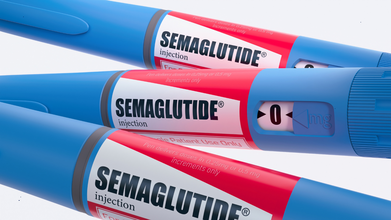
Alkem Laboratories today announced the launch of semaglutide in single-shot pre-filled syringes in multiple dose strengths, with prices starting at Rs 350.
The company, in a statement, said it is the first in India to introduce semaglutide in a single-shot pre-filled syringe format for the management of Type 2 diabetes mellitus and obesity as an adjunct to diet and exercise.
Also Read: John Barnes, Bobby Davro Diagnosed With Prostate Cancer Even As UK Rules Out Universal Screening
The ready-to-use format will expand treatment options for patients while lowering entry barriers through affordable pricing.
“Semaglutide has the potential to change how we manage metabolic disorders. With the launch of our pre-filled syringes, we are widening the choice available to doctors and patients, alongside the pen options we have already introduced,” said Dr. Vikas Gupta, Chief Executive Officer of Alkem Laboratories.
“In India, where we are seeing a continuous rise in disease burden, offering multiple, practical drug delivery formats is an important step in helping more patients start and stay on the therapy,” he added.
Alkem noted that it has received approval from the Drugs Controller General of India (DCGI) to manufacture and market semaglutide pre-filled syringes.
Also read: India To Tighten Regulation For Semaglutide, Other GLP-1 Drugs
The launch follows Alkem’s introduction of semaglutide in pre-filled disposable and reusable injection pen formats in the Indian market in March 2026. The company has also secured regulatory approval for semaglutide vials, which it plans to launch soon.
Meanwhile, domestic peers such as Torrent Pharma and Dr Reddy’s have also introduced non-infringing tablets, with Lupin, Sun Pharma and several others expected to follow suit.
Semaglutide: Risks Vs Benefits
In people with type 2 diabetes, Harvard Health noted that the body's cells are resistant to the effects of insulin and the body does not produce enough insulin, or both. This is when GLP-1 agonists stimulate the pancreas to release insulin and suppress the release of another hormone called glucagon.
These drugs also act in the brain to reduce hunger and act on the stomach to delay emptying, so you feel full for a longer time. These effects can lead to weight loss, which can be an important part of managing diabetes.
Notably, semaglutide is not just a glucose-lowering drug, it improves weight and has proven cardiovascular, liver, and renal benefits.
Read More: Pairing Ozempic With Exercise Is Beneficial For Your Muscles, Study Finds
Wider availability could therefore help reduce long-term complications such as heart disease and kidney failure. If used appropriately, this could indeed be a major step forward in total metabolic care, the experts said.
“The increasing affordability of GLP-1 receptor agonists is a double-edged development. On one hand, it significantly improves access for patients with obesity, type 2 diabetes, and high cardiovascular risk, conditions that are highly prevalent in India. These drugs have demonstrated meaningful benefits in weight reduction, glycemic control, and even cardiovascular risk reduction, which could translate into long-term public health gains,” Dr Vivek Bindal, Senior Director & Head, Bariatric and Robotic Surgery, at Max Healthcare, told HealthandMe.
- Follow Us :


© 2024 Bennett, Coleman & Company Limited