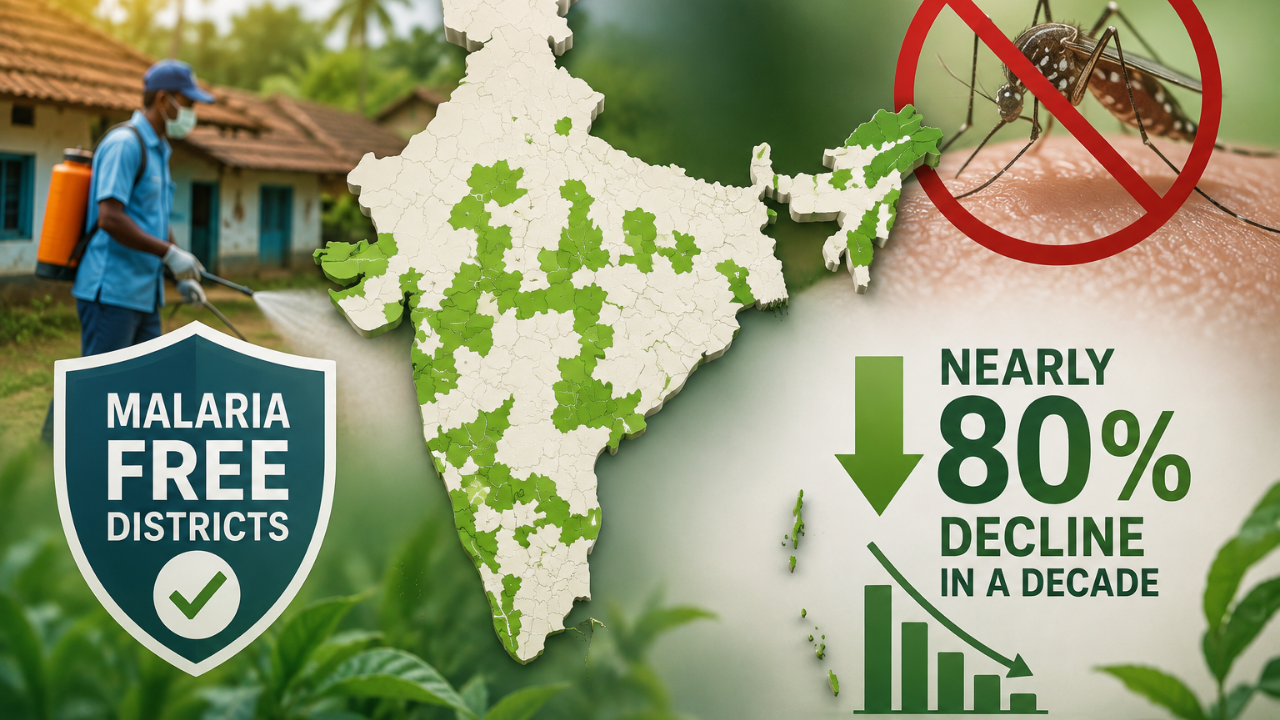
India is moving closer to its goal of eliminating malaria by 2030. Between 2022 to 2025, 160 districts across the country reported zero indigenous malaria cases, according to the Union Health Ministry.The country has also saw nearly 80% decline in malaria cases and deaths between 2015 and 2025. The number of districts with high malaria burden also went down from 155 to 33. The latest figures were discussed at a review meeting chaired by Aradhana Patnaik, Additional Secretary and Mission Director, National Health Mission, with officials from the Ministry of Health and Family Welfare, National Centre for Vector Borne Diseases Control (NCVBDC), states and affected districts. 160 Districts Reported Zero Malaria Cases In Last 3 Years 160 districts reported zero indigenous malaria cases from 2022 to 2025. This is significant as it suggests that local transmission was successfully interrupted in these regions.But zero reported cases does not mean the risk has vanished completely. Malaria can return when mosquitoes, infected people or favourable environmental conditions fuel transmission. To avoid this, health authorities are vigilantly continuing surveillance even in areas that have made substantial progress.The government said the reduction in numbers reflects the positive impact of focused malaria control and elimination initiatives and strategies. According to PIB, It including surveillance, early diagnosis, treatment and control measures for vector-borne infections.Also read: Malaria Alert in Germany: Frankfurt Airport Worker Dies After ‘Mosquito Arrives On Plane’; 5 Infected Strategies Needed For Malaria Elimination Patnaik stressed that India cannot rely on a one-size-fits-all approach as it moves towards elimination. He said, “Focused, area-specific strategies and strengthened surveillance are essential to accelerate India’s progress towards malaria elimination by 2030.” The Health Ministry has identified 33 high-burden districts across nine states and Union Territories for particularly intensive action. These districts accounted for 64% of India's malaria cases and 54% of malaria deaths in 2025. The states and UTs reviewed included Mizoram, Odisha, Tripura, Assam, Andhra Pradesh, Andaman and Nicobar Islands, Chhattisgarh, Jharkhand and Maharashtra.Despite the overall decline, malaria deaths continue to occur, and authorities highlighted that delays in diagnosis and treatment are the primary driving factors.The government has asked states to strengthen the “Test, Treat and Track” strategy, improve active surveillance and ensure that diagnostic tests and anti-malarial medicines remain available, particularly in remote areas. Also read: World Mosquito Day: How Dengue Can Damage Your KidneysThe Real Challenge For India Malaria is transmitted through the bite of infected Anopheles mosquitoes. The parasite enters the bloodstream and can cause fever, chills, headache and body aches. In severe cases, it can affect the brain and other organs and become life-threatening.The challenge for India now is not simply reducing cases, but preventing malaria from coming back in districts where transmission has become zero.Patnaik stressed, “Health interventions alone cannot address several factors contributing to malaria transmission, including water-logging, source reduction and environmental management.” The government has therefore called for greater coordination with rural and urban development departments, Panchayati Raj institutions and local communities to identify breeding sites and report suspected cases early.