
- Health Conditions A-Z
- Health & Wellness
- Nutrition
- Fitness
- Health News
- Ayurveda
- Videos
- Medicine A-Z
- Parenting
Zimbabwe Among the First African Countries to Roll Out Breakthrough HIV Injections
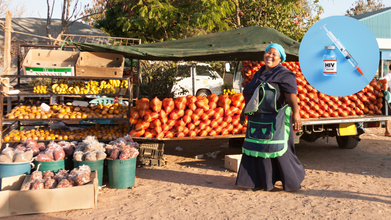
Representational Image (iStock and Canva)
Women, young ones and ones holding their babies, along with some men lined up on the outskirts of Zimbabwe's capital Harare for the injections of a new HIV prevention drug. The country launched it on Thursday. This drug needs to be administered only twice a year.
Why Is This Vaccine So Important For Zimbabwe?
Zimbabwe is a country where HIV led to tens of thousands of deaths in the last two decades. It is the first country to roll out lenacapavir, which is a long-acting drug that authorities have put their hopes on to slow down the HIV infection.
Also Read: Hangover Star Ken Jeong's Wife Beats Stage 3 Breast Cancer
What Is So Special About The HIV Injections?
Clinical studies have demonstrated near-total protection for the drug and has been described as a 'turning point' for high risk groups by many experts. However, many have warned that its broad impact would require overcoming funding constraints, infrastructure gaps and the challenge of keeping patients engaged.
Immunologist at Emory University Rama Rao Amara, calls it a "wonder drug". The drug, known as lenacapavir has been approved by the Food and Drug Administration (FDA) and is made by Gilead Sciences.
How Does This Drug Differ From Earlier HIV Prevention Drugs?
In 2021, FDA approved injectable form of PrEP medication called cabotegravir, however, this required patients to take it in every two months. This was also an intramuscular dose that healthcare providers were to administer into the buttocks.
What changes with lenacapavir is its easy administration. Each dose lasts longer compared to other medications and requires to be administered twice a year.
Read: 12.4 Lakh HIV Tests In Haryana Detect 5,877 Cases
The limitation with lenacapavir is its price tag of more than $28,000 per person per year. Carmen Pérez Casas, a senior strategy leader at Unitaid, a global health initiative based in Geneva, Switzerland said, "This is unaffordable. We need to get somewhere close to what previous options cost."
However, there is hope as the researchers published an analysis in The Lancet HIV that suggested generic versions of this drug could cost a person $25 per year.
Could This Drug Reshape HIV Prevention?
At the Zimbabwe launch, Constance Mukoloka, a sex worker, was among the first beneficiaries of this roll out which has happened by donor-support across 10 African countries, as reported by PBS News.
"I am safe, I can work with confidence now," said the 27-year-old sex worker. "When I took tablets, customers would see a container of pills and leave. They would never return due to fear," she said. "They couldn't tell the difference between PrEP and treatment drugs. With the work we do, that stigma costs you money."
Daily oral PrEP has been offered in Zimbabwe for years, along with condoms, vaginal rings and shorter-acting injections. However, sticking to the regimen has been difficult, especially for people dealing with stigma or irregular daily routines.
"I work in beer halls looking for clients. Sometimes I would get drunk and forget to take my drugs," Mukoloka said. "Sometimes I would work all night and not have time. Some clients refuse protection. They say ... 'Why should I use protection when I have paid?'"
Fitness First: Study Claims A Common Drug Can Mimic Benefits Of 'Intense Workouts'
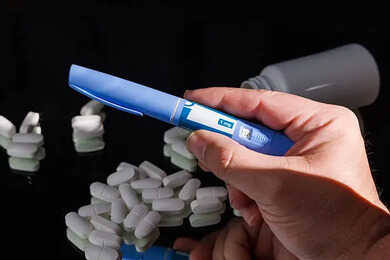
Metformin is a commonly used drug for type-2 diabetes. (Photo credit: iStock)
Diabetes patients rely upon metformin for controlling their blood sugar and insulin levels. Now, a new study claims that this common diabetes drug has many other health benefits to offer, and these can mimic the benefits of 'intense workouts.' The diabetes drug metformin is used by millions around the world who are struggling with this lifestyle disorder—it releases weight-regulating compounds in the body, the same ones that are released during workouts in inactive people. American scientists found that the drug can have a positive impact on a sedentary lifestyle—find out how.
What is metformin?
Metformin is the most common drug for the management of type 2 diabetes. It helps insulin work better, thereby regulating blood sugar spikes. This drug is usually prescribed when diet and workouts alone are not sufficient for weight management. According to a study by experts at the University of Miami Miller School of Medicine’s Sylvester Comprehensive Cancer Center, metformin may replicate the benefits of workouts in people who follow a sedentary, inactive lifestyle. In the case of prostate cancer patients, men who do not work out because of their treatment benefited from metformin use, as the drug raises levels of a molecule that supports weight loss. In the case of patients who cannot work out properly, the effect can be game-changing.
Are workouts necessary during cancer treatment?
Exercising is one of the best ways to avoid obesity and other metabolic disorders. It is also one of the best ways to stay strong during cancer treatment, as it regulates weight, heart health, and blood sugar. This helps cancer patients feel stronger even during treatment and recovery. However, many cancer patients cannot work out regularly because of hormone therapy-related fatigue. Metformin use, in this case, can prove helpful for patients.
How does metformin mimic the benefits of workouts?
Exercising benefits the body by releasing hormones such as oxytocin and dopamine. Researchers from the Sylvester Comprehensive Cancer Center explored whether these could be triggered without exercise and whether metformin could do that. They noted that while the drug cannot fully replace workouts as part of a healthy routine, there is a need to understand how a widely used drug can be beneficial for metabolic health during prostate cancer treatment.
N-lactoyl-phenylalanine, or Lac-Phe, is a molecule that spikes after an intense workout session, and it also regulates appetite and calorie burning. Scientists found that Lac-Phe levels were higher in metformin users even when they were not working out. The Sylvester team noted that prostate cancer patients often struggle with poor blood sugar control, heart disease risk, and weight gain due to hormone therapy. They then took blood samples from 29 people and found that the patients who took metformin had similar Lac-Phe levels to people who were engaged in strenuous workouts. This was noted even when the patients were not exercising. However, metformin did not have an impact on prostate tumours.
The study was published in the EMBO Molecular Medicine journal.
Reused Syringes Infect Over 330 Children in Pakistan With HIV: Report
Credit: Canva
In an alarming incident, more than 330 children in Pakistan have contracted HIV due to reuse of syringes in a hospital in Pakistan’s Punjab, according to a report.
The report, based on an undercover investigation by BBC News, highlighted blatant infection control failures and unsafe medical practices at THQ Hospital Taunsa in Pakistan.
The failures captured on camera, filmed over 32 hours inside THQ Taunsa Hospital in late 2025, showcase persistent unsafe practices, including the reuse of syringes on multi-dose vials, that have infected more than 330 children with HIV since late 2024.
The footage captured multiple violations of basic hygiene protocols, including the staff reusing syringes on multi-dose medicine vials, which increases the risk of contaminating entire batches of medication. In several instances, the same vial was then used to treat different children, the report said.
Other scenes captured included poor sanitation conditions, such as open vials, used needles left on countertops, and improper disposal of medical waste; staff administering injections without sterile gloves, further increasing the risk of cross-contamination.
Pakistan HIV Cases: Previous Outbreak In Southern Sindh
The incident in Taunsa is not the first. In 2019, media reports cited nearly 1,000 children testing positive for HIV due to the reuse of needles in southern Sindh province.
“Pakistan has experienced a series of HIV outbreaks over the past two decades, but we’ve never before seen this many young children infected or so many health facilities involved," Dr Fatima Mir from the Aga Khan University in Pakistan, told The Guardian. She was the lead author of the paper published in the Lancet Infectious Diseases, which also reported the cases.
“Use of syringes and needles is widespread, and Pakistan has one of the highest rates of unsafe injections in the world. Health practitioners need to use intravenous treatment only when necessary, use needles only once, and screen blood for infections before using it for transfusions,” she added.
The India Case: Thalassemic Children Infected With HIV
In 2025, a dozen children undergoing blood transfusions for thalassemia contracted HIV in two different incidents in India's Madhya Pradesh and Jharkhand, highlighting “systemic lapses in blood bank regulations”.
At least six children were found HIV positive at Satna district hospital in Madhya Pradesh, allegedly due to contaminated blood transfusions at the district hospital during treatment for thalassemia.
The children affected include five boys aged under 11 and a nine-year-old girl who have been undergoing blood transfusions at the hospital.
Another six children with thalassemia reportedly contracted HIV from contaminated blood transfusions at a government hospital in the West Singhbhum district of Jharkhand.
Safe Injection Practices: What Is Recommended
The World Health Organization (WHO) mandates the use of single-use, safety-engineered syringes—specifically auto-disable (AD) or reuse-prevention (RUP) devices—to prevent disease transmission and needle-stick injuries.
These devices automatically lock or break after one use and are essential for immunization and medication administration.
The US CDC recommends using single-dose vials whenever possible, over multiple-dose vials, especially when medications will be administered to multiple patients.
Do not administer medications from a syringe to multiple patients, even if the needle or cannula on the syringe is changed.
US FDA Recalls China-made Cough Drops And Throat Lozenges
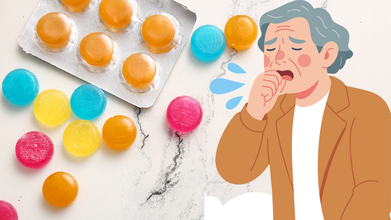
Credit: Canva
The US Food and Drug Administration has recalled China-made over-the-counter cough drops and throat lozenges sold across the country over potential safety concerns.
The FDA in a notice stated that Xiamen Kang Zhongyuan Biotechnology from Xiamen in China, has issued a voluntary recall of numerous products based on March 20, 2026.
The regulator noted that the recall was started following the FDA’s recommendation based on observations noted during an August 15, 2025, inspection of the manufacturing facility that “may bear on product quality.”
The FDA classified the recall as Class II on April 10, 2026. Class II recalls apply to products that can cause “temporary or medically reversible” health problems.
While the FDA did not specify how many cough drops were under the recall, the recalled products include:
- Exchange Select (manufactured for Your Military Exchanges): 30-count bag of honey lemon and menthol flavored cough drops
- Caring Mill (distributed by FSA Store, Inc): 90-count bags of cherry cough drops
- Discount Drug Mart Food Market: 30-count bags of honey lemon cough drops
- MGC Health (distributed by Medical Group Care): 25-count and 30-count bags of sugar-free honey lemon cough drops and 80-count bags of honey lemon cough drops
- QC Quality Choice (distributed by CDMA, Inc): 25-count bags of black cherry sugar-free and regular cough drops; 25-count bags of sugar-free and regular honey lemon cough drops; 30-count bags of creamy strawberry throat soothing drops; 30-count bags of menthol cough drops; and 30-count bags of vanilla honey cough drops.
Safe Alternatives For Cough Drops
Coughs are often caused by viral infections, allergies, or environmental irritants such as dust or smoke.
Also read: Eye Drops: US FDA Recalls Over 3 Million Products Over Safety Concerns
Dr. Umashankar Sharma, Medical In-charge (B.N.Y.S), Kailash Institute of Naturopathy, Ayurveda & Yoga, recommends several safe home remedies that can ease both adults' and children’s discomfort naturally.
“Warm liquids like soups, clear broths, or mild herbal teas, such as chamomile, help keep the throat moist and reduce irritation. Honey is a great natural option for children over one year; half to one teaspoon before bedtime can help calm night-time coughing,” he said.
He also suggests using a cool-mist humidifier in the room to add moisture to the air, which can loosen mucus and ease breathing. Saline nasal drops or a short steam session in a warm shower can also help relieve congestion.
Ensuring plenty of rest and hydration with water or warm drinks is essential. Slightly elevating the head with an extra pillow at night can reduce coughing while sleeping.
These remedies are generally safe and effective. However, if the cough persists for more than two weeks, or if the individual experiences high fever, wheezing, or difficulty breathing, it’s important to consult a doctor to rule out more serious conditions.
Home Remedies For Sore Throat
According to the Centers for Disease Control and Prevention, throat pain linked to an upper respiratory infection usually improves within about a week. Over-the-counter pain relievers like ibuprofen or naproxen can help ease discomfort and may be more effective than acetaminophen because they reduce both pain and inflammation.
Alongside medication, certain home remedies may also provide relief. Options worth trying include saltwater gargle, honey and herbal tea, or other hot beverages such as soups.
- Follow Us :


© 2024 Bennett, Coleman & Company Limited