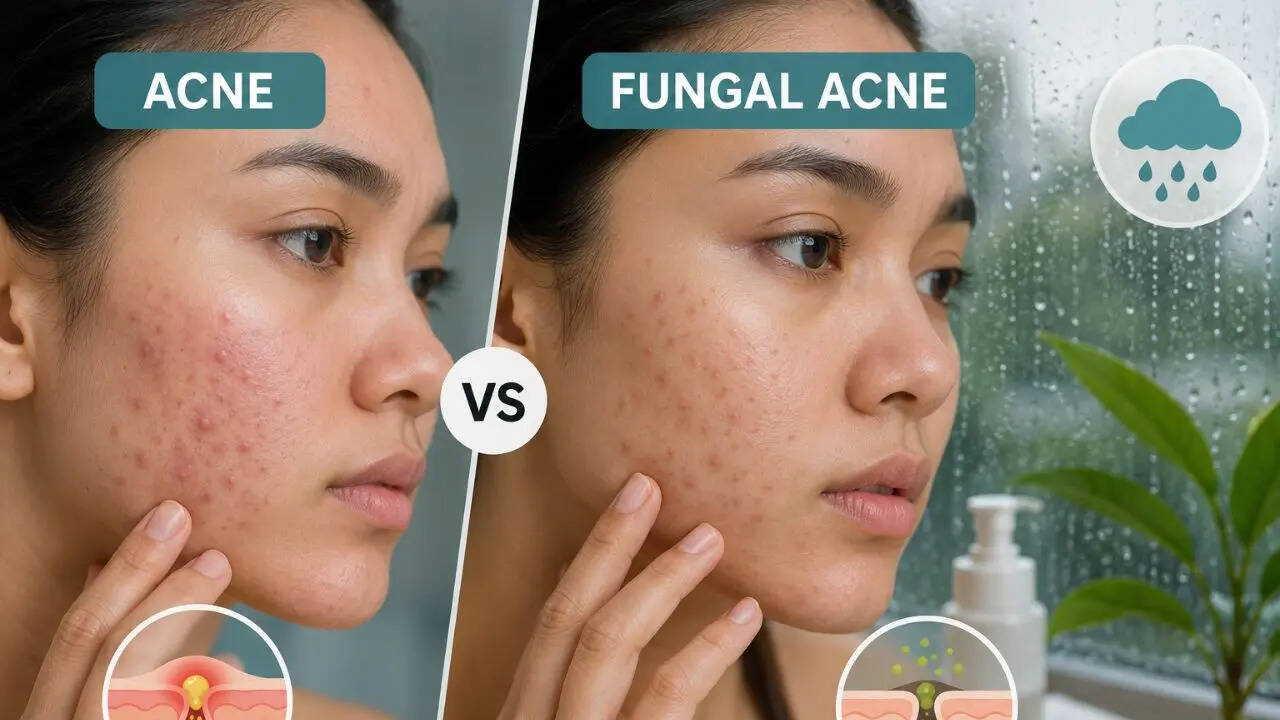
Skin breakouts are often common occurrences during the monsoon season, but not all outbreaks of bumps that occur during this period are traditional cases of acne. The combination of humidity along with sweat and sebum production makes the skin susceptible to different skin conditions, making it easy to mistake fungal acne for a regular one. While acne and fungal acne may appear almost identical, the factors that trigger them are not the same. Identifying the right condition early makes it easier to choose the most appropriate treatment and maintain healthier skin in the long run. How Monsoon Weather Triggers Different Breakouts? It is quite common to experience frequent breakouts during monsoon season. This usually happens due to the accumulation of humid conditions, sweat, and increased oil production. When sweat mixes with sebum, dead skin cells and skincare products, pores may become clogged, which eventually results in acne. At the same time, the environment also supports the growth of Malassezia, a yeast that naturally lives on the skin. When it grows excessively, it can trigger fungal acne, medically known as Malassezia folliculitis. Since both conditions tend to flare up during the rainy season, they are frequently confused with one another. Also read: Besides Sunscreen, What Everyday Habits Can Help Reduce Sun Exposure And Skin Damage?Acne vs. Fungal Acne: A Closer Look at the Differences There are several indications which one may use to differentiate between normal acne and fungal acne. Regular acne mostly develops as a combination of blackheads, whiteheads, inflamed pimples, and sometimes painful cysts. On the other hand, fungal acne presents itself in the form of tiny bumps that usually appear itchy and develop in clusters. These bumps commonly occur on the forehead, chest, shoulders and upper back, especially in areas where sweat tends to collect. Also read: World Plastic Surgery Day: Hidden Risks To Know If You’re Travelling Abroad For Affordable Cosmetic ProceduresChoosing the Right Treatment Path Since regular acne and fungal acne occur due to different reasons, they also require different treatment approaches. Although proper skin care can help in reducing the possibilities of outbreaks, it does not entirely prevent breakouts. Over-the-counter acne products are usually intended to unclog the pores and control the growth of bacteria causing acne; however, they do not work on fungal infections. In fact, in some cases, using the wrong products can even worsen irritation or allow the breakouts to persist.Therefore, always consult a dermatologist for targeted skin issues, particularly when acne scars are also a concern. In such situations, many experts may suggest modern treatments such as Harmony XL Pro for personalised results. This multi-application platform combines numerous energy-based technologies to address specific acne-related concerns and is also used in a variety of aesthetic procedures such as acne-scar removal and overall skin rejuvenation. Small Changes That Support Healthier Skin A minimal skincare routine can go a long way during the monsoon. Always start with a gentle cleansing after excessive sweating. Choose non-comedogenic moisturisers and make sure not to apply multiple oily or occlusive products that could result in clogged pores. If you develop a breakout, do not pick or squeeze the acne, as doing so can increase inflammation and the risk of scarring. In the end, recognising whether a breakout is regular acne or a fungal one is the first step towards appropriate treatment. Although both conditions become more common during humid weather, they are not managed in the same way. Paying attention to symptoms such as itching, the pattern of the bumps and how the skin responds to treatment can make a meaningful difference.By Dr. Anwesha Poddar, Dermatologist, Dr. Anwesha Poddar Skin, Laser & Hair Clinic