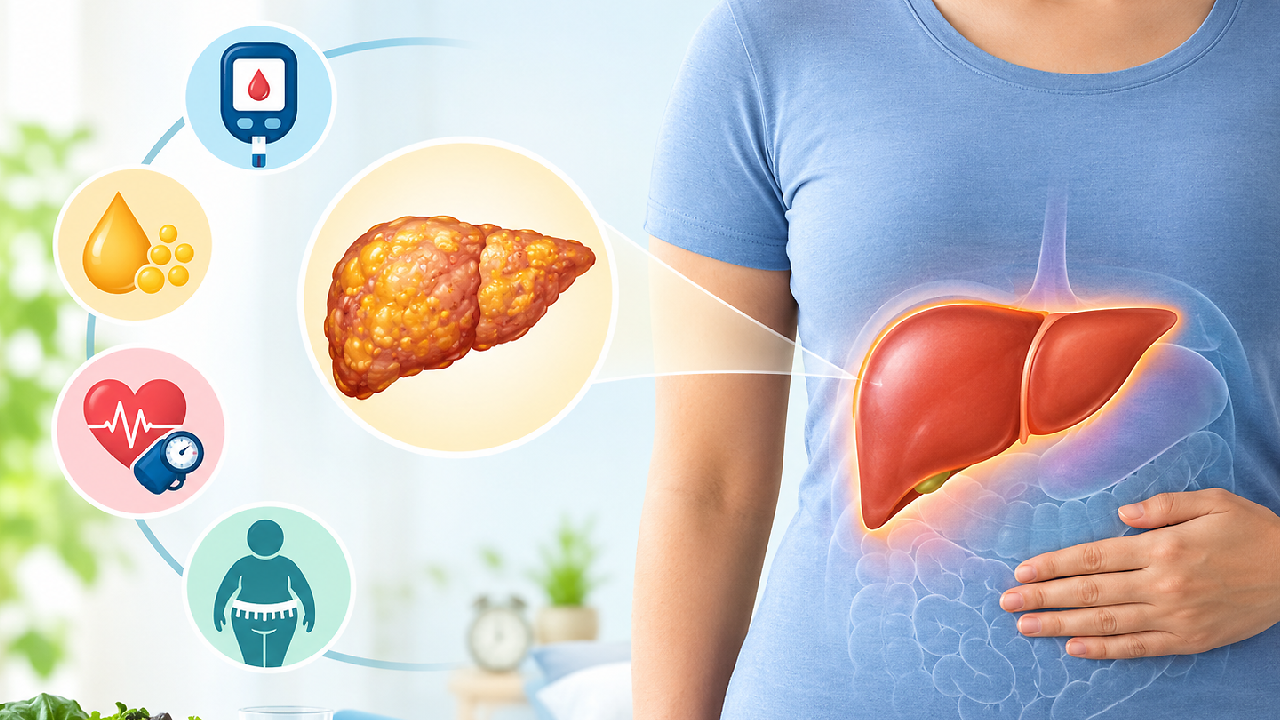
Fatty liver disease has traditionally been associated with obesity and alcohol consumption. However, in clinical practice, we are increasingly seeing fatty liver in individuals who may not appear overweight and who do not consume alcohol. This changing pattern reflects a larger problem: the close relationship between liver health, metabolic health, and lifestyle.Non-alcoholic fatty liver disease (NAFLD), now increasingly termed metabolic dysfunction-associated steatotic liver disease (MASLD), occurs when excess fat accumulates in the liver in association with metabolic risk factors. A systematic review and meta-analysis of Indian studies estimated the pooled prevalence of NAFLD among adults at 38.6%, meaning that roughly one in three adults may be affected. The prevalence was approximately 28.1% in average-risk populations and increased to 52.8% among individuals with higher metabolic risk.What is particularly important for Indians is that fatty liver cannot be identified simply by looking at body weight. South Asian populations can develop visceral or abdominal fat and metabolic abnormalities even at relatively lower body mass indices. A South Asian meta-analysis found that NAFLD affected approximately 26.9% of adults in the general population, while prevalence rose to 54.1% among people with metabolic diseases. Importantly, around 43.4% of people with NAFLD in the analysis were not obese.Diabetes, hypertension, dyslipidaemia, central obesity and metabolic syndrome are therefore important warning signs. In my practice, I often emphasise that a normal-looking body does not necessarily mean a metabolically healthy body. Waist circumference, blood sugar, lipid profile, liver enzymes, and, when indicated, liver imaging provide a much more meaningful risk assessment.The other misconception is that fatty liver is harmless. Simple steatosis may remain stable in many individuals, but some patients develop inflammation and progressive fibrosis, eventually leading to cirrhosis and liver cancer. A systematic review of hepatocellular carcinoma in India also found that the proportion of cases associated with NAFLD has been increasing, although viral hepatitis remains an important cause. ([PubMed][3])There is also a broader gastroenterological concern. Digestive and liver health are closely connected with dietary patterns, physical activity, and metabolic health. Excessive intake of refined carbohydrates, sugary beverages, ultra-processed foods, and excessive calories, combined with inadequate physical activity, can contribute to metabolic dysfunction.The good news is that lifestyle modification can make a substantial difference in fatty liver. Weight reduction, regular physical activity, improved dietary quality, adequate sleep, and better control of diabetes and cholesterol can help reduce liver fat and metabolic risk. Importantly, management should be individualised rather than based on crash diets or unregulated supplements.Fatty liver should therefore be viewed not merely as an incidental finding on an ultrasound report, but as a metabolic warning signal. Early identification allows us to intervene before irreversible liver damage develops. For patients, the message is simple: taking care of the liver also means taking care of the heart, metabolism, and overall digestive health.The statistics cited above are based on published systematic reviews/meta-analyses and IARC/WHO data; prevalence estimates vary depending on the population and diagnostic method.Dr. Pradipta Kr. Sethy, Director Gastroenterology, Manipal Hospitals EM Bypass & Mukundupur