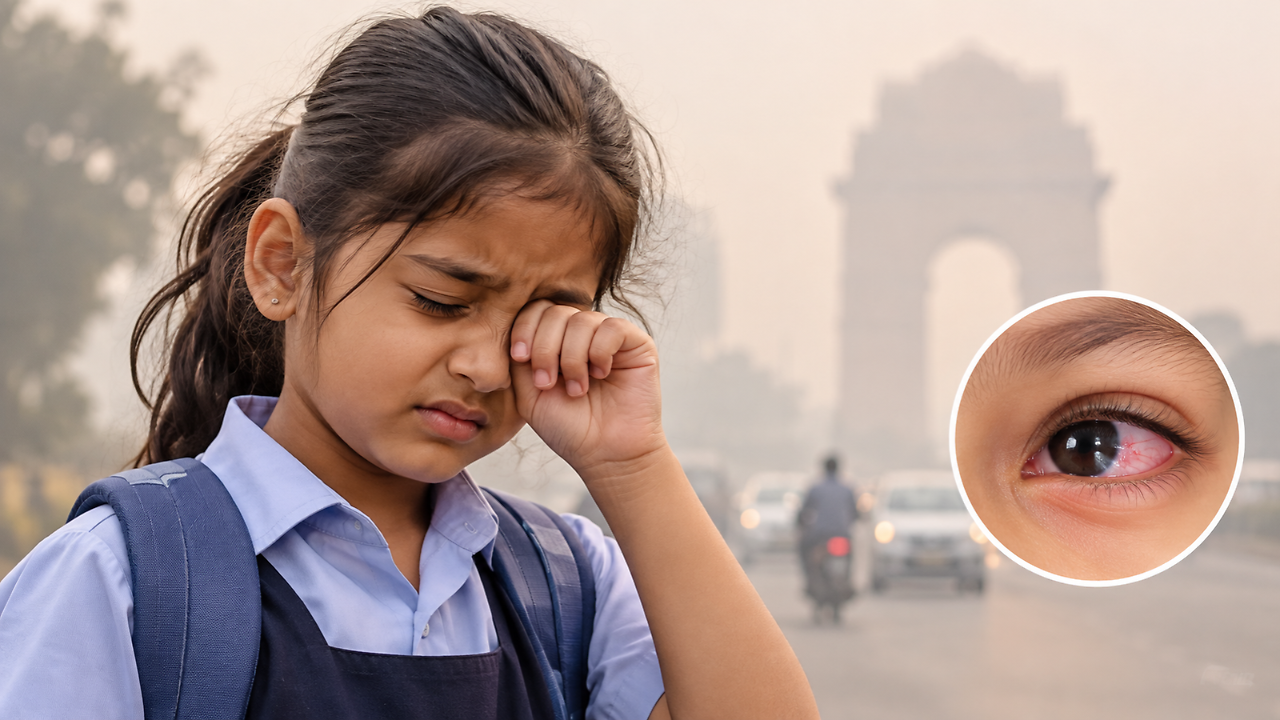
As Delhi wakes up to another spell of deteriorating air quality just days ahead of Diwali, ophthalmologists warn that dust, smoke, particulate matter, and toxic gases can affect children's eyes, triggering redness, itching, burning, excessive watering, and dryness.On Tuesday, India's national capital's average Air Quality Index (AQI) climbed to 331 at 7 am, entering the ‘very poor’ category. At the same time, eight monitoring stations recorded readings above 400, falling in the ‘severe’ zone, according to the Central Pollution Control Board (CPCB).As per data from the CPCB, 33 of the city's 58 monitoring stations recorded AQI levels in the ‘very poor’ category. Meanwhile, the India Meteorological Department (IMD) and the Indian Institute of Tropical Meteorology have forecast that air quality is likely to remain in the ‘very poor’ category over the coming days.“Children’s eyes are more sensitive to irritants in the environment, and exposure to pollutants, particulate matter and toxic gases can irritate the surface of the eye,” Dr Shibal Bhartiya, Clinical Director – Ophthalmology and Program Director – Community Outreach and Wellness at Marengo Asia International Institute of Neuro and Spine (MAIINS), told HealthandMe.Also read: Supreme Court Allows Green Crackers In Delhi-NCR Ahead Of Diwali: Are They Really Safe For Your Health?How Does Air Pollution Affect Children's Eyes?The experts warned that exposure to pollutants and particulate matter can irritate the surface of children's eyes, causing redness, itching, burning, excessive tearing and dryness.Dr Neepa Thacker Dave, Senior Consultant in Paediatric Ophthalmology at SRCC Children's Hospital, told HealthandMe that the eye’s surface is protected by a delicate tear film that provides lubrication, maintains clear vision and helps defend against environmental irritants. Exposure to airborne pollutants can disturb this protective layer and contribute to ocular surface irritation and inflammation."Excessive watering does not necessarily mean that the eyes are adequately lubricated. Irritation can trigger reflex tearing even when the tear film is unstable. Consequently, children may experience watering alongside dryness or discomfort," she said.Further, children with existing allergies or sensitive eyes may notice their symptoms worsening during periods of high pollution.“Long-term exposure to poor air quality may also worsen pre-existing ocular surface conditions,” Dr Bhartiya said.How Can Parents Protect Children's Eyes From Air Pollution?Read More: Rising AQI In Delhi-NCR: Doctors Warn Of Lung And Heart Risks As Pollution Builds Reducing children's exposure to pollution is important, particularly on days when air quality is poor.Dr Bhartiya advised parents to:Avoid outdoor activities when pollution levels are high.Keep windows closed during periods of severe pollution.Encourage children to avoid rubbing their eyes.Ensure children wash their faces after coming indoors.Dr Dave also highlighted the importance of greater awareness, reduced exposure and timely medical care in protecting children from pollution-related eye irritation and discomfort.When Should Children See an Eye Specialist?Dr Dave said children may not always have the vocabulary to describe eye discomfort. Parents and teachers should watch for frequent eye rubbing, excessive blinking, squinting, watering or reluctance to participate in reading and outdoor activities.Parents should not dismiss eye irritation in children, particularly when pollution levels are high. Although mild irritation may improve when exposure is reduced, recurring or persistent symptoms warrant an eye examination. Eye pain, significant sensitivity to light, blurred or reduced vision, marked redness or difficulty opening the eye require prompt medical attention.