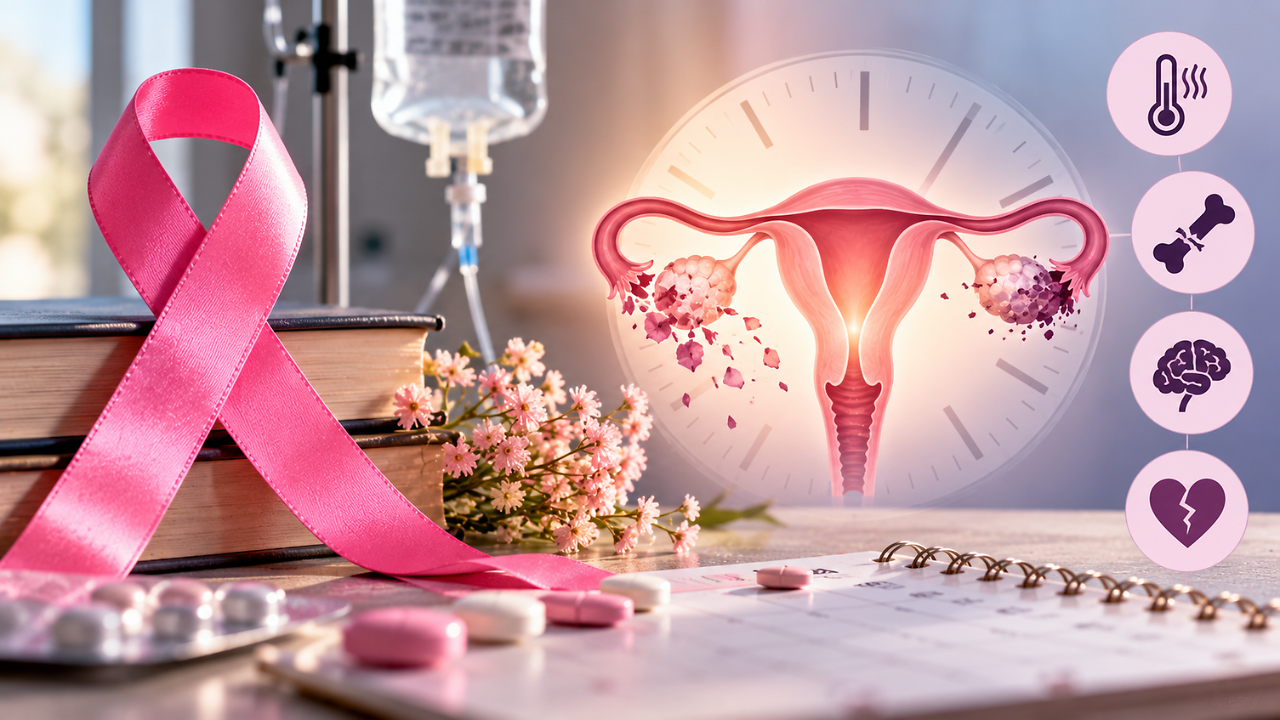
When Andrea de Armas was diagnosed with breast cancer at 26, she was preparing for a future that looked very different from the one she was suddenly handed.Along with surgery and chemotherapy, she had to make decisions about her fertility and adjust to the of long-term consequences from treatment.Now 30 and cancer-free, the US woman is still taking hormone therapy. The treatment has put her into temporary menopause. “I’m really lucky. I feel like I’m doing OK,” de Armas told CBS News. “It took me a little bit to kind of adjust. It wasn’t immediate; it took time. It took understanding the kind of changes my body was going through. But I’m able to live a pretty normal life for a 30-year-old.”Andrea’s experience highlights a revealing challenge of breast cancer in younger women. Young women who survive breast cancer face a series of emotionally heavy decisions about menstrual cycles, fertility, sexual health and emotional well-being, and menopause that comes decades earlier than expected.Effects Of Breast Cancer Treatment On Young WomenAlso read: Why Peak Incidence For Breast Cancer In India Occurs Between Ages 40–50, Compared To 60–70 In The US & EuropeDe Armas initially struggled to get her concerns taken seriously. She was eventually diagnosed with breast cancer in 2023 and discovered that she carried a genetic mutation associated with an increased risk of the disease.She underwent a lumpectomy in June, followed by chemotherapy. She later had a bilateral mastectomy and reconstruction, scheduling treatment around her studies so she could continue her physician assistant programme.“We worked together as a team,” said Dr. Cristina Lopez-Penalver, the surgical oncologist at Baptist Health's Herbert Wertheim Cancer Institute who treated her. “She was really not about ready to let this breast cancer get in her way.”De Armas graduated as a physician assistant in 2025 and began working a month later. However, despite completing surgery and chemotherapy, she continues to take hormone therapy because of the characteristics of her cancer.That medication has placed her in temporary menopause, a treatment-related effect that can be particularly difficult for younger women to navigate.Early Menopause Due To Hormone Therapy Also read: Breast Cancer: Know the Risks, Recognise the Signs & Get CheckedMenopause occurs when the ovaries stop releasing eggs and producing lower levels of hormones, particularly oestrogen.Although natural menopause usually occurs in the late 40s or early 50s, some cancer treatments can bring on menopause much earlier.According to the American College of Obstetricians and Gynecologists (ACOG), chemotherapy can damage the ovaries, causing periods to become irregular or stop altogether. Hormone therapy can also block oestrogen's effects to help prevent hormone-sensitive breast cancer from returning. Some women experience temporary ovarian suppression, in which medication switches off ovarian function during treatment. Others may develop permanent ovarian damage and early menopause. The outcome depends on the treatment, the woman's age and her ovarian function before treatment. In de Armas' case, hormone therapy has brought on temporary menopause. The transition can be more abrupt than natural menopause, leaving women with symptoms that affect daily life. Common effects include:Hot flashes and night sweats: Sudden waves of heat and sweating can disrupt sleep and daily activities.Sleep disturbances and mood changes: Hormonal changes may contribute to insomnia, irritability and low mood.Vaginal dryness and sexual discomfort: Reduced oestrogen can affect vaginal tissues and sexual health.Changes in fertility: Damage to ovarian function can reduce the chances of conceiving naturally, sometimes permanently.Bone health concerns: Low oestrogen levels can accelerate bone loss, increasing the risk of osteoporosis over time.The National Cancer Institute notes that treatment-related ovarian insufficiency can also cause joint pain, reduced libido and difficulty concentrating.