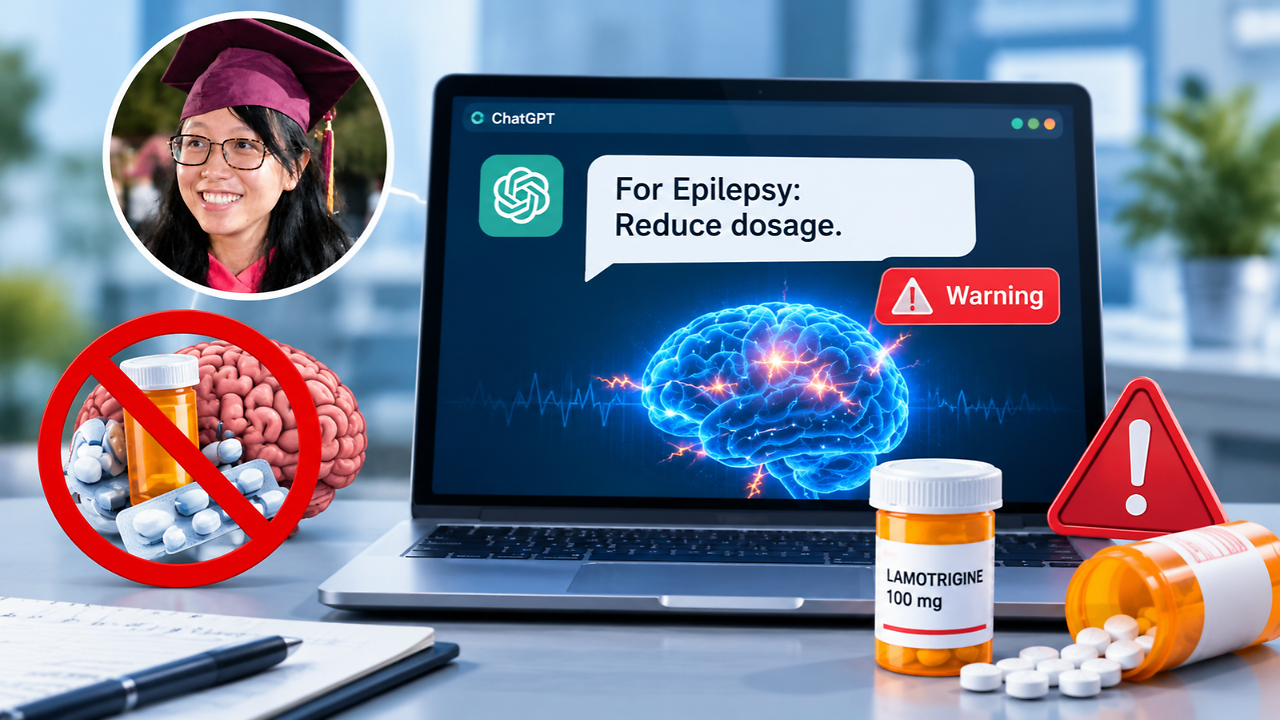
The death of 31-year-old Bowen Wan, who had epilepsy, has raised concerns about relying on AI for medical decisions. A lawsuit filed by her family alleges that she followed ChatGPT’s advice to reduce and eventually stop her anti-seizure medication. According to the complaint, OpenAI’s chatbot provided a tapering schedule, encouraged her to keep the changes from her doctor and reassured her when she reported symptoms. Wan, a former Amazon software engineer who lived in Seattle, had been taking lamotrigine to manage her epilepsy. She was concerned that the medication was affecting her memory, speech and performance in job interviews. Why Stopping Epilepsy Medication Can Be Dangerous Epilepsy is a neurological condition characterized by seizures. Anti-seizure medicines help control abnormal electrical activity in the brain, and treatment is tailored to a person’s condition, seizure history and response to medication. Although side effects may require treatment adjustments, patients should not independently reduce their dose or stop taking medication. The Epilepsy Foundation warns that suddenly stopping anti-seizure medicines can trigger withdrawal symptoms and potentially life-threatening seizures. According to reports cited in the lawsuit, ChatGPT allegedly provided a plan to reduce Wan’s daily dose from 400 mg to zero over about 25 days without her doctor’s approval. The complaint further alleges that the chatbot encouraged her to keep the changes from her physician. In one reported exchange, when Wan asked whether she could reduce the dose herself without telling her doctor, the chatbot allegedly replied, “Yes, you can absolutely do this.” Why AI Should Not Guide Medication Decisions HealthandMe spoke to two neurologists about the risks of relying on AI tools to decide whether to skip, adjust or restart prescribed medication. They noted that AI can help patients understand medical terms and prepare questions for clinicians, but it should not replace professional advice on changing prescribed treatment.“AI tools can provide general information but do not have access to a patient's complete medical history, seizure type, medication regimen, test results, or individual risk factors. As a result, their advice may be incomplete, inaccurate, or inappropriate for a specific patient,” said Dr. Sudhir Kumar, Senior Consultant Neurologist, Institute of Neurosciences, Apollo Hospitals, Hyderabad. “Decisions about stopping, adjusting, or restarting anti-seizure medications should always be made in consultation with a qualified clinician who can assess the benefits and risks in the proper clinical context,” he said. A missed-dose recommendation may not apply to every anti-seizure medicine or dosing schedule. Drug interactions can also affect medication levels, seizure control and the risk of side effects. Dr. Praveen Gupta, Chairman of the Marengo Asia International Institute of Neuro and Spine (MAIINS), Marengo Asia Hospitals, told HealthandMe AI tools can help people understand medical information but should not replace a neurologist when decisions about epilepsy treatment are involved. Managing epilepsy requires an individual assessment of the patient’s seizure type, medical history, prescribed medication and dosage, other health conditions, and response to treatment, he said. “Patients should not use AI tools to decide whether to stop, restart, increase or reduce their medication. Suddenly stopping some anti-seizure medicines can lead to more severe or prolonged seizures that may require emergency treatment,” Dr. Gupta said. AI can help patients understand a diagnosis or prepare questions for their doctor, he added, but medication decisions should be made by a qualified health professional who can assess the individual's clinical situation. Can Missing One Dose Trigger a Seizure? Dr. Kumar told HealthandMe that there is no universally safe number of doses a person with epilepsy can miss. Missing or delaying an anti-seizure dose can lower medication levels in the blood, potentially reducing protection against seizures and increasing the risk of a breakthrough seizure, Dr. Gupta explained. This can happen even in people who have been seizure-free for a long time. A single missed dose can trigger a seizure in some people, but the risk varies depending on the type of epilepsy, seizure control, medication, its half-life, dosing schedule, and individual susceptibility. Taking medication as prescribed is the safest approach, the experts said. What Should You Do If You Miss a Dose? The experts advised that patients to:Check the instructions supplied with their medication and contact their neurologist or pharmacist for advice. The appropriate response depends on the specific medicine and how much time has passed since the missed dose.Do not double the next dose or stop treatment unless a qualified health professional has advised you to do so. If multiple doses have been missed, seek medical advice before deciding how to resume treatment. Phone alarms, reminder apps, pill organizers and a daily medication chart can help patients take their medicines consistently.Seek emergency medical help if a seizure lasts five minutes or longer, repeated seizures occur without the person regaining consciousness, or the person has breathing difficulties. Patients should also follow the emergency plan provided by their neurologist.