
- Health Conditions A-Z
- Health & Wellness
- Nutrition
- Fitness
- Health News
- Ayurveda
- Videos
- Medicine A-Z
- Parenting
Can The HPV Vaccine Impact Your Chances Of Conceiving? Expert Answers
Credits: Canva
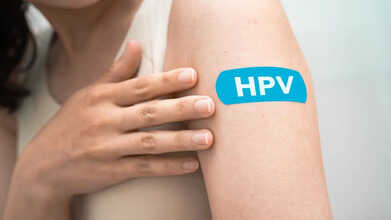
Concerns around fertility and vaccines often surface when people plan a family, and the HPV vaccine is no exception. Many women and men worry that getting vaccinated today could affect their ability to conceive later in life. Medical experts, however, say this fear is misplaced. According to fertility specialists, there is no evidence linking the HPV vaccine to reduced fertility. In fact, the vaccine may play a quiet but important role in protecting reproductive health over the long term.
Does The HPV Vaccine Affect Fertility?
The short and clear answer is no. The HPV vaccine does not negatively affect fertility in women or men. Dr. Madhu Patil, Consultant and Fertility Specialist at Motherhood Fertility and IVF, Sarjapur, Bangalore, explains that there is no scientific proof showing the vaccine causes fertility problems of any kind.
She notes that concerns often arise from misinformation rather than medical data. Extensive research and global vaccination programmes have consistently shown that people who receive the HPV vaccine do not experience reduced chances of conceiving in the future.
How HPV Infection Can Threaten Future Fertility
While the vaccine itself does not harm fertility, an untreated HPV infection can. HPV is the leading cause of nearly all cervical cancer cases. As per Dr Patil, “treatment for cervical cancer often involves procedures such as cone biopsy or LEEP, which can weaken the cervix. In more advanced cases, radiation or chemotherapy may be required.”
These treatments can reduce a woman’s ability to conceive and, in some cases, make it difficult to carry a pregnancy to full term. By preventing HPV-related cancers in the first place, the vaccine helps preserve the reproductive system and lowers the risk of fertility-compromising treatments later in life.
Why The HPV Vaccine Supports Reproductive Health
Dr. Patil points out that the HPV vaccine should be viewed as a protective measure rather than a risk. By stopping high-risk HPV strains from causing cancer or precancerous changes, the vaccine helps maintain cervical health. A healthy cervix and reproductive system are key factors in natural conception and safe pregnancies.
In this way, the vaccine indirectly supports fertility by reducing the likelihood of medical interventions that could interfere with reproductive function.
When Should the HPV Vaccine Be Taken?
Health experts recommend starting HPV vaccination at ages 11 or 12. At this stage, the immune response is strongest, and the vaccine offers protection well before any potential exposure to the virus. Dr. Patil strongly encourages parents to consult a gynaecologist and consider timely vaccination for their children.
That said, adults who missed vaccination earlier can still benefit. Many women and men receive the vaccine later in life after discussing it with their doctor.
Why Men Should Also Get The HPV Vaccine
The HPV vaccine is not only for women. Dr. Patil stresses that men should also be vaccinated, as HPV can cause cancers and genital warts that affect sexual health. Vaccination in men also reduces transmission to partners, adding another layer of protection for couples planning a family.
By limiting the spread of HPV, vaccination helps safeguard the reproductive and sexual health of both partners.
There is no evidence that the HPV vaccine reduces fertility. On the contrary, it helps prevent cancers and medical treatments that can threaten the ability to conceive or carry a pregnancy. Experts advise speaking with a gynaecologist, understanding the benefits, and making an informed decision based on medical facts rather than fear.
Toddler Left Partially Blind After ‘Ear Infection’ Diagnosis—What Did Doctors Miss?
Credits: Canva
A three-year-old girl was left partially blind after what first seemed like a routine ear infection was later diagnosed as a life-threatening brain tumour. As per Express UK, Chloe Kefford was rushed to A&E when she started experiencing car sickness and balance problems. Doctors initially diagnosed her with an ear infection and sent her home with antihistamines. But as Chloe’s condition worsened, her parents insisted on further testing, which revealed a tumour affecting her optic nerve.
Ear Infection Symptoms Masked A Life-Threatening Diagnosis
Chloe, from Formby, Merseyside, underwent open brain surgery and faced three-and-a-half years of treatment, including proton beam therapy last year, after experiencing two relapses. Proton beam therapy uses high-energy protons to precisely target the tumour, limiting damage to surrounding healthy tissue.
Open Brain Surgery And Years Of Intensive Treatment Followed
Now nine years old, Chloe has been honoured with a special award from Cancer Research UK for her bravery throughout her treatment. She received her initial care at St George’s Hospital in London and The Royal Marsden, before being transferred to Alder Hey in Liverpool.
Proton Beam Therapy Used After Cancer Relapsed Twice
Chloe’s mother, Nikki, 38, recalled that the family had been planning a move from Surrey to Merseyside before Chloe fell ill. As per Express UK, she said: “The house was already sold and we were planning our new life by the beach when Chloe became ill. Then we ended up moving and having to isolate for months. She relapsed not long after we moved and had more chemotherapy, then she rang the bell in April last year, but unfortunately, she relapsed again in July. So, we were supposed to be going on holiday to Disneyland in Paris and instead we went to Manchester for six weeks for Chloe to have proton beam therapy.”
Nikki added: “She is partially sighted now and has no peripheral vision; one eye is particularly badly affected. The main aim now is to preserve what eyesight she has left. We’re hopeful that the recent targeted treatment has got the cancer once and for all. She’s on steroids at the moment and is being monitored with three-monthly scans. She’s still in recovery and struggles with fatigue from the treatment, but we hope she’ll have a bit more energy soon. She’s our little ray of sunshine.”
Each year, around 400 children and young people in the North West are diagnosed with cancer. Advances in treatment and research are helping make therapies more effective and less harmful. Alder Hey Children’s Hospital in Liverpool is one of several centres across the UK taking part in pioneering clinical trials offering innovative new treatments.
In 2018, Cancer Research UK launched the Children’s Brain Tumour Centre of Excellence, supported by TK Maxx. The virtual centre brings together international experts in children’s brain tumour research to transform how treatments are developed. Every child nominated for a Star Award receives this recognition, which is endorsed by celebrities including JoJo Siwa and Pixie Lott.
Cancer Research UK spokesperson Jemma Humphreys said: “After everything Chloe’s been through, it’s been an absolute privilege to celebrate her incredible courage with a Star Award.”
Norovirus Spreads Rapidly In UK With Doctors Flagging New Symptoms
Credits: Canva
People experiencing certain symptoms are being urged to stay at home as a highly contagious virus spreads quickly across England. Fresh figures from the UK Health Security Agency show a 47% rise in cases during the first two weeks of 2026. This sudden jump has led the agency to remind the public about basic hygiene steps that play a key role in limiting the spread. Data suggests that norovirus is affecting people aged 65 and above the most, and although overall activity remains within normal seasonal levels, there has been a noticeable increase in outbreaks in hospital settings.
The latest UKHSA surveillance update also points to falling levels of flu, COVID-19, and RSV in the opening week of the year. While all winter virus levels are currently where they would be expected for this time of year, people are being encouraged to continue following simple precautions to help keep infections on a downward path.
What Is Norovirus?
Norovirus is an extremely infectious virus that irritates the stomach and intestines, causing gastroenteritis. It often leads to sudden vomiting, diarrhoea, nausea, and stomach cramps, and in some cases may be accompanied by fever or body aches. Although it is sometimes referred to as the “stomach flu,” it has no link to influenza. The virus spreads easily through contaminated food or water, shared surfaces, or close contact with someone who is infected. According to the Cleveland Clinic, most otherwise healthy individuals recover within a few days with rest and fluids, but preventing dehydration and avoiding passing the virus on to others is essential.Norovirus Symptoms
Common symptoms of norovirus include:
- Nausea.
- Vomiting.
- Diarrhoea.
- Stomach pain.
You may also experience:
- Headache.
- Fever.
- Body aches.
Symptoms usually develop between 12 and 48 hours after exposure and typically last for one to three days.
Doctors Report New Symptoms Of Norovirus
Both flu and norovirus can behave unpredictably, with case numbers rising and falling throughout the season. This makes simple preventive steps especially important. For illnesses affecting the stomach or respiratory system, such as norovirus, regular handwashing remains one of the most effective measures.
Health experts stress that alcohol-based hand sanitisers do not work against norovirus. Washing hands thoroughly with soap and warm water, along with cleaning surfaces using bleach-based products, is far more effective in reducing the spread. Good ventilation indoors can also help limit the transmission of respiratory viruses like flu. Anyone who develops symptoms is advised to stay at home whenever possible.
If going out cannot be avoided, wearing a face covering may help, particularly when around people who are more vulnerable.
Amy Douglas, Lead Epidemiologist at the UKHSA, said, according to the Mirror: “We have seen a clear rise in norovirus cases in recent weeks, particularly among people aged 65 and over, alongside an increase in hospital outbreaks. Although levels are still within what we would normally expect, there are simple actions people can take to stop norovirus spreading further.
“Washing hands with soap and warm water and cleaning surfaces with bleach-based products are key steps. Alcohol gels do not kill norovirus, so they should not be relied on alone.
“If you have diarrhoea and vomiting, do not return to work, school, or nursery until 48 hours after symptoms have stopped, and avoid preparing food for others during this time. If you are unwell, please stay away from hospitals and care homes to protect those most at risk from infection.”
Is Your Child’s Uneven Shoulder A Sign Of Scoliosis? What Parents Need To Know
Credits: Canva
Scoliosis is a fairly common spinal condition that is most often detected during adolescence. Each year, nearly 3 million new cases are diagnosed in the United States, and most of these fall under idiopathic scoliosis, a form that typically develops during the teenage years without a clear cause. In many cases, structural changes in the spine go unnoticed by parents until they begin to show outward physical signs. Scoliosis and kyphosis are among the most frequently seen spinal disorders, both involving abnormal curvature of the spine.
Scoliosis refers to a sideways curve of the spine and is most commonly seen in children and teenagers, though it can affect people at any age. Congenital scoliosis, in particular, may not be visible at birth. It can remain hidden for years and often becomes noticeable during periods of rapid growth. What begins as a minor internal change can gradually turn into a clearly visible curve as a child enters puberty.
To understand this condition better, we spoke with Dr Saraswati Viswanathan, Consultant – Orthopaedics at Manipal Hospital, Kanakapura Road, who shared her insights.
What Is Scoliosis?
Scoliosis is a condition in which the spine curves from side to side, unlike the spine’s normal front-to-back shape. In many cases, the curve is mild and may not cause noticeable symptoms, but it can sometimes lead to back discomfort and changes in posture. The condition is most commonly diagnosed during adolescence. According to the Cleveland Clinic, treatment options may include physical therapy, the use of braces, or surgery, depending on the severity.
Symptoms Of Scoliosis
As noted by the Cleveland Clinic, scoliosis often does not cause obvious symptoms. However, when symptoms do appear, they may include:
- Back pain.
- Trouble standing straight.
- Weakness in the core muscles.
- Pain in the legs, or sensations such as numbness or weakness.
What Are The Types Of Scoliosis?
There are three main types of scoliosis:
- Idiopathic scoliosis: This is the most common form. The term “idiopathic” means that the exact cause is unknown. Research suggests it can run in families and may have a genetic connection.
- Congenital scoliosis: This is a rare condition caused by abnormal spinal development before birth. It occurs when the vertebrae do not form properly during early embryonic growth.
- Neuromuscular scoliosis: This type is linked to conditions that affect the muscles and nerves supporting the spine. It is often seen alongside neurological or muscular disorders such as cerebral palsy, spina bifida, muscular dystrophy, or after certain injuries.
How Can We Identify This Condition Early?
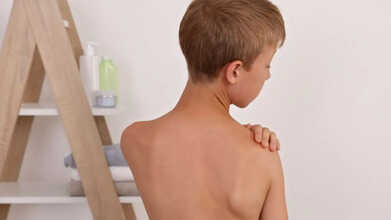
According to Dr Viswanathan, while a visible S-shaped or C-shaped curve is a well-known sign of scoliosis, one of the earliest indicators parents can look for at home is uneven shoulder height. If one shoulder consistently appears lower than the other, it may suggest an underlying spinal curve. Other signs to watch for include a noticeable hump on the back, uneven rib or chest appearance, or hips that look tilted or asymmetrical when the child is standing straight.
If you notice any of these changes, there is no need to panic, but it is important to take action. One simple screening method is Adam’s Forward Bend Test. Ask your child to bend forward at the waist and look for any unevenness in the shoulders or a raised area on one side of the back. Early screening and timely care can make a significant difference in managing spinal health and preventing the condition from worsening. Scheduling a visit with a pediatrician or orthopaedic specialist for proper physical and clinical evaluation can help rule out structural issues and ensure your child gets the right support as they grow into adulthood.
- Follow Us :


© 2024 Bennett, Coleman & Company Limited