
- Health Conditions A-Z
- Health & Wellness
- Nutrition
- Fitness
- Health News
- Ayurveda
- Videos
- Medicine A-Z
- Parenting
Cigarettes And The Female Body: The Hormonal Toll We Don’t Talk About

Credit: Canva/iStock
“Smoking is injurious to health.” We see this warning in theatres and on billboards, but for many, it’s become background noise. We tend to think of smoking as a “future threat”, a cough, some breathlessness, or perhaps a scary diagnosis years down the line.
But did you know that the cigarette in your hand is also quietly sabotaging something far more immediate: your hormonal health.
The Gender Gap In The Smoke
While smoking is often viewed through a male lens, the reality is shifting. In fact, approximately, women comprise about 20% of the more than 1 billion smokers globally, and the biological toll they pay is unique.
Usually the impact of smoking is focused more on the lungs and the heart. But one of the most overlooked victims of tobacco is the endocrine system, especially in women.
A Direct Hit To Your Menstrual Cycle
Cigarette smoke is a cocktail of thousands of toxic chemicals, including tar, nicotine, carbon monoxide, and poisonous metals. These don't just stay in the lungs; they hijack the hypothalamic–pituitary–ovarian (HPO) axis, which is the delicate "command center" that regulates your period.
Nicotine triggers a surge in stress hormones like cortisol and catecholamines. When these are chronically elevated, they disrupt the steady, rhythmic release of hormones that tell your body when to ovulate. The result?
- Irregular or Shorter Cycles: Your body’s natural rhythm is thrown off-beat.
- Painful Periods (Dysmenorrhea): Nicotine narrows your blood vessels (vasoconstriction), reducing blood flow to the uterus and making cramps significantly more intense.
The Effect of Smoking On Estrogen
Estrogen is the powerhouse hormone responsible for regulating the menstrual cycle, maintaining bone density, protecting heart health, and much more.
Smoking acts as an "anti-estrogen." By draining your estrogen, smoking can trigger early menopause, often by one to two years, and increase your long-term risk of osteoporosis.
For those trying to conceive, the toxins reduce your "ovarian reserve" by 20% (your egg count), making the journey to motherhood much harder.
The Road To Recovery: Recalibrating Your System
But the good news? Our bodies are remarkably resilient. Within weeks of quitting, your circulation improves, stress hormones stabilize, and your endocrine system begins to regain its equilibrium.
Many patients report more predictable cycles and less painful periods after quitting smoking.
Don't Rely On Willpower Alone
Quitting is a medical challenge, not just a test of character. If you’re overwhelmed, connect with your doctor on using the many tools available that can help you in quitting, such as:
- Nicotine Replacement Therapy (NRT): Gums, patches, and lozenges provide controlled nicotine without the toxic smoke. Unlike smoking, which delivers nicotine in rapid spikes along with thousands of harmful substances, NRT helps reduce cravings and supports quitting with far less harm.
- Prescription Support: Medications reduce the "reward" your brain gets from nicotine.
- Behavioral Support: Counselling significantly increases your chances of staying smoke-free for good.
Your hormones work tirelessly every single month to keep your body in harmony. Every cigarette disrupts that dance; every "no" helps restore it.
Your body’s natural rhythm is worth protecting. Perhaps today is the day you finally return the favor.
HIV No Longer Barrier To Organ Transplants, Say Delhi Doctors After Successful Kidney Surgery

Credit: Canva
While a weakened immune system and fear of complications once denied people with HIV access to organ transplants, doctors at a Delhi hospital have now challenged the idea with a successful kidney transplant surgery on a 43-year-old HIV-positive patient from Ethiopia.
According to the team of doctors from the Max Super Speciality Hospital, Patparganj, who successfully performed the complex living donor kidney transplant, advancements in antiretroviral therapy and transplant protocols have made such procedures increasingly safe in carefully selected cases.
“HIV is no longer a barrier to organ transplantation when managed appropriately,” said Dr. Ravi Kumar Singh, Senior Consultant, Nephrology and Transplant Physician at Max Hospital, Patparganj.
“With strict selection criteria and coordinated multidisciplinary care, patients with well-controlled HIV can achieve outcomes comparable to the general transplant population.”
Also read: India Identifies 219 Districts As Priority For Intensified HIV/AIDS Interventions
Kidney Transplant In HIV Positive Patient
The patient, who had been living with HIV for 10 years, developed end-stage renal disease 3 years ago and has been dependent on regular dialysis since then.
Before the surgery, the patient underwent extensive evaluation to ensure optimal control of HIV, including a stable immune profile and undetectable viral load.
The patient’s 33-year-old wife donated one of her kidneys. Compatibility testing confirmed matching blood groups and a negative cross-match, enabling the team to proceed with the transplant.
“Kidney transplantation in patients with HIV requires a highly meticulous and coordinated approach, given the complexities of balancing immunosuppression with ongoing antiretroviral therapy,” said Dr. Paresh Jain, Senior Director, Urology, Robotic Surgery & Renal Transplant.
“In this case, careful pre-transplant evaluation, precise surgical execution, and close post-operative monitoring were critical to ensuring a successful outcome. This procedure reflects how advances in transplant science and surgical expertise are enabling us to safely expand access to life-saving transplants for patients who were once considered high-risk,” he added.
Following the transplant, the patient has shown encouraging recovery, has been taken off dialysis, and is gradually returning to normal daily activities, the doctors said. The patient also continues on a carefully monitored regimen of immunosuppressive and antiretroviral therapy, they added.
Also read: India's Silent Crisis: Why We Must Embrace Deceased Donor Organ Transplantation
Can People With HIV Get A Transplant?
With advancements in antiretroviral therapy (ART), enabling people to live longer, HIV has now become a chronic, manageable condition. However, the HIV positive patients are now more likely to die from end-stage organ disease than from AIDS-related infections.
As per the US National Institutes of Health, people with HIV can successfully donate or receive transplanted organs with reasonable success rates.
However, health care providers must consider and monitor potential drug interactions, kidney and liver function, and HIV viral suppression in people with HIV receiving a transplant.
Further, the NIH advised HIV positive patients to continue taking all prescribed HIV medicines before and after transplant.
Dhurandhar 2 Actor Mustafa Ahmed Opens Up On Growing Up With Dyslexia

Credits: Instagram
Dhurandhar 2 actor Mustafa Ahmed, who played Rizwan in the film, opened up about growing up with dyslexia. He shared that he struggled with reading and writing, but sports and dancing came naturally to him.
"I was not a bright kid. I was dyslexic and came from an Afghan background. But I was always physical, I was good at sports, and I picked up dancing naturally. Anything that involved using my body, I was good at it,” said Mustafa, who trained has Hrithik Roshan, in the Alpha Coach podcast.
What Is Dyslexia?
Dyslexia is a learning difficulty that affects reading, writing, and spelling. However, it has nothing to do with intelligence.
Common signs of dyslexia include:
- Difficulty reading or recognizing words
- Trouble with spelling and writing
- Confusing similar-looking letters (like b/d or p/q)
- Slow reading speed and poor comprehension
- Difficulty following written instructions
This means that children with dyslexia are simply wired differently and may need to focus on other learning areas.
How Did Mustafa Overcome Dyslexia?
Mustafa did exactly that. He focused on training hard and eventually worked with big stars like Hrithik Roshan. That’s when he caught the attention of Aditya Dhar, the maker of Dhurandhar. Aditya saw potential in him and encouraged him to pursue acting, helping launch his journey in the industry.
Growing up, Mustafa, who revealed in an interview, faced challenges in school due to his learning difficulties. Tasks like reading scripts or memorizing lines may not have come easily at first. However, with determination, support, and self-belief, he was able to overcome these barriers.
However, today as a rising star, his story is a reminder that with the right support, early diagnosis, and self-belief, children with dyslexia can truly thrive.
Signs and symptoms of dyslexia
Doctors say signs of dyslexia can look different at each age. It happens because your brain grows and learns in new ways as you get older. You may notice your child has:
- Has difficulty learning or recognizing letters
- Has trouble rhyming words
- Mixes up words that sound similar
- Find it difficult to read simple words after learning letter sounds
- Have trouble remembering letters, even after lots of practice
- Avoiding tasks that have to do with reading
- Feeling sick or anxious before school or homework time
- Struggling in school
Can You Treat Dyslexia?
Doctors say even though dyslexia is a lifelong condition, it can be effectively managed with the help of interventions like:
- Phonics-based reading programs
- One-on-one tutoring
- Speech and language therapy
- Use of assistive technology like audiobooks and text-to-speech tools
With these strategies, individuals with dyslexia can improve their reading skills and excel in their chosen fields.
Mel Schilling Dies At 54, Her Colon Cancer Spread To Her Brain
Credits: Instagram
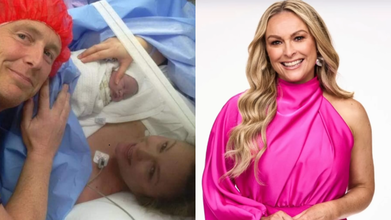
Mel Schilling, an Australian psychologist and a dating expert died at 54. Her husband Gareth Brisbane announced the death in a social media statement.
What Happened To Mel Schilling?
Schilling was diagnosed with colon cancer in December 2023. Just two weeks ago she said that the disease had spread to her brain. "I honestly don't know how long I have left," she wrote.
Read: What Is The Correct Age To Get A Colonoscopy?
According to her husband, she died "peacefully, surrounded by love". “This is a woman who, through two years of chemotherapy, when she could barely lift her head from the pillow, never complained and never stopped showing courage, grace, compassion and empathy, and never missed a day of filming,” Brisbane wrote.
She was also an expert on 'Married at First Sight Australia' for 12 years and because of her illness she stepped down as a dating expert.
How Does Cancer Spread To Other Parts Of The Body?
Schilling said that her cancer had spread to her brain. as per the Cancer Research UK, cancer cells can spread to other parts of the body through bloodstream or lymphatic system. They can then start to grow into new tumors. The National cancer Institute notes that cancer cells spread through the body in a series of steps, which include:
- growing into, or invading, nearby normal tissue
- moving through the walls of nearby lymph nodes or blood vessels
- traveling through the lymphatic system and bloodstream to other parts of the body
- stopping in small blood vessels at a distant location, invading the blood vessel walls, and moving into the surrounding tissue
- growing in this tissue until a tiny tumor forms
- causing new blood vessels to grow, which creates a blood supply that allows the metastatic tumor to continue growing
What Is Colon Cancer?
Colon (colorectal) cancer begins when small growths called polyps form on the inner lining of the colon or rectum. Over time, changes in the DNA of these cells can cause the polyps to become cancerous.
As abnormal cells multiply, they replace healthy cells and eventually form a mass known as a tumor. This process develops slowly, often taking up to ten years for a precancerous polyp to turn into cancer and begin showing symptoms.
Colon cancer poses serious health risks because cancerous cells can invade healthy tissues. Over time, they may break away and spread to other parts of the body, making detection more difficult since the symptoms can resemble other conditions.
How Can You Get Screened For Colon Cancer?
You can get examined by a colonoscopy. A colonoscopy is a 15 to 60 minute medical procedure that is used to examine the entire inner lining of the large intestine, which includes rectum and colon for abnormalities, such as polyps, inflammation, or cancer. A doctor uses a colonoscope, which is a thin, flexible tube with a camera to take images, remove polyps, or take issue samples.
Most health experts, including federal guidelines and the American Cancer Society, recommend that people at average risk for colorectal cancer start screening at age 45. This usually means getting a colonoscopy once every 10 years, or opting for stool-based tests every one to three years. These guidelines also play a role in whether insurance companies cover the tests.
- Follow Us :


© 2024 Bennett, Coleman & Company Limited