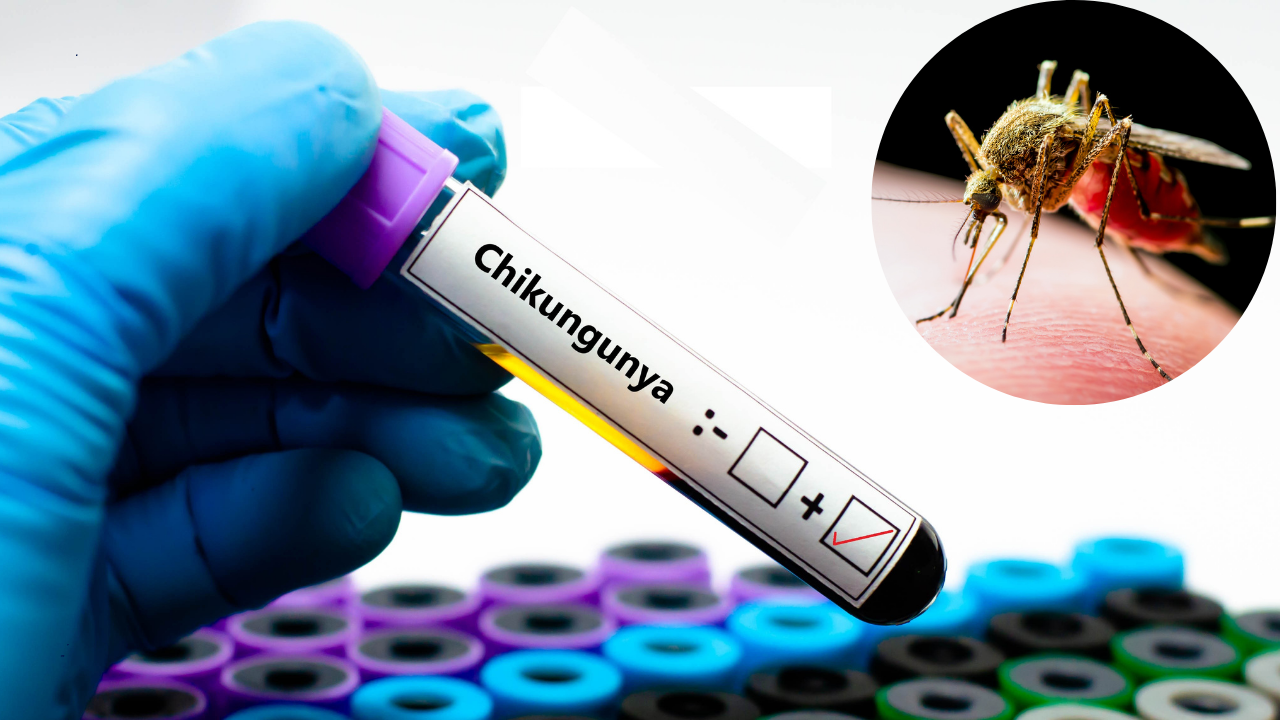
Even as climate change is driving mosquitoes north, a new study warned that Europe and North America can be new hotspots for the chikungunya virus. Alarmingly, the research indicated that 139 countries face risk, covering 21.26 per cent of global land area for chikungunya, a mosquito-borne viral disease. Further, the findings published in the journal Frontiers in Cellular and Infection Microbiology suggest that climate-driven vector expansion has significantly broadened the geographic scope of the CHIKV threat.“We show that under climate change models, the virus will further expand northward into temperate regions, especially northeastern North America, central Europe, and East Asia,” said Dr Ye Xu, from Zhejiang Chinese Medical University, China.Chikungunya is a viral illness transmitted to humans primarily through the bite of infected Aedes aegypti and Aedes albopictus mosquitoes. How Climate Is Linked To Mosquito Behavior?Also Read: Climate Change Fueled Rising Salmonella Drug Resistance Over Decades: The Lancet StudyAs the primary vectors of chikungunya, Aedes aegypti and Aedes albopictus are highly influenced by climate conditions. These mosquitoes thrive in warm and humid environments, with temperature playing a major role in their breeding, survival, and ability to spread the virus.The rising temperatures can accelerate larval development, increase mosquito reproduction, and shorten the virus’s incubation period inside the mosquito, making transmission more efficient.In the study, the researchers explained that stable temperature patterns and seasonal variations are especially important for Aedes aegypti. The species is highly sensitive to colder temperatures, with egg hatching rates dropping significantly at around 12°C. This limits how far the mosquito can spread into cooler regions.However, climate change and warming temperatures are making previously unsuitable regions in Europe and North America more favorable for these mosquito species, raising concerns about the growing risk of chikungunya outbreaks, the team said.“Because this mosquito can tolerate cooler conditions better than the yellow fever mosquito, warming may allow it to establish in places that used to be too cold,” said Dr Yang Wu, Guangzhou Customs Technology Center, China.“When suitable mosquitoes become established, the chance of local chikungunya transmission increases.”Global Chikungunya Cases Read More: 16 Million Indians Die Due To Hypertension Every Year: AIIMS DocIn 2025, there were 502,264 reported chikungunya cases globally, accounting for 186 deaths across 41 countries and territories, according to the Pan American Health Organization.This disease burden is projected to escalate under climate change, which is profoundly altering the distribution patterns of infectious diseases, the researchers noted.“The public does not need to panic, but health systems should prepare early,” warned Dr Xu.The researchers recommended that these regions implement proactive entomological surveillance and adaptive public health infrastructure by 2040 to mitigate the threat of emerging arboviral epidemics.Among the proposed measures, researchers include tracking mosquitoes, training healthcare workers to quickly recognise the virus, strengthening mosquito control, setting up rapid-response plans before outbreaks occur.Chikungunya Symptoms You Should KnowChikungunya is a mosquito-borne viral disease that causes fever and severe joint pain. Symptoms of chikungunya appear between 4 and 8 days (range 2–12 days) after the patient has been bitten by the infected mosquito. Most symptoms are generally self-limiting and last for 2–3 days. The disease is characterized by an abrupt onset of fever, joint painmuscle pain, headache, nausea, fatigue rash. The joint pain is often debilitating and usually lasts for a few days but may be prolonged, lasting for weeks, months, or even years.