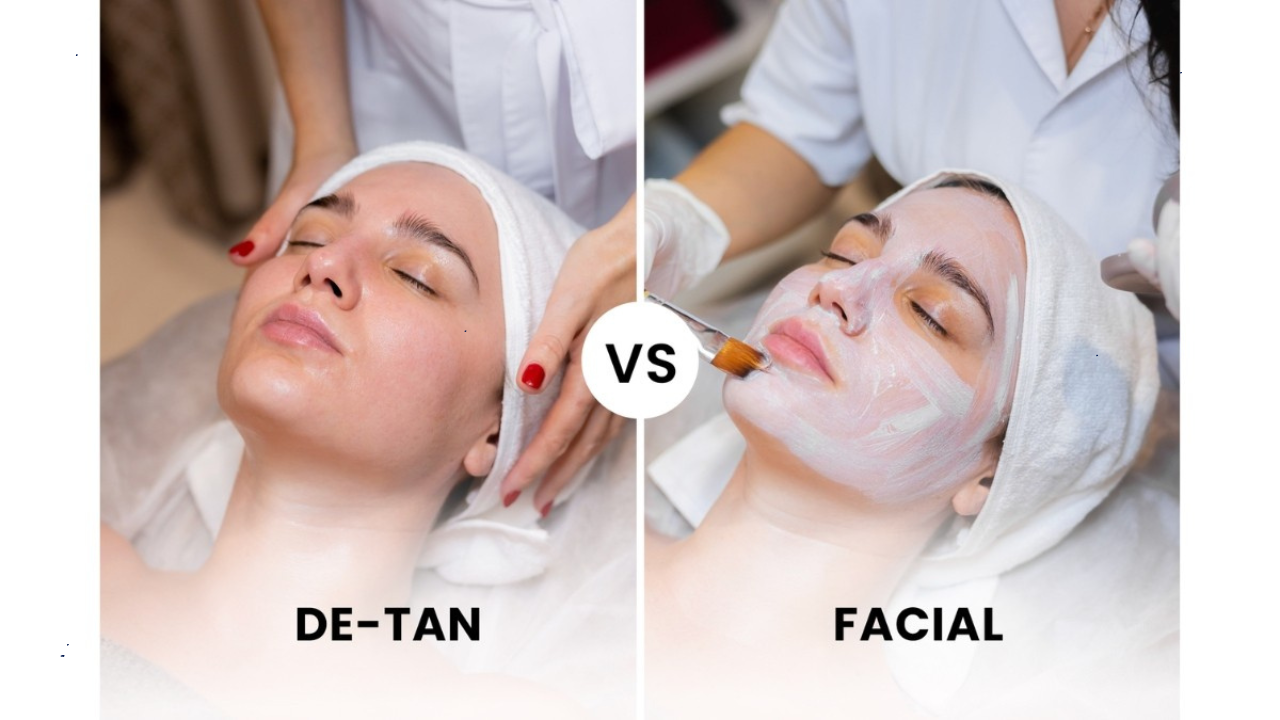
-Walk into any salon, and you'll be offered a facial for almost every skin concern under the sun. But somewhere along the way, targeted treatments like de-tanning started giving traditional facials a real run for their money. If your main concern is sun damage, uneven tone, or that stubborn dullness that builds up over weeks of stepping out, the de tan vs facial debate is worth having properly. The perfect de-tan face mask used consistently at home can deliver results that genuinely rival a salon treatment. It helps you in targeting pigmentation and sun damage right at the source without the appointment, the wait, or the cost. What keeps those results going between sessions is just as important. A daily de-tan face wash helps prevent surface tan from quietly rebuilding.So eventually your skin holds onto its progress rather than starting from scratch every week. Here's a proper breakdown of the difference between de-tan and facial so you can make the right call for your skin.De Tan Vs Facial for Oily SkinThe core difference comes down to what each treatment is actually designed to do.De Tan is a targeted treatment built around one primary goal. It aims to dissolve surface-level pigmentation and sun damage. It is made up of chemical exfoliants like AHAs, brightening ingredients like vitamin C or kojic acid, and clay formulas that peel away tanned, dead skin cells to expose younger skin underneath.A facial is a multi-step ritual that addresses overall skin health, not just one specific condition. It usually comprises cleansing, exfoliating, steaming, extraction, massage, and masks. Each phase has a particular objective. A facial is a great way to boost circulation, tackle a range of skin issues all at once, and give your skin a really good refresh.Maintaining De-Tan Results at Home: A Wiser ApproachIncluding a targeted de-tan mask in the weekly regimen can help those who want to keep their skin more even-toned and brighter in between salon visits. Exfoliating acids, oil-balancing clays, and barrier-supporting elements fuel a product that targets dullness, uneven texture, and stubborn tan without stripping the skin.Products like the Foxtale Skin Radiance De-Tan Mask are particularly helpful for oily, mixed, and sun-exposed skin types since they combine light exfoliation with skin-brightening treatment. Over time, a de-tan treatment at home may make skin seem brighter, fresher, and more radiant when used regularly in conjunction with daily sunscreen.Which One Suits Your Skin Type?Oily & Acne-Prone SkinFor oily and acne-prone skin, a targeted de-tan treatment is almost always the safer choice over a traditional facial. Most salon facials designed for brightening use heavy cream-based products, facial massages with oils, and steam, all of which can aggravate acne, clog pores, and trigger fresh breakouts on skin that's already overproducing sebum.When you use a detan mask with Kaolin Clay and AHAs, it controls excess oil and pigmentation. It does all this without introducing anything that worsens breakouts for you. If you have oily skin, at-home detan treatments done consistently outperform most salon facials in both safety and visible results.Dry & Dehydrated SkinA traditional facial that includes a hydrating massage and a nourishing mask can work well here because it addresses moisture levels alongside surface concerns.That said, a detan treatment isn't off the table for dry skin. The key is picking the right formula, one that uses gentler AHAs like Lactic Acid rather than stronger Glycolic Acid, and that includes hydrating ingredients like Ceramides or Hyaluronic Acid to counterbalance the exfoliation.Dull & Sun-Damaged SkinWhen the skin is suffering from a noticeable tan, uneven tone, and stubborn dullness from sun exposure, a detan treatment is the gold standard of 2026. A facial can provide a glow to your overall tone, but it doesn’t target the melanin deposit that produces your tan and pigmentation. A detan mask with Glycolic Acid, Niacinamide, and brightening clays works on the actual source of the problem, and with consistent use, the results compound over time in a way that a monthly salon facial simply can't replicate.Which Works Better for Pigmentation and Sun Damage?Here's a simple way in which you can decide:Choose a De-Tan when:Your main concern is tan, uneven skin tone, or post-sun pigmentationYou prefer to have targeted, efficient results at home without salon visitsYour skin is oily or acne-prone and reacts badly to heavy facial productsYou need something you can do consistently every week as part of your routineYou've just come back from a trip, a wedding season, or an extended time outdoors, and need to reset your skin quickly.Choose a Facial when:Your skin needs an overall reset, not just brightening, but deep cleansing, circulation boost, and hydration togetherYou're dealing with multiple concerns at once and want a professional to assess and treat your skinYour skin is dry or mature, and benefits from the massage and nourishment steps a facial includesYou want a one-time intensive treatment before a special occasion rather than an ongoing routine fix.For most people, the best approach isn't choosing one over the other permanently. In fact, you should understand when each serves your skin best and use them accordingly. A weekly de-tan treatment at home, with an occasional facial when your skin needs a deeper reset, covers most bases without overcomplicating your routine.Can You Use a De-Tan Mask Instead of a Facial?The facial vs de-tan debate doesn't have a single winner. It actually depends entirely on what your skin is dealing with and what goal you are trying to achieve. If you have issues with tan, pigmentation, and sun damage, a dedicated detan treatment is a better option for you. Overall skin health, hydration, and multi-concern maintenance are where a facial earns its place. Know what your skin needs, pick the right tool for the job, and stay consistent; that's where the real results come from.