
- Health Conditions A-Z
- Health & Wellness
- Nutrition
- Fitness
- Health News
- Ayurveda
- Videos
- Medicine A-Z
- Parenting
Depo-Provera: How Safe Is the Injectable Birth Control?

Credits: Canva
Depo Provera Brain Tumor: Medroxyprogesterone acetate, a contraceptive injection containing the hormone progestin, is widely known by its brand name, Depo-Provera. Administered every three months, it prevents pregnancy by stopping the ovaries from releasing an egg and thickening cervical mucus to block sperm.
Recently, the story of Robin Phillips, 45, has brought renewed attention to this birth control option. For years, Phillips experienced what she believed were migraines, only to discover she had an intracranial meningioma, a tumor that forms on the lining of the brain. She required emergency surgery. Phillips has been using Depo-Provera for nearly 30 years, pausing only during the pregnancies of her two children. She is now among over 1,000 women suing Pfizer, the manufacturer, claiming the company knew about the potential risks and failed to properly warn users.
This raises a key question: How safe is Depo-Provera, and what side effects should users be aware of?
What Is Depo-Provera?
Depo-Provera is an injectable contraceptive containing medroxyprogesterone acetate. Often called a birth control shot, it’s given every three months under the supervision of a healthcare professional. Its main function is to stop ovulation so no egg is released, while also thickening cervical mucus to prevent sperm from reaching the egg. Additionally, it thins the lining of the uterus.
A lower-dose version called Depo-SubQ Provera 104 works the same way but is injected just under the skin rather than into the muscle. Both versions carry similar risks and benefits.
Depo-Provera Shots: Side Effects
According to the NHS, side effects that affect more than 1 in 100 users include:
- Headaches and dizziness
- Nausea, bloating, or stomach pain
- Mood changes, including nervousness or depression
- Changes in periods
- Weight fluctuations
- Lower sex drive
- Breast tenderness and back pain
- Fatigue or feeling weak
- Skin issues like acne, itching, or hair loss
- Swollen ankles or fluid retention
- Changes in vaginal discharge
If side effects persist or interfere with daily life, the NHS recommends speaking with a doctor or pharmacist.
Deep Provera Brain Tumor: Is There A Connection?
The NHS notes that using Depo-Provera for three years or longer may slightly increase the risk of meningioma, a type of brain tumor. These tumors are generally rare, so the absolute risk remains low. However, with cases like Robin Phillips’ emerging, many women are questioning the long-term safety of the injection.
What Is Meningioma?
For those unversed, Meningioma is a brain tumor that forms in the meninges, which is a protective membrane surrounding the brain and spinal cord rather than the brain tissue itself.
Deep Provera Lawsuits
Thousands of women in the U.S. have filed lawsuits against Pfizer, claiming the company failed to adequately warn users and doctors about the potential link to brain tumors, particularly for long-term users. Pfizer has attempted to have these cases dismissed, citing FDA decisions that approved the existing labels.
What Studies Say
Research, including studies cited by the National Library of Medicine, suggests that prolonged use of Depo-Provera can increase the risk of developing slow-growing meningiomas. While these tumors remain uncommon, the connection highlights why long-term users should be aware of the potential risks and discuss contraceptive options with their healthcare providers.
Depo-Provera remains an effective and widely used contraceptive, but like all medications, it comes with risks. Women considering or currently using it should stay informed, monitor side effects, and consult a medical professional about long-term use.
COVID patients at higher risk of sleep apnea for over 4 years after infection

Credit: Canva
A new study has shown that people who survived COVID-19 infections are more likely to develop obstructive sleep apnea (OSA) for years after the infection with the SARS-CoV-2 virus.
OSA is a common and serious sleep disorder that causes the throat muscles to relax and block the airway, resulting in fragmented, nonrestorative sleep, low blood oxygen, and loud snoring.
The February 2026 study, published on the preprint server medRxiv, found that people with both severe and non-severe COVID infections are at higher risk of developing sleep apnea and other sleep issues for 4.5 years.
"SARS-CoV-2 infection is independently associated with increased risk of new-onset OSA. These findings support targeted screening in post-COVID populations,” said Sagar Changela, Department of Radiology, Albert Einstein College of Medicine, in the paper.
What The Study Found
Although an infection with the SARS-CoV-2 virus has been associated with long-term respiratory and neurological conditions, its role in new-onset OSA remains unclear.
The retrospective study, which has not been peer-reviewed, involved 910,393 patients. The results showed that patients hospitalized due to COVID were 41 percent at risk of new onset of OSA.
One-third of people with mild COVID infection, who weren't hospitalized, also suffered from sleep issues.
The researchers also linked OSA to cardiovascular, metabolic, and cognitive morbidity. The team found that OSA increased the risk of heart failure and pulmonary hypertension among hospitalized COVID patients, compared to those with mild infections.
On the other hand, the non-hospitalized COVID patients were significantly more likely than controls to develop obesity.
Further analyses showed that the risk of new-onset OSA was higher in hospitalized COVID patients with asthma and those who were younger than 60 years. Notably, women were also found at greater risk than men, while vaccination status did not vary by risk.
According to the team of researchers, the major factors for OSA among COVID patients are low-grade systemic inflammation after a SARS-CoV-2 infection that reduces upper-airway neuromuscular control.
In addition, the higher levels of inflammatory cytokines often seen in long-COVID patients can also affect respiratory drive and upper-airway stability -- key factors for OSA.
What Is Sleep Apnea?
Sleep apnea is a serious sleep disorder where a person's airway can collapse completely or partially. It causes breathing lapses during sleep, and the body stops breathing many times while an individual is asleep. It also weakens throat muscles, leading to airway collapse during sleep. The decrease in oxygen saturation can also lead to death.
While OSA is the most common type of the sleep disorder, other types include central sleep apnea and complex sleep apnea.
Obesity is the major cause of this disorder, and loud snoring is the most common symptom. The person suffering from the condition feels tired, even after getting adequate sleep.
Treating sleep apnea is key to preventing long-term health complications such as cardiovascular disease, hypertension, diabetes, stroke, and increased mortality.
CPAP machines, oral appliances, and lifestyle modifications are common and effective treatment measures.
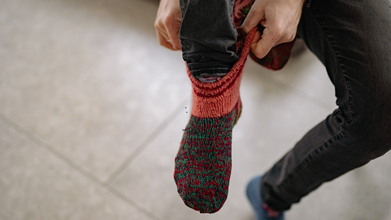
Do You Sit Down To Put Your Socks On? Study Says This Could Mean You Are Getting Old
Credits: Canva
Are you still sitting down to put your sock on? A new study says that it may be an indicator that you are getting old. A research commissioned by American Pistachio Growers, partnered with British actor and comedian John Thomson, teamed up with nutritionist Rob Hobson to embrace aging positively. The research looked at common day-to-day signs of aging and found that 39 per cent of those surveyed (out of total 5,000 people over 40s) wanted a quiet drink over a night and they cared less about fashion. The research revealed that this could be an indicator that "you are creeping into the old category".
What Did The Study Find?
About one in three respondents (33 per cent) said they first felt they were no longer young when they caught themselves groaning while bending down.
Other telltale signs included discussing aches and pains with friends (30 per cent), preferring a quiet pub over a noisy bar (27 per cent) and naturally waking up at 6 am (12 per cent).
The survey also found people typically start feeling “not young” around 50, although 38 per cent believe old age now begins in the 80s rather than the 50s or 60s.
At the same time, 36 per cent said they have adopted habits to stay youthful, such as taking vitamins or supplements, choosing healthier snacks (19 per cent) and increasing protein intake (17 per cent).
"Getting older is inevitable, but you can still live life to the full. It is about embracing experience, having a laugh about the realities of aging and making small changes that actually make a difference. You don't need to overhaul your life, just make some healthy tweaks to your daily routine," said John.
Do You Feel Old?
Interestingly, only 36 per cent of people in the survey actually said they feel old. In fact, 27 per cent reported feeling more comfortable in their own skin now than when they were younger, and 18 per cent of those over 30 said they are more satisfied with life than they were in their thirties.
Lifestyle choices also seem to shift with age. Around 39 per cent now prioritize comfort over fashion, 34 per cent enjoy going for walks and 19 per cent have taken up gardening or DIY projects. Healthy eating becomes more intentional too, with 60 per cent of men and 61 per cent of women saying they are more health conscious than before.
Their motivations are practical: avoiding illness (59 per cent), staying active (58 per cent) and maintaining independence as they age (47 per cent).
TV nutritionist Rob Hobson, who partnered with American Pistachio Growers to promote the nut as an easy addition to a healthy routine, said ageing is less about decline and more about awareness. “Getting older isn’t about slowing down, it’s about making smarter choices,” he said. “Simple habits like eating nutrient-rich snacks, staying active and prioritizing sleep can help you feel youthful for longer. Age is just a number, but how you fuel your body makes all the difference.”
Suzanne Devereaux-McKinstrie, spokesperson for the non-profit organization, echoed the sentiment, saying later years can be empowering. “Getting older isn’t just about limitations, it’s about opportunities. It’s the perfect time to explore new hobbies, prioritise wellbeing and celebrate the confidence that comes with experience,” she said, adding that diet plays a key role in staying strong and active.
Top 25 Signs That Reveals You Are Getting Older
| 1 | Talking about aches and pains with friends |
| 2 | Groaning when bending down |
| 3 | Preferring quiet venues to noisy ones |
| 4 | Preferring a quiet drink over a night out |
| 5 | Enjoying an early night |
| 6 | Not caring about the latest fashion trends |
| 7 | Thinking that new music isn’t as good as it used to be |
| 8 | A recurring ache that doesn’t disappear |
| 9 | Using phrases like ‘back in my day’ or ‘remember when….?’ |
| 10 | Sitting down to put socks on |
| 11 | Caring less about how you look |
| 12 | Taking shoes off as soon as you get inside – slippers have become a necessity! |
| 13 | Noticing something you wore in your youth is now back in fashion |
| 14 | Starting conversations with ‘Do you remember when…?’ |
| 15 | Reading menus at arm’s length |
| 16 | Talking to yourself |
| 17 | Moaning about politics |
| 18 | Feeling more confident/self-assured |
| 19 | Getting up at 6am naturally |
| 20 | First “Who?” when watching the Brit Awards |
| 21 | Looking forward to gardening |
| 22 | Feeling confounded by AI |
| 23 | Listening to the radio or podcasts instead of club music |
| 24 | Getting excited about new home appliances |
| 25 | Checking the weather forecast hourly |
Why Indians Face Higher Fatty Liver Risk Than Europeans, Expert Explains

Credit: Unsplash
While it’s no secret that alcohol takes a toll on the body, particularly the liver, long-term health issues can arise even for light drinkers. This begs the question: how do Europeans seem to handle their booze so much better? Dr Harsh Vyas, a radiologist from Gujarat, recently tackled this on Instagram.
He compared two 37-year-old patients: an Italian who drinks regularly and an Indian teetotaler. Surprisingly, the Italian’s liver was in better shape than the Indian man’s, who was struggling with fatty liver disease despite never touching a drop of alcohol.
Here are some reasons he claims are the reason behind the massive difference between both men:
Genetic Efficiency
According to Dr. Vyas, the primary reason Europeans often appear to have a higher tolerance for alcohol than Indians is how their bodies process toxins at a molecular level.
Your body uses two main enzymes to break down alcohol. Think of them like a two-step cleaning crew which include Alcohol dehydrogenase (ADH) which converts alcohol into acetaldehyde, a highly toxic substance and Aldehyde dehydrogenase (ALDH) that converts that toxin into harmless acetic acid (vinegar), which the body can easily flush out.
In European livers, both enzymes usually work at peak efficiency. The toxic intermediate (acetaldehyde) is neutralized almost as fast as it is created. But in Asian populations, the activity of these enzymes is often lower. This means the toxic metabolites don't just pass through; they linger in the bloodstream for a much longer duration.
Because these toxins stay in the system of an Indian person longer, they cause more oxidative stress and inflammation. This explains why even a "teetotaler" in India might develop fatty liver from other metabolic factors (like diet or sugar), while a moderate European drinker might show less immediate liver damage - their genetics act as a more efficient "waste management" system.
Diet
Talking about food habits, Dr Vyas highlights a significant contrast between the Mediterranean-style habits common in Europe and the typical nutritional patterns found in India. He explains that Europeans generally benefit from a diet rich in complex carbohydrates, high-quality proteins, and healthy fats derived from sources like seafood and olive oil.
These nutrients provide the liver with the essential building blocks it needs for repair and protection against inflammation. In contrast, many Indian diets rely heavily on refined carbohydrates and often lack sufficient protein and healthy essential oils.
This high intake of refined sugars and flours can lead to insulin resistance, causing the liver to store excess energy as fat. Consequently, even an Indian teetotaler may develop a fatty liver due to these metabolic stressors, whereas a European's liver might remain more resilient despite moderate alcohol consumption because it is better supported by their overall nutritional intake.
Exercise
Using his Italian patient as an example, the doctor noted a commitment to daily exercise lasting 30 to 40 minutes, supplemented by walking 5 to 6 kilometers every single day. This level of consistent movement is far less common among the Indian population, where regular workouts are often neglected.
Dr Vyas concluded that while even small amounts of alcohol remain toxic to the human body, the superior lifestyle of many Europeans, combined with genetic advantages, a nutrient-dense diet and high physical activity, creates a "buffer" that helps their systems compensate for the damage.
In contrast, the sedentary habits and nutritional gaps seen in many Indian lifestyles leave the liver far more vulnerable to disease, even in those who avoid alcohol entirely.
- Follow Us :


© 2024 Bennett, Coleman & Company Limited