
- Health Conditions A-Z
- Health & Wellness
- Nutrition
- Fitness
- Health News
- Ayurveda
- Videos
- Medicine A-Z
- Parenting
Double Covid Surging Across UK, Doctor Urges Immediate Vaccination

Credits: Canva
A GP has warned that people can catch Covid more than once in a short span, including while they are still unwell from a previous infection. In some cases, this may even involve picking up two strains of the virus at the same time, a situation doctors are calling “double Covid”.
Doctor Warns of ‘Double Covid’ as UK Cases Rise
New figures from the UK Health Security Agency show confirmed Covid cases have risen by 11 per cent. In the week leading up to January 9, 51 deaths were recorded and more than 500 people were in hospital with the virus.
Can You Catch Covid Twice at the Same Time?
Speaking to the BBC, GP Dr Nish Manek said it is possible to be infected again while still dealing with ongoing symptoms, including long Covid. She explained that having long Covid does not provide immunity against reinfection.
According to Dr Manek, protection from a previous infection or vaccination reduces over time. New variants are also better at evading the immune system, making repeat infections more likely.
Why Long Covid Does Not Protect You
Dr Manek said immunity can fade within months, leaving people vulnerable. New strains of the virus, including recent Omicron-related variants circulating in 2025, are able to bypass existing immune defences.As a result, someone managing long Covid symptoms may still catch Covid again. A fresh infection can trigger a relapse of symptoms or slow down recovery.
She added that a positive test may reflect either the same strain or a new variant. In both cases, it is still Covid and should be taken seriously.
Vaccines Still Reduce Severe Illness
Dr Manek stressed that vaccination remains important. While vaccines may not fully prevent infection, they significantly reduce the risk of severe illness and hospitalisation.
She said Covid continues to change and remains present in the community. Simple protective steps still matter, including testing when unwell, wearing masks in crowded indoor settings, and staying up to date with vaccinations.
Which Covid Variants Are Circulating Now
As of January 2026, Covid continues to evolve in the UK. One of the most common strains currently in circulation is NB.1.8.1, often referred to as the Nimbus variant.Latest Covid Symptoms to Watch For
Doctors say symptoms linked to current variants often affect the upper respiratory tract and can feel similar to a bad cold or flu.
Commonly reported symptoms include a very painful sore throat described as feeling like razor blades, a hoarse voice with swollen glands, blocked or runny nose, sneezing, and extreme tiredness. Fever, a persistent cough, and body aches are still widely seen.
Loss of taste or smell is now reported far less often than during the early stages of the pandemic.
Who Is Eligible for a Covid Vaccine in the UK
The UK has moved to a targeted vaccination approach, focusing on those most at risk of serious illness.
The current winter vaccination programme is coming to an end. The final date to receive this dose is January 31, 2026. You are eligible if you are aged 75 or over, live in a care home for older adults, or are aged six months or older and immunosuppressed due to medical treatment or long-term conditions.
A spring booster programme has been confirmed for 2026. Appointments are expected to open in late March, with vaccinations starting from April 13. Eligibility criteria remain the same as the winter programme.
How To Book Your Covid Vaccine?
Eligible individuals do not need to wait for an invitation. Vaccinations can be booked online through the NHS website, via the NHS App, by calling 119 for free, or by visiting a walk-in pharmacy or clinic.Doctors continue to urge those eligible to get vaccinated while doses are still available.
Changing Color Of Light Could Help Treat Mental Illness

Credits: Trondheim Sleep Group/St Olav's hospital
Lights will guide you home, but will it treat your mental illness? It could. According to new findings, changing the color of light could help treat mental illness. A psychiatric unit in Trondheim, Norway is testing how light could be used as a potential treatment for mental health conditions like psychosis and depression. The approach is simple, yet innovative that aims on changing the ward's design to help patients in their recovery. As night falls, filters are lowered over windows and lights are changed. This creates a soothing ambiance and eliminates the blue wavelengths that could disrupt body's internal clock.
The findings have been published in PLOS Medicine, that looked on the patients who were treated in the circadian-adapted ward. The study showed that these patients showed greater clinical improvement and less aggressive behavior. "Just by changing the light spectrum, we can improve the quality of treatment," said Havard Kallestad, a researcher at St Olavs hospital who led the study.
Has This Approach Been Used In Other Areas Of Healthcare?
Researchers are now looking at its use for other healthcare areas, which means beyond the psychiatric wards. The UK's National Institute of Health and Care Research (NIHR) has also called for trials to see if this could "reset" the internal clocks of people who are living in care homes to reduce their behavioral disturbances, especially in dementia patients.
Professor Anthony Gordon of the NIHR said that it was about determining if light therapy could be used to reduce anxiety and improve sleep.
Read: Doctor Explains How Sleep Debt Is Becoming A Crisis In Urban Professionals
How Was The Study Conducted?
The psychiatric unit was divided in two identical halves with the same layout, staffing, and facilities. The key difference between the two was the evening light environment. One of the wards used blue-depleted lighting from 6pm onwards, where blinds and filters blocked similar light from windows and screens.
Whereas the other ward used standard hospital lighting and the unique design allowed researchers to study the impact of different lighting on patient recovery.
What Is Circadian Rhythm And How It Impacts Health?
Circadian rhythm is the body's internal 24-hour clock that regulated the sleep-wake cycle, hormones, digestion, and temperature, which aligns them with day and light. It is primarily controlled by light-sensitive brain cells, or what people commonly call the 'body clock'.
Disruption in the cycle could link to various health issues, which includes mental health problems like depression and cardiovascular diseases. This is why the test in Trondheim could prove beneficial in treating patients across the spectrum of illness.
Fish Oil Supplements Cut Heart Attacks And Strokes Risk In Dialysis Patients

Credit: Canva
Dialysis patients who took daily fish oil supplements had a 43 percent lower risk of major cardiovascular events, according to a large international clinical trial jointly led in Australia by Monash Health and the School of Clinical Sciences at Monash University.
Published in The New England Journal of Medicine, the study found that participants who took four grams of fish oil each day experienced significantly fewer major cardiovascular events, including heart attack, stroke, cardiac death and vascular-related amputations than those who received a placebo.
The supplement contained the omega-3 fatty acids EPA and DHA, which are naturally found in fish oil.
Adjunct Professor Kevan Polkinghorne, a nephrologist at Monash Health and adjunct in the School of Clinical Sciences, led the Australian portion of the trial said: "Patients on dialysis have extremely high cardiovascular risk, and very few therapies have been shown to reduce that risk," Professor Polkinghorne said. "In a field where many trials have been negative, this is a significant finding.
"Dialysis patients typically have much lower levels of EPA and DHA than the general population. This may help explain the magnitude of benefit observed in this group."
He also noted that results applied specifically to people undergoing haemodialysis for kidney failure and the findings should not be generalized to healthy individuals or to other groups of patients.
What Are Fish Oil Omega-3s?
Omega-3 fatty acids are polyunsaturated fats known for their crucial role in brain function and overall mental health. Fish oil is particularly rich in EPA and DHA, which are vital components of cell membranes and have strong anti-inflammatory effects in the body.
These omega-3s play a critical role in human development, and they are primarily found in fatty fish and fish oil. Since many people do not consume enough fish, supplementation is often recommended to ensure adequate intake of these essential fatty acids.
Although the body can convert another type of omega-3, alpha-linolenic acid (ALA), into EPA and DHA, this process is not highly efficient. As a result, fish oil supplements may provide a convenient way to ensure optimal levels of omega-3s.
Some popular sources of Omega-3 include:
- Salmon
- Cod Liver Oil
- Algae Oil
- Oysters
- Nuts and seeds, such as flaxseeds, chia seeds, and walnuts
- Plant oils, such as flaxseed oil, soybean oil, and canola oil
- Fortified foods, such as eggs, yogurt, juices, milk, etc.
Budget 2026: Cheaper Fish In India
Earlier this month, Finance Minister Nirmala Sitharaman announced a surprising tax reduction for India's fishers and marine industry, and experts say it is good news for you too.
Until now, fish caught by Indian vessels beyond territorial waters and brought back to the country for mass consumption has been treated as import, attracting customs duties and integrated goods and services tax (GST).
The combined tax burden raises costs and compliance issues, which discouraged people from deep-sea and exclusive economic zone (EEZ) fishing as well as
However, during her Union Budget 2026 presentation, Sitharaman proposed that fish caught in the EEZ and high seas by Indian fishing vessels are treated as duty-free when brought into Indian ports and treated as exports when landed at foreign ports.
This means that the market availability for Omega-3 packed fishes including salmon, mackerel, tuna, herring and sardines will significantly increase as their existing steep prices see a tremendous fall.
This Key Protein Could Revolutionize Malaria Vaccines, Scientists Say
Credit: Canva
Malaria infected an estimated 282 million people and caused about 6,10,000 deaths worldwide in 2024, according to the World Health Organization’s (WHO) latest World Malaria Report. The report placed strong emphasis on drug resistance, warning that it remains one of the biggest threats to global elimination goals.
WHO-recommended vaccines helped prevent roughly 170 million cases and one million deaths last year, which is about nine million more than the year before. Around 95 per cent of malaria deaths occurred in the African Region, with children under five forming the largest share.
Within the WHO South-East Asia Region, India represented 73.3 per cent of all malaria cases and 88.7 per cent of all malaria-related deaths. The report also underscored that the world is nowhere close to meeting the targets set under the Global Technical Strategy for malaria 2016–2030.
However, a group of University of Nottingham researchers have now found a key protein that is an enticing target for new antimalarial interventions. The study looked at a protein called Aurora-related kinase 1 (ARK1), which plays an important role in the parasite’s unusual cell division.
ARK1 helps control the parasite’s mitosis (cell division) and organizes a structure called the spindle, which separates genetic material so new parasites can form.
Scientists turned off the ARK1 gene using genetic engineering techniques to see what would happen. Without ARK1, the parasites could not form proper spindles and failed to reproduce, suggesting the protein could be a weak spot that future malaria treatment.
"What makes this discovery so exciting is that the malaria parasite's 'Aurora' complex is very different from the version found in human cells," senior author Rita Tewari said.
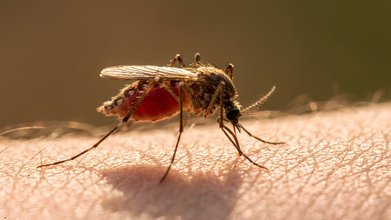
What Are Anopheles Stephensi Mosquitoes?
Anopheles stephensi is a malaria-transmitting mosquito originally found in South Asia. Unlike many other malaria vectors, it thrives in cities and breeds in man-made water sources such as storage tanks, containers, and discarded tyres. It can carry both Plasmodium falciparum and P. vivax parasites.
In recent years, this mosquito has spread into several African countries, where it adapts easily and shows resistance to multiple insecticides. This expansion has increased the threat of urban malaria outbreaks, as highlighted by the World Health Organization.
At present, Anopheles stephensi has been detected in nine African countries and is proving difficult to control due to widespread insecticide resistance.
Malaria Vaccines
The report noted that WHO approved the world’s first malaria vaccines in 2021, and 24 countries have now added them to their regular immunisation schedules. Dr Tedros Adhanom Ghebreyesus, WHO Director-General, said that new preventive tools provide reason for optimism, but many obstacles remain.
He pointed out the rise in cases and deaths, the pressure from drug resistance, and the impact of reduced funding. These factors could undermine the progress achieved over the last twenty years.
- Follow Us :


© 2024 Bennett, Coleman & Company Limited