
- Health Conditions A-Z
- Health & Wellness
- Nutrition
- Fitness
- Health News
- Ayurveda
- Videos
- Medicine A-Z
- Parenting
Dry Lips Aren’t Just About Cold: What They Could Be Signaling About Your Health

Credits: iStock
What seems like a seasonal problem may be saying more. As the cold wave swept across Delhi NCR, dry and cracked lips became an almost universal complaint. Most people brushed it off as a routine winter issue. But this year, doctors began noticing something different. To understand this, we spoke to Dr P Venkata Krishnan, Senior Consultant and Director, Internal Medicine at Narayana Hospital in Gurugram. Persistently dry lips were often appearing alongside subtle signs of dehydration and internal stress, even when temperatures were low and sweating was minimal.
“People assume dehydration happens only in summer. That is not true,” says Dr. Krishnan. “During winter, the body still loses water, but the warning signs are much quieter.”
Low humidity, biting winds and long hours in heated indoor spaces were steadily pulling moisture out of the body. Lips, which lack oil glands, were often the first place where this loss became visible, sometimes before people realized anything was wrong.
Why Winter Can Quietly Dehydrate the Body
Cold weather naturally reduces thirst. Since people sweat less, many unknowingly cut back on water intake. At the same time, the body continues to lose fluids through breathing, especially because cold air tends to be dry.
“Heated indoor environments dry out the skin and mucous membranes even further,” Dr. Krishnan explains. “Lips are especially vulnerable, which is why they show dehydration early.”
This kind of silent dehydration does not just affect the skin. It has been linked to fatigue, headaches, dizziness and sudden drops in blood pressure. In more severe cases, it can lead to electrolyte imbalance and kidney stress.
When Dry Lips Become a Medical Red Flag
Mild chapping is common. But doctors are urging people not to ignore lips that are severely cracked, bleeding or remain dry despite regular use of lip balms.
“When dry lips are accompanied by dark urine, reduced urination, confusion or muscle cramps, it is no longer a cosmetic issue,” says Dr. Krishnan. “It becomes a medical concern.”
Among older adults and people with chronic conditions, dehydration has been found to increase the risk of hospitalization. In emergency settings, it has even triggered cardiac stress and kidney-related complications.
Children and the Elderly Are at Higher Risk
Young children and elderly individuals are especially vulnerable during cold waves. Children often do not express thirst clearly, while ageing reduces the body’s natural thirst response.
“For someone living alone or indoors most of the day, dehydration can go unnoticed until symptoms worsen,” Dr. Krishnan notes. “Dry lips in these groups should be treated as an early warning.”
Caregivers are advised to watch for changes in lip texture, skin elasticity, alertness and energy levels.
Pollution Makes Things Worse
Winter pollution in Delhi NCR adds another layer of risk. Particulate matter irritates the skin barrier, making lips more prone to cracking and inflammation. Frequent lip licking, a common reaction to dryness, worsens moisture loss.
Outdoor workers and daily commuters face a double impact from cold air and pollution.
Small Habits That Can Prevent Bigger Problems
Most cases of winter dehydration are preventable. Doctors recommend maintaining regular water intake even without thirst. Warm fluids such as soups and herbal teas can help.
“Hydration doesn’t always have to mean cold water,” says Dr. Krishnan. “Consistency matters more.”
Using protective lip balms, indoor humidifiers, and limiting alcohol and excessive caffeine can also reduce fluid loss.
A Subtle Sign That Deserves Attention
This winter, dry lips are no longer being seen as a harmless nuisance. They are emerging as one of the earliest visible signs of dehydration and internal imbalance. Paying attention to such small signals could help prevent avoidable health emergencies during the cold season.
Study shows nanoparticles may shorten kidney stone laser surgeries, reduce recurrence
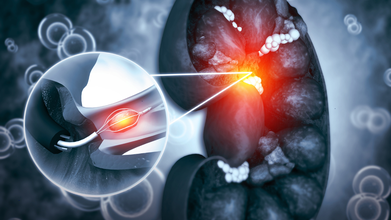
Credit: iStock
A team of researchers in the US has developed a nanoparticle-based technique that could make laser surgeries for kidney stones faster, safer, and potentially reduce the chances of recurrence.
Engineers from the University of Chicago and doctors from Duke University added dark nanoparticles to a common saline solution used in kidney stone laser surgeries. Their method also promised less recurrence of disease.
The research focused on laser lithotripsy, a widely used surgical method in which lasers are used to break kidney or urinary tract stones into tiny fragments that can then be removed by suctioning or pass naturally.
How Nanofluid Boosts Lasery Surgery
Traditionally, surgeons use a small video-guided laser to fragment the stones. However, achieving effective fragmentation often requires higher laser power, which generates additional heat and causes damage to the surrounding tissues.
Thus the new method “is a way to better utilize the laser energy that is already being employed,” said Po-Chun Hsu, assistant professor at the University of Chicago Pritzker School of Molecular Engineering (UChicago PME).
Hsu noted that their nanoparticle-based “nanofluid” also has the potential to enhance the performance of lasers without increasing power levels. This will effectively fragment the stones and remove the dust particles.
The study, published in the journal Advanced Science, describes an innovative saline solution that enhances the performance of existing laser systems without requiring modifications to the equipment.
By adding dark nanoparticles that absorb laser wavelengths, the solution ensures that more of the laser energy is directed at the kidney stone rather than being reflected or dispersed.
“This improves the amount of laser energy that is transmitted to and absorbed by the stones,” said corresponding author Pei Zhong, a professor of engineering at Duke University.
“Nanofluid introduces a new dimension that can influence this complex physical process, independent of the stone composition or the laser being used,” Zhong said.
Kidney Stone Laser Surgery In 10 Minutes
Laboratory tests using artificial kidney stones showed that the nanofluid increased stone ablation efficiency by between 38 and 727 percent in spot treatments and by 26 to 75 percent in scanning treatments.
The researchers also tested the nanoparticle solution on living cells for up to 24 hours and found it to be non-toxic and safe.
In clinical settings, however, exposure would be much shorter. Laser lithotripsy is typically an outpatient procedure lasting about 30 minutes. The researchers believe that improved laser absorption could reduce the procedure time to around 10 minutes.
“If surgeries take too long, waste heat from the laser can accumulate and cause more harm than the stone removal itself,” Hsu said.
Kidney Stones: Symptoms And Prevention
Kidney stones are hard mineral or acid salt deposits formed in the kidneys. It occurs due to concentrated urine, and causes intense, radiating back/side pain, nausea, and blood in urine.
Common causes include
- dehydration,
- diet,
- obesity,
- family history
- metabolic issues
- staying well-hydrated
- reducing sodium levels
- eating fewer oxalate-rich foods
- consuming sufficient calcium-rich foods
- increasing citrus intake.
Amy Carr, Former England Youth Player Dies At 35

Credits: Instagram
Former youth player of England, Amy Carr dies at the age of 35. England women's football team too paid tribute on her death. Carr was a former goalkeeper who played for England Under-17s and Under-19s. She was diagnosed with a brain tumor for a second time.
She was diagnosed in 2015 and raised more than £2,000 for charity by running the Dublin Marathon in 2024.
"We are heartbroken to hear that former England youth player Amy Carr has passed away aged 35," read a statement on the Lionesses' X account. "Amy, who was diagnosed with a second brain tumour in 2024, devoted her time to raising money for vital brain tumour research that could help others. She remains an inspiration to all."
Carr also played for Arsenal, Chelsea and Reading before she gained a football scholarship in the USA. Chelsea added on X: "We are saddened to learn of the passing of former Chelsea goalkeeper, Amy Carr. Our condolences are with Amy's friends and family at this time."
What Is Brain Tumor?
Before diving into the concept of a brain tumor, it is important to first understand what a tumor is. A tumor refers to an abnormal lump or mass that forms due to the uncontrolled growth of cells in the body.
tumors are broadly classified into two main categories:
- Benign
- Malignant
A benign tumor consists of normal cells that have grown excessively to form a lump. This overgrowth may result from something going wrong in the body, but the cells themselves are not cancerous. On the other hand, a malignant tumor is made up of abnormal cells that grow uncontrollably. These are cancerous cells, and their aggressive nature can lead to serious health issues.
A brain tumor is a condition in which abnormal cells develop within any part of the brain. Similar to tumors elsewhere in the body, brain tumors can also be benign (non-cancerous) or malignant (cancerous). The presence of a tumor in the brain can interfere with normal brain function, depending on its size, type, and location.
Our bodies possess a natural healing mechanism that is crucial for survival. This repair system is activated whenever there is damage from injury, radiation from the sun, or harmful chemicals in the environment. However, this process can occasionally go wrong. When it does, small clusters of cancerous cells may begin to form. In most cases, the immune system successfully detects and destroys these abnormal cells before they grow. But in rare instances, these cancerous cells evade immune detection and continue to grow, leading to the formation of tumors or cancers.
Such abnormal growths can occur anywhere in the body. When these growths are located in the brain or spinal cord, they are referred to as Central Nervous System (CNS) tumors.
India Is Home To 25% of the World’s Cervical Cancer Victim

Credits: Canva
India is home to 25 per cent of the world's annual count of cervical cancer fatalities. According to the World Health Organization GLOBOCAN report of 2022, India reports over 120,000 new cases with nearly 80,000 fatalities. This is the highest death-toll worldwide from cervical cancer each year.
In India, a new case is diagnosed every four minutes, and another woman dies approximately every seven minutes. Persistent infection with high-risk HPV strains, especially types 16 and 18, is the leading cause of cervical cancer. Meanwhile, studies show that even a single dose of the HPV vaccine can provide long-lasting, potentially lifelong protection.
To combat this, India launched a nationwide campaign to vaccinate young girl against the human papillomavirus (HPV). This is also the second most common cancer among women in the country. India kicked off the nationwide campaign on 28 February. Prime Minister Narendra Modi at Ajmer city in the western state of Rajasthan inaugurated this campaign. Vaccines were made available free-of-cost at government facilities to approximately 11.5 million girls aged 14 years across the country.
Currently, approximately one in every 50 girls born in India is expected to develop cervical cancer during her lifetime, and widespread vaccination is likely to reduce this risk significantly," said Partha Basu, Head, Early Detection, Prevention & Infections Branch at the International Agency for Research on Cancer.
What Is Cervical Cancer?
Cervical cancer develops in a women's cervix (uterus opening) due to abnormal cell growth, primarily caused by persistent HPV infection, a common infection that's passed through sexual contact.
When exposed to HPV, the body's immune system typically prevents the virus from causing damage however, in a small percentage of people, the virus can survive for years and pave the way for some cervical cells to become cancerous.
Treatment involves surgery, radiation, and chemotherapy, with early detection significantly improving outcomes, though it remains a major cancer in low-income countries Cervical cancer can also be prevented through vaccination and regular screening (Pap/HPV tests).
Symptoms Of Cervical Cancer
Cervical cancer has no symptoms in the early days and therefore, is hard to detect until it has spread. However, the early-stage symptoms include:
- Vaginal bleeding after sex
- Vaginal bleeding post-menopause
- Vaginal bleeding between periods or unusually heavy/long periods
- Watery vaginal discharge with a strong odor or containing blood
- Pelvic pain or pain during intercourse
- Advanced Cervical Cancer Symptoms (when cancer has spread beyond the cervix)
- Painful or difficult bowel movements or rectal bleeding
- Painful or difficult urination or blood in the urine
- Persistent dull backache
- Swelling of the legs
- Pain in the pelvis or lower abdomen
- Follow Us :


© 2024 Bennett, Coleman & Company Limited