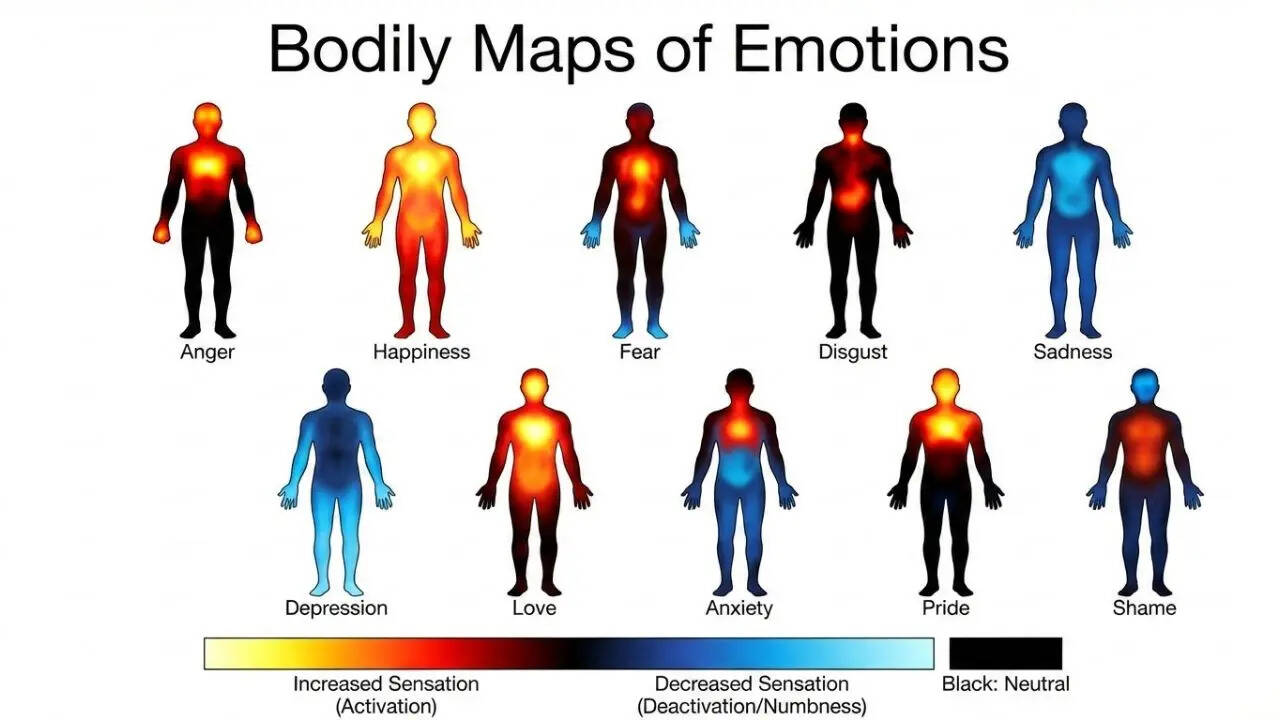
Have you ever described feeling “cold feet,” “a gut instinct,” or “a shiver down your spine”? These common expressions might seem trivial, but they reflect something real. Emotional body mapping can help explain why.Just as anxiety or depression can show up as physical symptoms, our emotions often register in specific areas of the body. Emotions guide much of how we experience the world, yet many of us rarely stop to notice how they affect us physically.If you struggle to put your feelings into words, learning how emotions manifest in the body can help you connect more deeply with yourself.Where Are Emotional Feelings Felt In Your Body?A 2014 study by Glerean and colleagues identified 13 emotions and the specific areas of the body they activate—or don’t. Similar to a heat map, warmer colors (red, orange, yellow) indicate increased activity, while cooler colors (blue, green, indigo) indicate decreased activity.If these maps resonate with your own experiences, they can provide insight into how emotions influence your body and overall well-being.How Was This Tested?The researchers proposed that each emotion triggers distinct physical reactions. They asked 701 participants to shade regions on a body silhouette where they felt heightened or reduced activity in response to various stimuli.These stimuli mirrored real-life experiences: clips from films, conversations, and unexpected facial expressions. Across the participant pool, emotions consistently affected similar areas of the body.A follow-up study in 2018 by the same team found that the intensity of bodily sensations mirrored the intensity of the emotion in the mind. In other words, stronger physical feelings were linked with stronger mental experiences.From this, researchers categorized feelings as:Negative (unpleasant): anger, fear, anxiety, shamePositive (pleasant): happiness, love, prideOther categories: illness, homeostasis, cognitionFew emotions, such as surprise, were found to be neutral. Participants also reported that pleasant and controllable states occurred more often than unpleasant and uncontrollable ones. Anyone who has experienced overwhelming anxiety or depression will recognize that feeling of being out of control. Emotional Body ChartCertain emotions trigger strong physical responses, often preparing the body for action, such as the fight-or-flight response.Happiness: This emotion lights up the body the most. Warm sensations spread throughout, especially in the head and chest, signaling energy, vitality, and a sense of well-being.Anger: Activation is intense in the upper body—the head, chest, and arms. The hands are especially bright, reflecting the impulse to clench fists or act aggressively.Fear: Like anger, it activates the head and chest (heart racing). However, the feet are cold (blue), suggesting blood is being redirected from the extremities to vital organs.Anxiety: Almost entirely focused in the chest, representing tightness, rapid heartbeat, or difficulty breathing.Love & Pride: Both emotions show strong activation in the chest and head, associated with warmth, heart swelling, or the sensation of “puffing up” the chest.Deactivation Emotions (Mostly Blue): These emotions involve a withdrawal of energy and sensation from the body.Depression: The most deactivated state. Limbs are entirely blue, showing heaviness, numbness, and a lack of energy to move. The torso shows very little activation.Sadness: A mix of responses. The chest and eyes show some activity (linked to crying or heartache), but the arms and legs are cool, reflecting slowing or weakening of the body.Other Specific Reactions:Disgust: Activation is concentrated in the digestive system—the throat and stomach—indicating nausea or physical aversion.Shame: A complex pattern appears. The chest and cheeks are warm (blushing), while the extremities are cold, reflecting internal turmoil paired with external withdrawal.Understanding where emotions manifest in the body can help us become more aware of our physical and mental states. From the warmth of happiness in the chest to the heaviness of depression in the limbs, our bodies carry the signals of our feelings. Paying attention to these sensations not only deepens self-awareness but can also guide us in managing stress, improving well-being, and responding to emotions more mindfully.