
- Health Conditions A-Z
- Health & Wellness
- Nutrition
- Fitness
- Health News
- Ayurveda
- Videos
- Medicine A-Z
- Parenting
Fact Check: Doctors Bust Common Myths Around Epilepsy and Explain Why Early Treatment Matters

Credits: Canva
Epilepsy affects more than 15 million people in India, yet it remains one of the most misunderstood neurological conditions. Despite being a treatable brain disorder, fear, stigma and long-standing myths continue to delay diagnosis and care, especially in smaller towns and rural areas. Doctors say this lack of awareness often causes more harm than the condition itself.
According to the World Health Organization (WHO), nearly 50 million people worldwide live with epilepsy, making it one of the most common neurological disorders. The WHO also estimates that up to 70 per cent of people with epilepsy can live seizure-free if properly diagnosed and treated. Yet, in low- and middle-income countries, almost three-fourths of patients do not receive the treatment they need.
What Really Happens During a Seizure
Dr Madhukar Bhardwaj, Director and Head of Neurology at Aakash Healthcare, explains that epilepsy occurs due to a sudden disturbance in the brain’s electrical activity. “A seizure happens when the brain’s electrical signals stop working normally for a short time,” he says.
This can cause a wide range of symptoms, from jerking movements and falling unconscious to staring spells or brief confusion. “Some seizures last just a few seconds and may go unnoticed, while others can be severe,” Dr Bhardwaj adds.
Breaking Dangerous and Persistent Myths
Despite medical clarity, myths around epilepsy remain deeply rooted. Dr Bhardwaj points out that many people still believe epilepsy is caused by ghosts, black magic, or divine punishment. “Others think it spreads by touch or that people with epilepsy cannot study, work or get married,” he says.
One of the most dangerous misconceptions is putting an object into a person’s mouth during a seizure. “This is completely false and can seriously injure the patient,” Dr Bhardwaj warns. Doctors stress that epilepsy should be treated like any other chronic condition, such as diabetes or high blood pressure, not as a social taboo.
Understanding the Real Causes of Epilepsy
Dr Neha Kapoor, Associate Director and Head of Neurology at Asian Hospital, says epilepsy does not have one single cause. “In many cases, we are unable to find an exact reason,” she explains. However, known causes include genetic factors, head injuries from accidents, brain infections like meningitis, strokes, and other forms of brain damage.
In children, epilepsy may result from lack of oxygen at birth or abnormal brain development before birth. Dr Kapoor also clarifies a common misunderstanding: “Stress, lack of sleep, and alcohol can trigger seizures, but they are not the root cause of epilepsy.”
Why Epilepsy Often Goes Undiagnosed
Not all seizures look dramatic, which leads to frequent delays in diagnosis. “Not all seizures involve shaking,” says Dr Praveen Gupta, Chairman at Marengo Asia International Institute of Neuro and Spine (MAIINS). “Some look like daydreaming or sudden confusion, which is why epilepsy is often missed.”
Dr Gupta notes that many patients reach specialists very late due to fear and misinformation. “With timely treatment, most people with epilepsy can live completely normal lives,” he says.
Advanced Treatment and Surgical Options
Nearly 70 per cent of epilepsy patients can control seizures with regular medication, according to doctors. For those who do not respond to medicines, known as drug-resistant epilepsy, advanced treatment options are now available in India.
“Epilepsy surgery is being used successfully,” Dr Gupta explains. “We carefully identify the part of the brain causing seizures and treat it safely. This can greatly reduce or even stop seizures.” He adds that modern surgical and neuro-robotic techniques are changing outcomes and offering renewed hope.
Addressing Sexual Health and Quality of Life
Epilepsy can also affect aspects of life that are rarely discussed, including sexual health. Dr Vineet Malhotra, Principal Consultant at SCM Healthcare, says seizures, stress and some anti-seizure medications may impact energy levels, hormones and sexual desire in men.
“However, these issues are manageable,” Dr Malhotra says. “With counselling, lifestyle changes and medication adjustments, patients can lead healthy, active and fulfilling lives.”
Doctors agree that awareness, early diagnosis and breaking myths are key to ensuring epilepsy is treated as what it truly is, a manageable medical condition, not a social label.
Breast Conservation Surgery vs Mastectomy: What Surgeons Recommend Today

Credit: Freepik
Breast cancer treatment has evolved significantly over the past few decades, moving from radical removal approaches to more personalized and tissue-preserving techniques. Today, surgeons no longer view breast conservation surgery (BCS) and mastectomy as competing options, but as equally effective strategies chosen based on individual patient needs.
With the growing availability of reconstructive surgery in Kolkata, patients now also have better cosmetic and psychological outcomes regardless of the surgical path they choose.
Understanding The Two Surgical Options
When faced with a breast cancer diagnosis, understanding the available surgical options is crucial for making an informed decision. Each approach is designed to effectively treat the disease while considering the patient’s long-term health, comfort, and quality of life.
What Is Breast Conservation Surgery (BCS)?
Breast conservation surgery, or lumpectomy or partial mastectomy, is a procedure that involves the removal of the tumor and a small amount of surrounding healthy tissue while preserving most of the breast.
The main objective is to remove cancer without altering the natural shape and appearance of the breast. Radiation therapy is usually administered after surgery to kill any remaining cancer cells and minimize the chances of recurrence.
What Is A Mastectomy?
Mastectomy is the removal of the whole breast tissue, and in other cases, the lymph nodes and skin around the breast. It can be done on either breast or both breasts based on the type of cancer and risk factors.
After a mastectomy, patients can choose to have breast reconstruction with the help of modern surgical procedures, such as those provided in reconstructive surgery in Kolkata, which can help to restore the shape and symmetry of the breast.
Major Differences Between BCS And Mastectomy
The basic distinction is the degree of tissue excision. BCS leaves the majority of the breast, but a mastectomy takes away all of it.
| Factor | Breast Conservation Surgery (BCS) | Mastectomy |
| Extent of Surgery | Removes tumor with a small margin of healthy tissue | Removes entire breast tissue |
| Invasiveness | Less invasive | More extensive surgery |
| Cosmetic Outcome | Preserves most of the natural breast shape | The breast is removed (reconstruction may be needed) |
| Recovery Time | Generally faster recovery | Longer recovery period |
| Radiation Therapy | Usually required after surgery | May or may not be required |
| Risk of Recurrence | Slightly higher local recurrence risk | Lower local recurrence risk |
| Hospital Stay | Often shorter or a day-care procedure | May require a longer hospital stay |
| Suitability | Early-stage cancer, smaller tumors | Larger tumors, multiple areas, or high-risk cases |
| Impact on Body Image | Better preservation of body image | May impact body image (can be improved with reconstruction) |
Notably, several studies indicate that both methods have equal chances of survival in the long term in early-stage breast cancer.
Eligibility Criteria: Who Can Opt For What?
Not every patient is suited for the same surgical approach, as the choice largely depends on individual clinical factors. Tumor size, stage, location, and overall health all play a crucial role in determining eligibility. Understanding who can opt for which procedure helps ensure both effective treatment and optimal long-term outcomes.
Candidates for Breast Conservation Surgery
BCS is usually prescribed to patients with:
- Stage I or II breast cancer
- Tumors smaller than 5 cm
- One tumor in one area
- No radiation therapy contraindications
- Some cases do not have high-risk genetic mutations like BRCA
It might not apply to patients who have more than one tumor in other parts of the breast or those with advanced disease.
Candidates for Mastectomy
Mastectomy may be suggested when:
- The tumor is huge in comparison with the size of the breast
- It has several tumors in various quadrants
- Cancer is metastatic (Stage III or IV)
- The genetic risk of recurrence is high in the patient
- Radiation therapy is not an option or choice
Moreover, other patients might opt to undergo mastectomy to have a sense of security or to alleviate the fear of recurrence.
Advancements In Breast Surgery
The current surgical advances have greatly enhanced the results, particularly in patients who want to preserve their breasts.
Oncoplastic Surgery
Among the most remarkable developments is the oncoplastic breast surgery that involves the use of both cancer resection and plastic surgery. This enables the surgeons to excise bigger tumors without altering the shape and symmetry of the breast.
This has increased the eligibility of BCS so that more women can avoid mastectomy and still have safe control of cancer.
Improved Imaging and Targeting
Modern imaging techniques have assisted surgeons in accurately identifying tumors so that they can be fully removed without damaging normal tissue. This enhances cosmetic outcomes as well as oncological safety.
Advanced Reconstruction Methods
The emergence of reconstructive surgery in Kolkata has given patients who have undergone mastectomy the opportunity to have an immediate or delayed reconstruction with the help of implants or autologous tissue.
Reconstruction has been brought to improve psychological well-being, body image, and quality of life.
Influencing Factors of Surgical Decision-Making
The decision to use BCS or mastectomy is not only a medical choice, but a very personal one, which depends on several factors:
1. Cancer Stage and Tumor Characteristics
The main determinants include tumor size, location, and spread. BCS is more appropriate in early-stage cancers, whereas mastectomy is usually necessary in advanced cases.
2. Survival and Recurrence Outcomes
It has always been demonstrated that the survival rates are the same with BCS (including radiation) and mastectomy in the case of early-stage cancers. Nevertheless, BCS can be slightly more likely to recur locally, which can be treated.
3. Patient Preference
A major role is played by emotional and psychological factors. There are those patients who want to keep their breasts, and others opt to undergo a mastectomy to have peace of mind. Studies show fear of recurrence is a major driver for choosing mastectomy.
4. Access to Radiation Therapy
Since BCS requires post-operative radiation, access to treatment facilities can influence the decision. Patients without easy access may opt for a mastectomy.
5. Cosmetic and Quality-of-Life Concerns
BCS tends to provide superior cosmetic results and satisfaction. Nevertheless, the modern methods of reconstruction have also helped to enhance the results of mastectomy patients considerably.
What Do Surgeons Recommend Today?
Modern breast surgeons support a multidisciplinary patient-centered approach. Instead of prescribing a single solution, they consider:
- Clinical (tumor size, stage, genetics)
- Access to care and patient lifestyle
- Motivational preparedness and individual interests
Surgeons are increasingly preferring breast conservation surgery in most of the early-stage cases because of its good results and quality-of-life advantages. Nevertheless, mastectomy is necessary in more complicated or risky cases.
Conclusion
The debate between breast conservation surgery and mastectomy is no longer about which is superior, but about which is most appropriate for the individual patient. Oncoplastic techniques and reconstructive surgery in Kolkata have advanced, and patients now have a choice of safer, more personalized, and cosmetically satisfying options.
The New Era of Cardiac Care: How Advanced Transplant Techniques are Saving Lives in India

Credit: Canva
Heart failure has quietly emerged as one of India’s most serious and underestimated health challenges, driven by a rise in hypertension, diabetes, obesity, and delayed diagnosis of heart disease.
Due to a shortage of donor organs and a long waiting period before receiving the right treatment, end-stage heart failure patients in India faced a lot of difficulties a few years ago.
Today, advancements in heart transplant techniques are changing the situation from what was once an untreatable condition to a second chance at life.
Data from the National Organ and Tissue Transplant Organization (NOTTO) shows a significant year-on-year rise in heart transplants, with 253 transplants done in 2024, showcasing improved organ donation awareness, better coordination between hospitals, and stronger transplant networks.
What was once considered the only option is now emerging as a life-saving solution, offering patients not just a second chance but a return to a more meaningful and active life.
Why Are Heart Transplants Needed?
A heart transplant offers hope and gives a second life to patients whose hearts no longer support the body even after the best available medical aid.
Although it is never performed instantly, it becomes necessary whenever conditions of the heart result in end-stage heart failure, where the pumping function of the heart is compromised.
Also read: Harish Rana’s Family Donated His Heart Valves And Corneas After His Death From Passive Euthanasia
When medications and modern technologies cannot supply an adequate amount of blood and oxygen to the organs, patients experience extreme breathlessness, fluid buildup, fatigue, and repeated hospitalizations, making even simple activities like walking, eating, or lying flat exhausting.
As the flow of blood continues to deteriorate, failure is also expected in other vital organs such as the kidneys and liver. It is at this point that the transplantation of the donor heart is considered the only treatment option to ensure that the blood flow is normalized.
How Heart Transplantation Transforms Life?
Heart transplant is not just a surgical replacement of a failing organ, but a complete life restoration for patients with end-stage heart failure.
Its benefits include:
- Normalizes Heart Functioning: A healthy donor heart can immediately restore normal and effective blood flow. This will reduce weakness and fatigue that makes carrying out everyday tasks rather difficult.
- Enhances Survival Rates: Patients diagnosed with end-stage heart failure can only experience the best post-transplant survival outcomes when they undergo the transplant procedure as compared to other medical treatments.
- Enhances Quality of Life: The patients are able to attain independence once again as they are able to walk, sleep, travel, and socialize with their families and friends.
- Prevents Frequent Hospitalization: The successful transplant procedure prevents constant hospitalization, especially in cases with deteriorating heart failure, infections, and organ dysfunction.
- Protects Other Vital Organs: By restoring adequate blood flow, heart transplantation helps reverse damage to the kidneys, liver, and lungs caused by prolonged heart failure
- Permits Return to Normal Roles and Responsibilities: Patients regain their ability to work, take care of others, and carry out their daily responsibilities, which helps their emotional well-being.
Olympic Legend Liz McCollgan Warns Athletes To Protect Skin From Sun
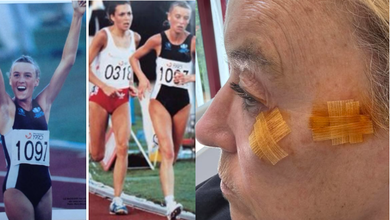
Credit: Liz McCollgan/Instagram
Scottish Olympic legend Liz McColgan has warned athletes to wear sun protection during their training hours to protect their skin from “lasting consequences”.
Liz McColgan shared the health warning to athletes after undergoing surgery to remove lesions on her face.
The Olympic silver medalist from Dundee shared post-surgery photographs on the social media platform Instagram and lamented that, as a young runner, she never focused on wearing sun protection.
Avoiding sun cream because she felt it made her "sweat more" was her “ignorance”, said the 61-year-old former athlete.
“As a young athlete, I trained and raced in all weathers. Sun protection was never something I gave much thought to. In fact, I avoided it. I didn’t like the feeling of creams on my skin - I thought they made me sweat more, so I convinced myself I was better off without them. Looking back, that was ignorance,” Liz McColgan said.
“Recently, I had to undergo surgery to remove two lesions on my face. It was a stark reminder that the choices we make early on - especially the ones we dismiss as unimportant - can have lasting consequences,” she added.
Liz McColgan noted that athletes keep all their focus on "performance - mileage, sessions, recovery, nutrition”, but simple things like protecting their skin are often ignored.
“Yet it’s just as much a part of our overall health and wellbeing as any training session,” she said.
Sharing the health message to both young and old athletes, McColgan said, “Take sun protection seriously. Whether you’re training, racing, or even just spending time outdoors, protecting your skin matters.”
McColgan won a silver medal in the same event at the 1988 Olympic Games in Seoul. In 1991, she went on to win the 10,000m World Championships title in Tokyo.
Also read:5 Simple Do's And Don'ts For Healthy Skin
Why Sunscreen Is Essential
Using sunscreen protects the skin from harmful ultraviolet (UV) radiation, which causes
- skin cancer,
- premature aging,
- painful sunburns.
Should Sunscreen Be Used Indoors Too?
Sunscreen is meant to be part of a daily skincare routine. But most people reach for sunscreen when heading to the beach or stepping out for a long day in the sun.
According to dermatologists, sunlight can still reach you indoors.
Dr Khushboo Jha, Chief Dermatologist Consultant at Metro Hospital, explains that sunlight entering through windows can still affect the skin.
“While standard window glass blocks most UVB rays, which cause sunburn, UVA rays can still pass through. These rays penetrate deeper into the skin and are linked to long-term concerns such as premature aging, uneven pigmentation, and loss of skin elasticity,” she said.
These UVA rays are often overlooked because they do not cause immediate redness or burning like UVB rays. However, over time, they can lead to visible signs of skin aging and pigmentation.
Also read: Why Should You Must Apply Sunscreen Inside A Plane?
A Practical Approach To Daily Skincare
Dermatologists suggest viewing sunscreen as a preventive skincare habit rather than a rigid rule.
Dr Jha recommends incorporating sunscreen into your morning routine, particularly if your day includes stepping outdoors or spending time in naturally lit environments.
In simple terms, if daylight reaches your workspace or you plan to go outside later in the day, applying sunscreen in the morning is a small step that can help protect your skin over time.
- Follow Us :


© 2024 Bennett, Coleman & Company Limited