
- Health Conditions A-Z
- Health & Wellness
- Nutrition
- Fitness
- Health News
- Ayurveda
- Videos
- Medicine A-Z
- Parenting
Fact Check: Sunscreen Is Only Used For Outdoors

Credits: Canva
Most people reach for sunscreen when heading to the beach or stepping out for a long day in the sun. But skincare experts say sun protection should not be limited to vacations or outdoor activities. Sunscreen is meant to be part of a daily skincare routine.
This often raises a common question. If you are staying indoors all day, do you still need sunscreen?
Dermatologists say the answer depends on your surroundings and daily habits.
Sunlight can still reach you indoors
Many people assume that staying inside completely protects their skin from sunlight. But this is not always true.
Dr Khushboo Jha, MBBS, MD, Chief Dermatologist Consultant at Metro Hospital and Founder of One Skin Clinic, explains that sunlight entering through windows can still affect the skin.
“While standard window glass blocks most UVB rays, which cause sunburn, UVA rays can still pass through. These rays penetrate deeper into the skin and are linked to long term concerns such as premature aging, uneven pigmentation and loss of skin elasticity,” she says.
These UVA rays are often overlooked because they do not cause immediate redness or burning like UVB rays. However, over time they can lead to visible signs of skin aging and pigmentation.
When sunscreen indoors becomes important
Dermatologists say sunscreen indoors is particularly useful for people who spend long hours near windows or in well lit spaces.
Dr Jha notes that individuals who work near windows, sit in sunlit rooms or spend time driving during the day may still be exposed to sunlight. “Even short periods of daily exposure to sunlight over time can contribute to cumulative skin damage,” she explains.
In such situations, applying sunscreen in the morning can offer an added layer of protection. A broad spectrum sunscreen with at least SPF 30 is generally recommended.
This approach is especially relevant for people working in offices with large windows or those who frequently commute during daylight hours.
What if you are away from windows?
Experts also say sunscreen use indoors is not always equally necessary for everyone.
If you spend most of the day inside a room with minimal natural light and away from windows, your exposure to ultraviolet radiation becomes much lower.
Dr Jha says that in such cases the urgency of frequent sunscreen reapplication becomes less important. The risk of sun related skin damage is significantly reduced when there is little to no direct daylight entering the space.
This means sunscreen indoors should not be treated as a strict rule but rather as a flexible part of skincare based on lifestyle and environment.
What about blue light from screens?
Another topic that often comes up is blue light exposure from digital devices such as phones, laptops and tablets.
Some studies suggest that prolonged exposure to visible light may contribute to pigmentation, especially in individuals with deeper skin tones. However, dermatologists point out that the amount of blue light from electronic screens is much lower than what we receive from natural sunlight.
Dr Jha says the effect of digital screens on the skin is still being studied, but compared to sun exposure, the impact remains minimal.
A practical approach to daily skincare
Dermatologists suggest viewing sunscreen as a preventive skincare habit rather than a rigid rule.
Dr Jha recommends incorporating sunscreen into your morning routine, particularly if your day includes stepping outdoors or spending time in naturally lit environments.
In simple terms, if daylight reaches your workspace or you plan to go outside later in the day, applying sunscreen in the morning is a small step that can help protect your skin over time.
World Hypertension Day 2026: Why Switching Salt May Be India’s Simplest Weapon Against High Blood Pressure

Credit: AI generated image
In India, more than one in four people has hypertension, and cumulatively, over 90 per cent of adults with hypertension are either undiagnosed, untreated, or treated but still live with uncontrolled blood pressure. Experts say this growing burden needs urgent attention.
In an interview with HealthandMe on World Hypertension Day 2026, Professor Vivekanand Jha, Executive Director of The George Institute for Global Health, suggested that one practical solution may be as simple as switching to potassium-enriched low-sodium salt substitutes (LSSS).
Current estimates show that Indians consume between 8 and 11 grams of salt (equivalent to 3.2–4.4 grams of sodium) per day — nearly double the World Health Organization recommended limit of 5 grams of salt (2 grams of sodium).
Low-sodium salt substitutes are composed of approximately 70–75 per cent sodium chloride and 25–30 per cent potassium chloride. They reduce sodium intake while increasing potassium consumption, helping lower blood pressure and reduce cardiovascular risk.
In January 2025, the World Health Organization released guidelines recommending potassium-enriched salt substitutes to combat hypertension and related heart risks. The guidelines suggest replacing regular table salt, which is high in sodium, with potassium-enriched alternatives that may help reduce noncommunicable diseases such as cardiovascular disease and chronic kidney disease by lowering blood pressure.
Dr Jha was also part of a consensus statement released by experts in clinical medicine, public health, and nutrition, recommending potassium-enriched low-sodium salt substitutes as an effective intervention to reduce hypertension and cardiovascular disease in India.
Here are excerpts from the interview:
Q. Is asking people to simply switch to a healthier salt more realistic than expecting them to completely change their diets?
Dr Jha: Public health works best when solutions fit naturally into people’s daily lives. Asking families to completely change what they eat is extremely difficult because food habits are emotional, cultural, and built over generations. But asking them to switch the type of salt they use at home is a much simpler and more achievable step. The taste remains familiar, cooking habits do not change, and yet the health benefits can begin immediately.
In a country like India, where a large proportion of sodium intake comes from salt added during cooking, this becomes a very practical intervention. It is not about perfection — it is about finding solutions that ordinary families can realistically adopt and sustain. There are, of course, other dietary factors that also need attention, such as excessive sugar intake, processed foods, and poor fruit consumption.
Q. High blood pressure medicines are often prescribed quickly. Are doctors giving enough importance to simple dietary changes like switching to healthier salt, or is prevention still underestimated?
Dr Jha: The answer is a definite no.
Our healthcare system is designed around managing disease once it appears, rather than reducing people’s need to come to hospitals by preventing disease in the first place.
Also read: Can Hantavirus Spread Through Semen And Breast Milk? What Experts Say
In a busy clinic, physicians often have only a few minutes with each patient, making detailed dietary counselling difficult. At the same time, advice like “eat less salt” can feel abstract or impractical for many patients. There are also systemic incentives that prioritize medicines over preventive care.
We need much stronger integration of nutrition and prevention into routine medical practice. If we truly want to reduce the burden of hypertension and its complications — including cardiovascular disease, stroke, and chronic kidney disease — prevention cannot remain an afterthought.
Q. Low-sodium salt may not suit some people with kidney disease or those on certain medicines. How can these risks be managed without discouraging the wider population from benefiting?
Dr Jha: This is an important conversation and needs to be handled responsibly and transparently. There is a small group of patients — particularly some people with advanced kidney disease or those on specific medications — for whom excess potassium may not be appropriate.
However, for the vast majority of the population, including many people with early-stage kidney disease, low-sodium salt substitutes are safe and beneficial. We have repeatedly shown this through modelling studies.
The challenge is ensuring that a legitimate caution for one group does not unintentionally discourage everyone else. That is why clear labelling, better awareness among healthcare professionals, and honest public communication are essential. Public health decisions are often about balancing risks and benefits, and in this case, the potential population-level benefits are very significant, including for a large majority of patients with chronic kidney disease.
Read More: Heart Diseases, Mental Disorders And Cancer Among 62 Health Risks Linked To Alcohol Use: Study
Q. Emerging evidence suggests increasing potassium may be as important as reducing sodium. Does this change how India should approach hypertension prevention?
Dr Jha: This is a very important point and broadens the conversation in a meaningful way. As it turns out, many physicians are also unaware that potassium intake among Indians is substantially lower than recommended, and that increasing potassium intake can help lower blood pressure and improve cardiovascular health.
What makes low-sodium salt substitutes particularly valuable is that they address both issues together — they reduce sodium while increasing potassium through a product people already use every day. This dual benefit could make a meaningful difference at scale.
It does not replace the need for healthier diets overall, but it does provide a practical and scalable public health tool.
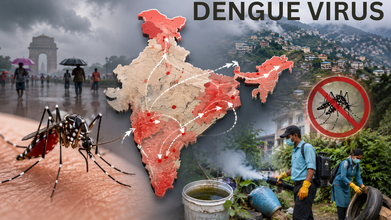
Dengue Is Spreading Beyond Monsoons And Into New Regions Across India, Says Expert
Credit: AI generated image
Climate change and rapid urbanization are changing mosquito habitats, and shifting dengue serotypes are reshaping the disease landscape in India. As a result, the country is now witnessing a transformation in how dengue spreads, who it affects, and how severe infections can become.
Once considered a seasonal monsoon illness, dengue is now increasingly becoming a year-round public health challenge, extending into hill states, semi-urban regions, and previously low-risk geographies.
In an exclusive interview with HealthandMe, Dr. Shikha Taneja Malik, Senior Scientific Affairs Manager, Drugs for Neglected Diseases initiative (DNDi), South Asia, discussed why India’s dengue numbers are likely being massively undercounted, how surveillance and diagnostic gaps are masking the real scale of the crisis, and why young adults are facing more severe infections due to changing serotypes.
Dr. Shikha also explained the urgent global push for affordable therapeutics and the challenges India still faces in developing an indigenous dengue vaccine despite its strong manufacturing capacity.
Here are the excerpts from the interview:
Q. Dengue was always called a monsoon disease. Is that label now dangerously misleading?
Dr. Shikha: Yes, I would argue that labels are not just outdated but risky, too. What we are seeing across India and across the region is a fundamental shift in the transmission pattern.
Dengue used to follow a fairly predictable seasonal curve — cases would spike between July and November, track the monsoon, and then recede. That curve is flattening. We are now seeing cases in February, March, and May — months that were previously considered safe. Delhi, Mumbai, Bengaluru — cities that used to have clear off-seasons for dengue — are reporting year-round transmission.
Warmer temperatures, altered rainfall patterns, unplanned urbanization, and poor sanitation have lengthened transmission seasons, making dengue a year-round systemic crisis. Models now predict year-round transmission in coastal regions, though monsoon months will retain the highest peak.
Also read: National Dengue Day 2026: India Reports 6,927 Cases And 10 Deaths In 2026
Q. Are serotype shifts driving changing dengue patterns, especially in young adults?
Dr. Shikha: Yes, India is witnessing active serotype shifts, and they directly explain rising severity, especially in young adults. Initial infection with one of the four dengue serotypes results in lifelong immunity to that specific serotype. Whereas, a secondary infection with a different serotype can trigger Antibody-Dependent Enhancement (ADE).
Young adults who were exposed to one serotype in childhood are now encountering a new dominant serotype, making them especially vulnerable to severe secondary infections.
Q. Is India undercounting dengue cases? Why do so many cases go unreported?
Dr. Shikha: The 2.89 lakh figure in 2023 is what our surveillance system captures, but it is almost certainly a fraction of the true burden. The Lancet has estimated that India accounts for around 33 per cent of the global dengue burden, and globally, we are looking at approximately 400 million infections every year. That puts India's real annual dengue burden potentially in the tens of millions — not hundreds of thousands.
Few studies have shown that the estimates of actual cases are approximately 282 times higher.
There are several reasons why cases go unreported, and they compound each other.
- A large proportion of infections are either asymptomatic or present as a generic fever — patients never seek formal care.
- Our surveillance system is passive and fragmented. Reporting is largely dependent on public health facilities.
- Confirmatory testing through NS1 antigen tests or PCR requires infrastructure that is not yet uniformly available at the primary health center level, particularly in rural and semi-urban areas.
Q. Are previously dengue-free regions in India now reporting cases due to climate change?
Dr. Shikha: Yes, the geographic spread is both significant and well-documented. Climate change is playing a major role in this shift. Rising temperatures, changing rainfall patterns, increasing humidity, and rapid unplanned urbanization are creating more favorable conditions for Aedes aegypti mosquitoes to survive and transmit the virus for longer periods each year.
Since the mid-1990s, dengue has rapidly spread to regions where it was historically non-existent, including Odisha, Arunachal Pradesh, and Mizoram. In the early 2000s, dengue was endemic only in a few southern and northern states; it has since spread to many states, including union territories.
Read More: Ebola Outbreak: Rare Bundibugyo Strain Confirmed In DR Congo And Uganda
The shift is particularly visible in hilly and cooler geographies such as Himachal Pradesh and Jammu & Kashmir. Climate modelling projects further expansion of Aedes albopictus into upper Himalayan regions, including Leh-Ladakh and Arunachal Pradesh, by 2050.
Q. What are the biggest challenges in indigenous dengue vaccine production in India?
Dr. Shikha: India has strong vaccine manufacturing capacity, but dengue remains scientifically complex. Existing vaccines have limitations and do not cover all vulnerable groups.
India’s first Phase 3 trial for an indigenous dengue vaccine, DengiAll, is underway across 18 states. The Butantan vaccine candidate, originally developed by NIH, has been licensed to Indian companies, including Panacea, SIIPL, and Indian Immunologicals, with the ICMR-Panacea candidate being the most advanced.
The recent DCGI approval of Qdenga is encouraging, but sustained financing and coordination between ICMR, DBT, and industry will be critical for developing a truly indigenous vaccine.
The Urban Lifestyle and Increasing Number of Dengue Cases: What Needs to Be Modified?
Credit: iStock
Dengue has become one of the fastest-emerging health crises in the urban parts of India. Every year during the monsoon season, the number of dengue cases rises dramatically in many Indian cities, posing a huge burden on the healthcare sector.
Though climate and mosquitoes are usually cited as reasons for the surge in dengue cases, the problem actually lies in how urban life and the infrastructure of the cities have changed over the decades.
Why Urban Areas Are More Vulnerable
The dengue virus is spread through the Aedes aegypti mosquito that lives well in fresh still water, which is abundant in urban areas.
Mosquitoes breed in construction sites, open water tanks, old plastic buckets, flower pots, coolers, water stored on roofs, and blocked drainage systems. Due to the growing size of cities and high population density, mosquito-borne diseases have become more common.
There are many factors that contribute to the rise in the number of dengue patients, one of which is unplanned city expansion. The fast pace of development in the cities results in stagnant water in the construction areas going unnoticed for weeks.
Moreover, improper drainage and a lack of sanitation facilities help mosquitoes breed. Even posh societies and offices can suffer if proper checks are not conducted.
Urban lifestyle trends also act as indirect factors contributing to the issue. Longer working hours, higher levels of indoor activities, and reliance on mechanical ventilation lead to less focus on environmental hygiene issues.
Families tend to take mosquito prevention steps only after an outbreak starts. The overuse of plastics and poor waste management practices in urban areas have exacerbated waterlogging problems.
The situation has been exacerbated by climate change and global warming. Mosquitoes can breed at a faster pace and survive for a longer period of time in the warm climate and unpredictable rain patterns. Another factor that plays an important role is urban heat islands, which refer to places that are hotter because of man-made concrete buildings.
What Needs to Change?
In order to curb the incidence of dengue, there must be an all-around transformation, both on the part of the governing authorities and the people. Firstly, urban planning should take into consideration good drainage facilities, frequent fogging, garbage disposal services, and proper regulation of building sites. Secondly, there must be frequent checks in residential areas, schools, offices, markets, and open public areas.
Secondly, the awareness campaign needs to be practical and more community-oriented. The citizens should realize that the prevention of dengue starts from their homes. Actions like washing the coolers once a week, covering the water tank, not allowing the water to stagnate, and using mosquito repellents will go a long way in minimizing the spread of dengue.
Early Detection and Healthcare Preparedness
Healthcare preparedness is also equally important. The early detection and proper treatment of dengue could help avoid any serious complications. One should never overlook symptoms like fever, body pain, headache, rashes on the skin, nausea, and weakness during the rainy season.
Combatting dengue fever is no longer just a matter of health care but rather a question of urban planning and lifestyle issues. As the cities continue to expand, everyone should unite and come up with healthier and more environmentally friendly cities. Otherwise, we may see more recurring problems of dengue outbreaks in urban settings every year.
- Follow Us :


© 2024 Bennett, Coleman & Company Limited