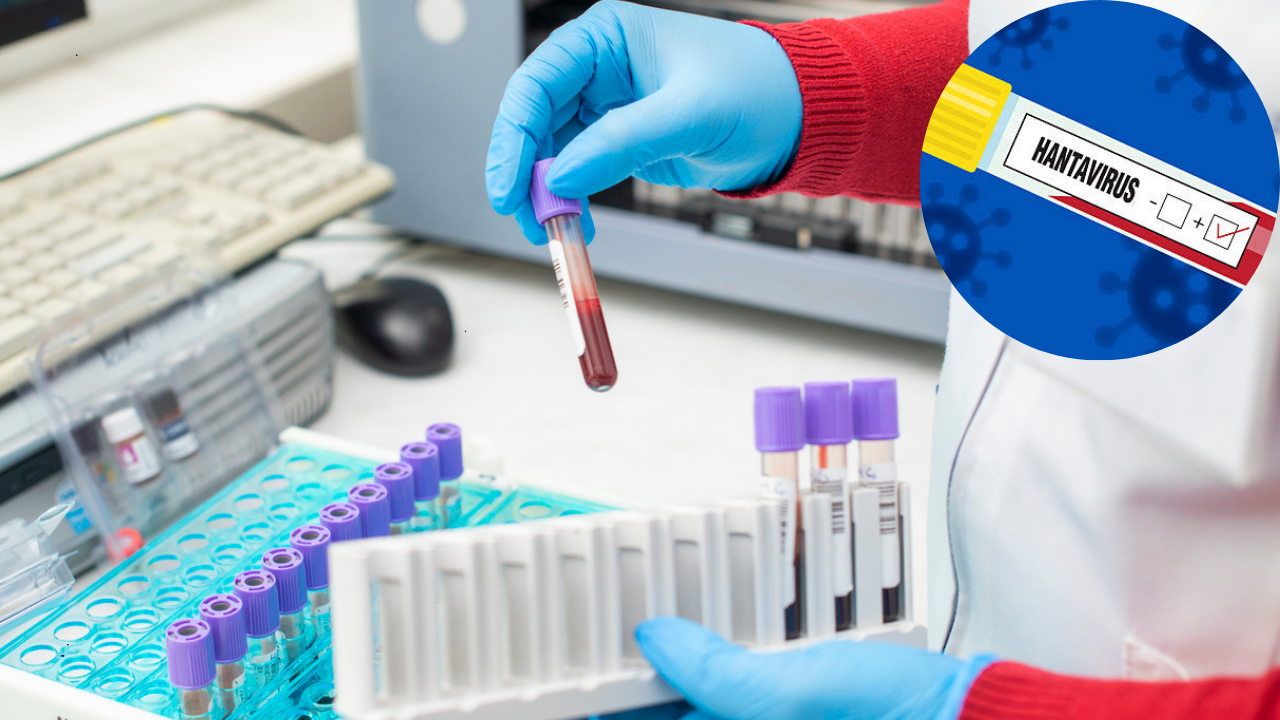
Amid reports of the hantavirus outbreak onboard the cruise ship MV Hondius, and two Indian crew members, India’s Ministry of Health and Family Welfare has stepped up surveillance measures. While the Indian Embassy in Spain has confirmed that the two Indian nationals are currently asymptomatic and are being evacuated to the Netherlands for quarantine, health authorities in the country are closely monitoring the situation in coordination with national and international health agencies. Notably, the Indian Council of Medical Research (ICMR) has mobilized its formidable "Viral Shield", a sophisticated network of 165 specialized laboratories, called the Virus Research & Diagnostic Laboratory (VRDL), to ensure that the rat-borne virus does not breach the country's borders. What Are The VRDLs? The 165 laboratories include 11 Regional level, 27 State level 127 medical college level, It covers 31 States and Union Territories of India and functions under the umbrella of the Department of Health Research (DHR)/ ICMR. “The VRDL network has emerged as a pillar of India's health security architecture. It has enabled timely response to outbreaks; provided essential diagnostic services for various viral infections, including high- risk pathogens, and strengthened our ability to respond to emerging and re- emerging viral threats. The Government of India's investment in the establishment and expansion of this infrastructure underscores the importance of sustained investment in health research for protecting the health of our citizens,” said Union Health Minister JP Nadda, in the 2025 quarterly bulletin of VRDL. Post-pandemic, VRDLs are actively engaged in integrated surveillance for Influenza-like Illness (ILI) and Severe Acute Respiratory Infection (SARI), monitoring for pathogens like Influenza A/B, Mycoplasma pneumonia, and SARS-CoV-2 variants. In 2025, Union Minister of State for Health and Family Welfare, Anupriya Patel, said, VRDL has stood as “sentinels in protecting the country”. She added that 16 VRDLs are now equipped with Bio-Safety Level-3 (BSL-3) facilities for studying high-risk pathogens, playing a central role in detecting outbreaks of Nipah, Zika, and Kyasanur Forest Disease. Also read: Hantavirus: Is Climate Change Behind The Outbreak?What's The Status Of MV Hondius Passengers?Amid stiff opposition from the locals, the Dutch-flagged vessel MV Hondius, carrying 94 people, including Filipinos, Britons, Americans, Indians, and Spaniards, arrived in Spain's Canary Islands on May 10. All have been evacuated and repatriated.Two of the 17 American passengers evacuated from the hantavirus-hit MV Hondius have tested positive, the US Department of Health and Human Services (HHS) announced today.A French woman onboard the same cruise has also tested positive for hantavirus, and her health worsened in the hospital overnight, French Health Minister Stephanie Rist said. The woman was among five French passengers repatriated from the MV Hondius."It’s not surprising that others on the ship will test positive for hantavirus in the coming days. What’s crucial is that they don’t pass this on to others- those most at risk: who they live with/family/friends as they head home. Quarantine for next 45 days super important," Prof. Devi Sridhar, Professor & Chair of Global Public Health, Edinburgh University, said in a post on the social media platform X.WHO Guidelines On Hantavirus Read More: Why The Norovirus Outbreak On A Caribbean Cruise Ship Is Not A Cause for PanicThe WHO maintains that the eight passengers on board have been infected with hantavirus. While three have died, six have been hantavirus infection has been confirmed in six cases.Dr. Maria Van Kerkhove, the WHO’s head of epidemic and pandemic preparedness, said that after being brought to shore, passengers will be kept cordoned off from the public and taken to repatriation flights. In their home countries, many will be taken onward to isolation facilities. Van Kerkhove said that the WHO is recommending “active monitoring and follow-up” for all passengers and crew for 42 days from their “last point of exposure” to a confirmed case. "Our recommendation is daily health checks, at home or in a specialized facility. It's up to countries to develop their policies, but our recommendations are very clear," Van Kerkhove said, highlighting that the incubation period for the virus was up to six weeks.