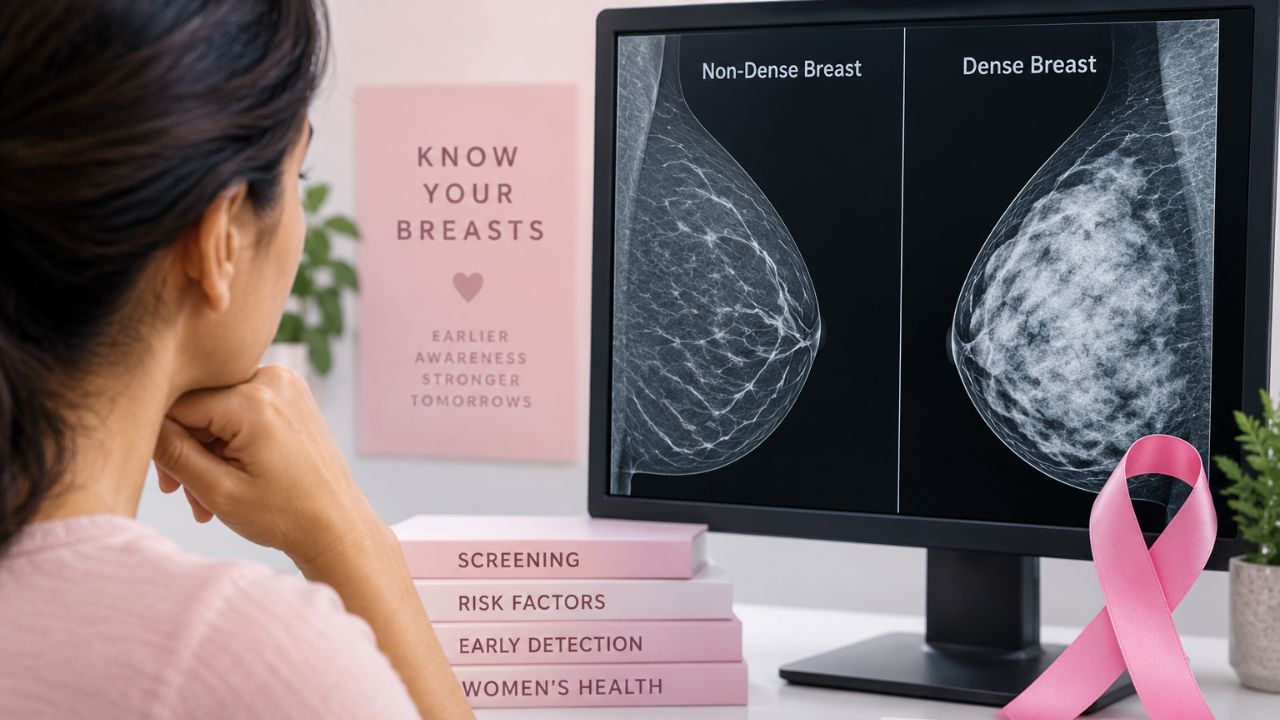
Many women may come across the term "breast density" following a mammogram, but not all of them fully understand what it implies. The fact that someone has dense breasts does not mean that they have cancer or that they will definitely get it. On the other hand, greater breast density can be linked to a higher risk of breast cancer and may also make it more difficult to detect certain cancers on a mammogram. What Is Breast Density? The breast density is the ratio of fibrous and glandular tissue to fatty tissue in the breast. Dense breast tissue is a normal variation and is especially frequent in younger women. It should be clear that women cannot tell themselves if their breast has dense tissue or not; it has to be assessed using breast imaging, typically a mammogram. Breast density is usually divided into four types, going from almost all fatty tissue to very dense tissue, and women who have heterogeneously dense or extremely dense breasts are at a greater risk of developing breast cancer than women whose breasts are mainly fatty.Also read: Alcohol-Linked Cancer Deaths Doubled In US: Colorectal Leads In Men, Breast Leads In WomenWhat Do Dense Breasts Indicate? A major concern is that on a mammogram dense tissue appears white, just as many breast abnormalities—some of which are cancers—do too. This makes it harder for radiologists to spot certain abnormalities. Women need not be alarmed if their mammogram report states that their breasts are dense. Breast density is just one of the factors to take into account when evaluating the risk of breast cancer; family history, age, past breast conditions, genetic mutations, hormonal factors, reproductive history, and lifestyle must also be considered. It will depend on a woman's total risk level whether or not further screening is needed. Although mammography is still an important method of screening, in certain individual cases a doctor may suggest extra imaging, for example breast ultrasound or magnetic resonance imaging (MRI). Such tests are not required automatically for every woman who has dense breasts.Also read: How Scientists Blocked Drug-Resistant Triple-Negative Breast Cancer With A Two-Step Drug Method What Should Women Do? Women should also know what is normal for their breasts. If a new lump is detected, there is a persistent change in the shape or size of the breast, the skin becomes dimpled, the nipple turns inwards, there is an unusual discharge from the nipple or there is ongoing discomfort, then it is advisable to have a healthcare professional look at it. Yet the majority of breast changes are not cancerous and symptoms by themselves are not enough to make a diagnosis. Lifestyle plays a big role in maintaining breast health. One way of reducing the overall risk of breast cancer is to keep a healthy weight, remain physically active, limit alcohol intake, avoid tobacco, eat a well-balanced diet and stick to the recommended screening programmes. Women must not regard breast density as a diagnosis. The main point is that women should not be afraid of dense breasts but should understand what this means for them. They must talk to their family doctor about their mammography report and their individual risk factors and then follow a screening programme suitable to their risk. Breast density is therefore a valid reason for having a screening examination, not one for concern. By understanding breast density and talking to a breast specialist, women can make informed choices regarding screening and make sure that any potential abnormalities are assessed as early as possible. By Dr. Meghal Sanghavi, Consultant Onco Surgeon, Wockhardt Hospital, Mumbai Central