
- Health Conditions A-Z
- Health & Wellness
- Nutrition
- Fitness
- Health News
- Ayurveda
- Videos
- Medicine A-Z
- Parenting
Is Your Tooth Missing? You Could Have Tooth Agenesis

Tooth agenesis happens when because of genetic and environmental factors, people are born missing some of their teeth.
In this case, certain teeth never develop and it can involve both primary and permanent teeth. Most commonly it affects permanent teeth.
There are three types of dental agenesis:
- Anodontia: Complete absence of teeth
- Hypodontia: Absence of one to six teeth
- Oligodontia: Absence of six more teeth
What Happens With Tooth Agenesis?
In most cases, it affects the lower second premolars, which are the teeth in front of your molars on the bottom. The next affected area is the upper second premolars, the teeth that are in front of your molars on the top. It can also affect the upper lateral incisors, which are the smaller teeth on either side of your top two front teeth.
Are There Any Symptoms?
If your tooth is small and peg-shaped, has gaps and spaces between your teeth, or are large, rectangular teeth that have extremely pulp chambers, also known as Taurodontic teeth.
Who Are At Risk?
Since it is also a symptom of genetic disorders, people with ectodermal dysplasia might also have:
- Hair thinning
- Nail abnormalities
- Lack of sweat glands
- Poor vision
- Hearing loss
Is There A Bright Side?
The ray of hope is that Japanese scientists were able to recreate these missing teeth in mice. In a 2021 paper titled Anti-USAG-1 therapy for tooth regeneration through enhanced BMP signalling available on National Library of Medicine's platform, Japanese scientists found that if a second gene is knocked out, called the USAG-1 gene, then the tooth could grow back.
What can be done according to the scientists is that antibodies can be created that block this gene in humans so the teeth could grow. The research is in its phase 1 trials, which means that soon there will be a positive result for it.
How Is It Treated Now?
Without positive results on trials, there are yet to be any medicines that can regrow teeth in humans, however, there are ways to manage tooth agenesis. These options include:
- Dentures
- Dental Bridges
- Dental Implants
- Orthodontic treatment, such as braces
Glaucoma Cases Surging Among Young Adults, Say Experts
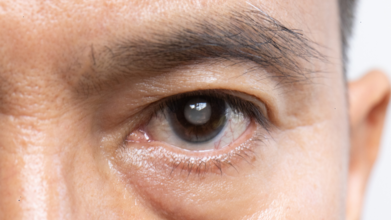
Credit: iStock
Once seen only among the elderly, glaucoma, also known as irreversible blindness, is increasing among younger adults in their 20s and 30s, said experts.
Glaucoma is a chronic disease that affects an estimated 80 million individuals globally, according to the World Glaucoma Association.
Beyond the role of genetics, unhealthy lifestyles with increased screen time and stress are the major reasons for the rise in glaucoma cases in young adults.
"We have seen an increasing incidence of glaucoma among younger adults in their 20s and 30s because of lifestyle habits such as increased screen time and lack of sleep, an increase in diabetes and high blood pressure, and a genetic predisposition," Dr. Mahipal Singh Sachdev, Chairman & Medical Director, Centre For Sight Group of Eye Hospitals, told HealthandMe.
Why Is Treatment Difficult
A major challenge with glaucoma is its lack of symptoms in the initial stages. As a result, the condition is often diagnosed at an advanced stage, where treatment yields the least results.
More than 75 percent of glaucoma cases globally remain undiagnosed.
Although the condition does not directly lead to mortality, glaucoma-led blindness is categorized as a severe form of disability (category VI) out of seven World Health Organization (WHO) classifications on the global burden of diseases.
"Often referred to as a silent thief of sight, glaucoma usually has no warning signs until the damage to the optic nerve has already caused permanent vision loss," Sachdev said.
"Because there are no noticeable symptoms in the early stages of glaucoma, many people have been unaware that they are developing it until it has progressed to a point where there is already significant damage and vision loss; this often translates to blindness," he added.
However, increased awareness of glaucoma and increased frequency of eye examinations have helped reduce the time between the onset of the disease and the diagnosis, the expert said.
Glaucoma: Are Children At Risk?
Although rare, children can be born with congenital or paediatric glaucoma as a result of ocular drainage abnormalities.
Dr Devindra Sood, Senior Consultant — Ophthalmology, Max Multi Speciality Centre, Panchsheel Park, told HealthandMe that glaucoma in children is uncommon.
"Its presentation for diagnosis and treatment is also different from that in adults," Sood said.
The symptoms of pediatric glaucoma include:
- enlargement of the globe,
- excessive lacrimation,
- photophobia,
- corneal cloudiness.
Sood stated that traditionally, large eyes are considered to harbor glaucoma.
These children usually do not respond to medical treatment, and surgical intervention is required.
However, early detection and treatment of congenital glaucoma are vital to reducing the risk of permanent visual impairment, Sachdeva said.
Glaucoma: A Global Health Burden
It is a progressive, degenerative disorder of the optic nerve that produces characteristic visual field damage.
The chronic disease affects an estimated 80 million individuals globally. By the year 2040, it is estimated that there will be 22 million individuals worldwide who are blind from glaucoma.
In India, around 12 million people suffer from glaucoma, and 1.5 million are blind due to it.
When to see a doctor for glaucoma:
• Vision suddenly gets blurry
• Severe eye pain
• Headache
• Nausea
• Vomiting
• Rainbow-colored rings or halos around lights.
Study shows nanoparticles may shorten kidney stone laser surgeries, reduce recurrence
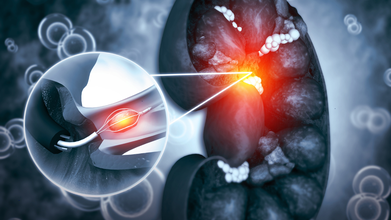
Credit: iStock
A team of researchers in the US has developed a nanoparticle-based technique that could make laser surgeries for kidney stones faster, safer, and potentially reduce the chances of recurrence.
Engineers from the University of Chicago and doctors from Duke University added dark nanoparticles to a common saline solution used in kidney stone laser surgeries. Their method also promised less recurrence of disease.
The research focused on laser lithotripsy, a widely used surgical method in which lasers are used to break kidney or urinary tract stones into tiny fragments that can then be removed by suctioning or pass naturally.
How Nanofluid Boosts Lasery Surgery
Traditionally, surgeons use a small video-guided laser to fragment the stones. However, achieving effective fragmentation often requires higher laser power, which generates additional heat and causes damage to the surrounding tissues.
Thus the new method “is a way to better utilize the laser energy that is already being employed,” said Po-Chun Hsu, assistant professor at the University of Chicago Pritzker School of Molecular Engineering (UChicago PME).
Hsu noted that their nanoparticle-based “nanofluid” also has the potential to enhance the performance of lasers without increasing power levels. This will effectively fragment the stones and remove the dust particles.
The study, published in the journal Advanced Science, describes an innovative saline solution that enhances the performance of existing laser systems without requiring modifications to the equipment.
By adding dark nanoparticles that absorb laser wavelengths, the solution ensures that more of the laser energy is directed at the kidney stone rather than being reflected or dispersed.
“This improves the amount of laser energy that is transmitted to and absorbed by the stones,” said corresponding author Pei Zhong, a professor of engineering at Duke University.
“Nanofluid introduces a new dimension that can influence this complex physical process, independent of the stone composition or the laser being used,” Zhong said.
Kidney Stone Laser Surgery In 10 Minutes
Laboratory tests using artificial kidney stones showed that the nanofluid increased stone ablation efficiency by between 38 and 727 percent in spot treatments and by 26 to 75 percent in scanning treatments.
The researchers also tested the nanoparticle solution on living cells for up to 24 hours and found it to be non-toxic and safe.
In clinical settings, however, exposure would be much shorter. Laser lithotripsy is typically an outpatient procedure lasting about 30 minutes. The researchers believe that improved laser absorption could reduce the procedure time to around 10 minutes.
“If surgeries take too long, waste heat from the laser can accumulate and cause more harm than the stone removal itself,” Hsu said.
Kidney Stones: Symptoms And Prevention
Kidney stones are hard mineral or acid salt deposits formed in the kidneys. It occurs due to concentrated urine, and causes intense, radiating back/side pain, nausea, and blood in urine.
Common causes include
- dehydration,
- diet,
- obesity,
- family history
- metabolic issues
- staying well-hydrated
- reducing sodium levels
- eating fewer oxalate-rich foods
- consuming sufficient calcium-rich foods
- increasing citrus intake.
Amy Carr, Former England Youth Player Dies At 35

Credits: Instagram
Former youth player of England, Amy Carr dies at the age of 35. England women's football team too paid tribute on her death. Carr was a former goalkeeper who played for England Under-17s and Under-19s. She was diagnosed with a brain tumor for a second time.
She was diagnosed in 2015 and raised more than £2,000 for charity by running the Dublin Marathon in 2024.
"We are heartbroken to hear that former England youth player Amy Carr has passed away aged 35," read a statement on the Lionesses' X account. "Amy, who was diagnosed with a second brain tumour in 2024, devoted her time to raising money for vital brain tumour research that could help others. She remains an inspiration to all."
Carr also played for Arsenal, Chelsea and Reading before she gained a football scholarship in the USA. Chelsea added on X: "We are saddened to learn of the passing of former Chelsea goalkeeper, Amy Carr. Our condolences are with Amy's friends and family at this time."
What Is Brain Tumor?
Before diving into the concept of a brain tumor, it is important to first understand what a tumor is. A tumor refers to an abnormal lump or mass that forms due to the uncontrolled growth of cells in the body.
tumors are broadly classified into two main categories:
- Benign
- Malignant
A benign tumor consists of normal cells that have grown excessively to form a lump. This overgrowth may result from something going wrong in the body, but the cells themselves are not cancerous. On the other hand, a malignant tumor is made up of abnormal cells that grow uncontrollably. These are cancerous cells, and their aggressive nature can lead to serious health issues.
A brain tumor is a condition in which abnormal cells develop within any part of the brain. Similar to tumors elsewhere in the body, brain tumors can also be benign (non-cancerous) or malignant (cancerous). The presence of a tumor in the brain can interfere with normal brain function, depending on its size, type, and location.
Our bodies possess a natural healing mechanism that is crucial for survival. This repair system is activated whenever there is damage from injury, radiation from the sun, or harmful chemicals in the environment. However, this process can occasionally go wrong. When it does, small clusters of cancerous cells may begin to form. In most cases, the immune system successfully detects and destroys these abnormal cells before they grow. But in rare instances, these cancerous cells evade immune detection and continue to grow, leading to the formation of tumors or cancers.
Such abnormal growths can occur anywhere in the body. When these growths are located in the brain or spinal cord, they are referred to as Central Nervous System (CNS) tumors.
- Follow Us :


© 2024 Bennett, Coleman & Company Limited