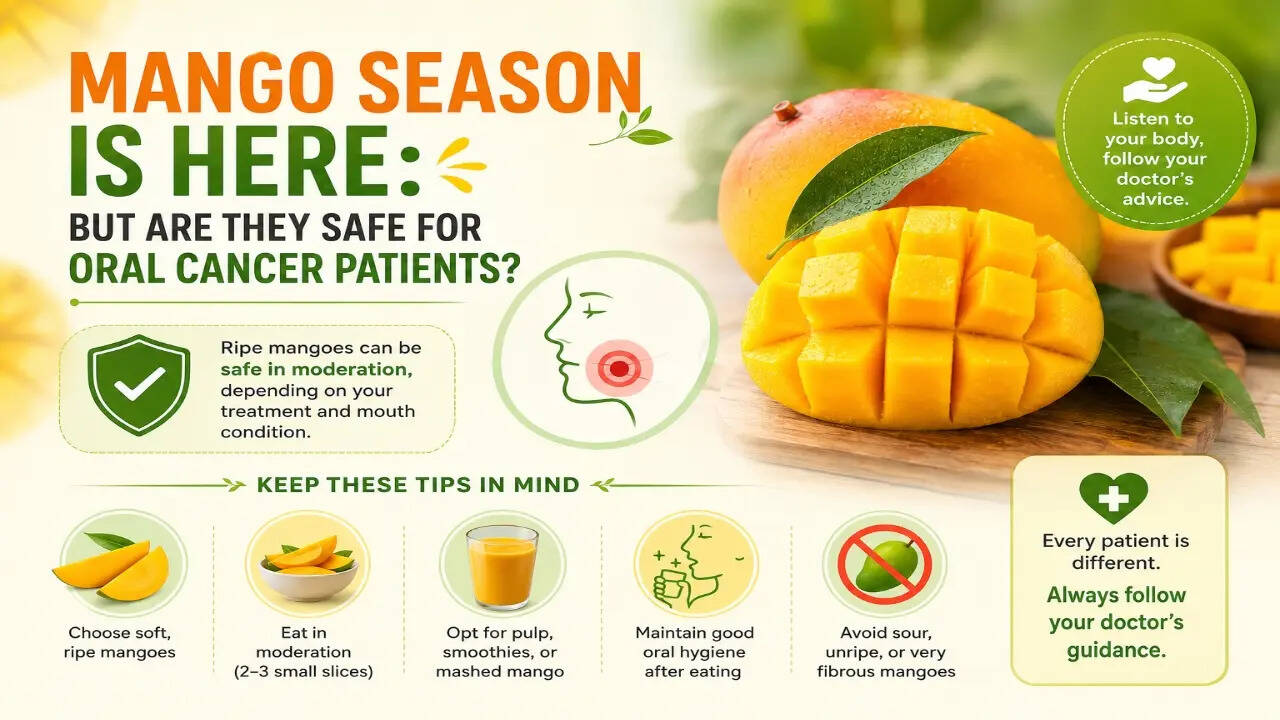
Have you been diagnosed with oral cancer? Wondering if you can have your favourite fruit, mango? Then make sure to consult your doctor before having it. Though mangoes are rich in vitamins and antioxidants, oral cancer patients should consume them carefully, depending on their treatment stage and mouth condition. It is not a good idea for oral cancer patients to eat mangoes in large quantities. Can oral cancer patients eat mangoes? In an interaction with Health and Me, Dr. Amit Chakraborty, Head and neck onco-surgeon, Mumbai, shared some simple guidelines to help oral cancer patients satisfy their mango cravings healthily. Everyone, including oral cancer patients, eagerly waits for the mango season. After all, it is difficult to resist mangoes, right? As summer and mangoes go hand in hand, even oral cancer patients may be tempted to eat them. Mangoes are packed with vitamins, antioxidants, and natural sweetness, but they should be eaten in moderation. However, oral cancer patients and those undergoing cancer treatment often wonder whether mangoes are safe for them. Understand that the answer depends on the patient’s condition, stage of treatment, and symptoms affecting the mouth and throat.What happens when oral cancer patients eat mangoes often?In many cases, ripe mangoes can be safely consumed by oral cancer patients because they are soft, nutritious, and easy to swallow. However, they should have only two to three small slices of mango per day. It is not advisable to eat an entire mango. Mangoes contain vitamins A, C, and E, along with antioxidants that help support immunity and overall health. They may also provide energy to patients who struggle with appetite loss during treatment. However, oral cancer patients can suffer from mouth ulcers, pain, burning sensations, dry mouth, difficulty chewing, or sensitivity due to chemotherapy, radiation, or surgery.In such situations, very sweet, fibrous, or slightly sour mangoes may irritate the mouth and increase discomfort. Sticky mango pulp can also sometimes remain inside the mouth, making oral hygiene important. It is necessary to avoid sour and unripe mangoes. Mango pulp, smoothies, or mashed mango can be chosen by patients who have difficulty swallowing. Again, the expert will decide the quantity. If the expert does not allow it, then it is better not to eat mangoes. Maintaining proper oral hygiene after eating is equally important to prevent infections and irritation.ConclusionIf you have oral cancer and want to eat a mango, choose a soft, ripe mango. Moderation is key, and maintaining oral hygiene is essential. As every patient’s condition is different, follow your doctor’s advice regarding cancer treatment. All you need to do is to ensure that you do not go overboard with the fruit, as it can do more harm than good if eaten mindlessly, especially with comorbidities.