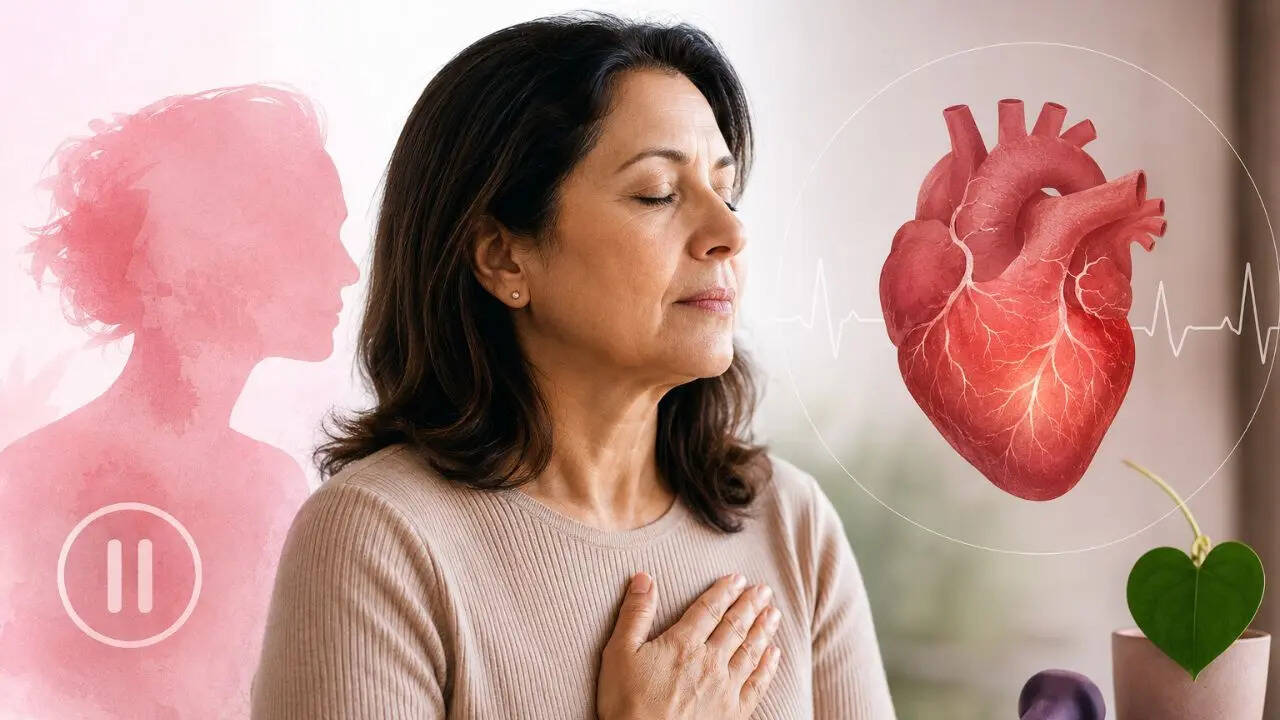
I've spent over three decades treating heart disease, and in that time, I've seen the same misunderstanding come up again and again, across different patients, different generations, different backgrounds. It's the one that delays diagnosis more than any other. Ask most people what menopause changes, and they'll talk about hot flashes, mood swings, or sleep. Ask me, and I'll tell you it changes something just as important: a woman's heart. I believe menopause should be treated as a cardiovascular milestone, not just a reproductive one. We talk to women a great deal about bone density, hormonal symptoms, and fertility. We talk far less about what's happening quietly inside their arteries during this same period. That gap in the conversation is costing us early diagnoses. In some cases, it's costing lives.How Estrogen Protects The Heart? To understand why, it helps to look at what protects a woman's heart in the first place. For most of her reproductive years, estrogen acts almost like a quiet guardian in the background, keeping the endothelium — the inner lining of blood vessels — working well, and supporting the release of nitric oxide, which helps arteries stay relaxed and open. This is a big reason heart attacks are fairly uncommon in women before menopause, compared to men of a similar age. Menopause takes that buffer away, slowly, not all at once. The shift usually starts during perimenopause, often well before periods actually stop. LDL, the harmful cholesterol, tends to rise; HDL, the protective kind, often falls. Blood pressure that used to be easy to control starts creeping higher. Arteries stiffen, insulin resistance sets in, and fat tends to shift toward the belly, carrying its own inflammatory effect on blood vessels. None of this feels dramatic on any single day. It just builds, quietly, year after year — enough that by ten to fifteen years past menopause, a woman's heart risk has often caught up to, and sometimes overtaken, a man's of the same age.Also read: Lifestyle Genetics And Hormones: Understanding The Interplay Of Risk Factors For Ovarian CancerAgeing & Menopause: A Double Impact Some argue this is simply age catching up, and that menopause gets blamed unfairly. There's truth in that — age alone stiffens arteries in everyone. But in my experience, losing estrogen compresses those changes into a much shorter stretch of time. It isn't one factor or the other; it's ageing, sped up by a hormonal shift arriving right in the middle of life. That said, menopause alone doesn't determine a woman's future with heart disease. It sets the stage, but daily habits decide how the story plays out. Smoking, inactivity, weight around the middle, a diet heavy in processed food, unchecked blood pressure and blood sugar, chronic stress, poor sleep, and skipped check-ups all add their share. The reassuring part is that nearly everything on that list can be changed. I've watched patients shift their own trajectory with fairly ordinary steps — walking regularly, eating simply, sleeping better, getting basic tests done once a year.Also read: Mood Swings, Anxiety & Brain Fog During Menopause? Expert Recommends Looking Beyond Hot FlashesHeart Symptoms Women Should Never Ignore What troubles me most in practice is how often real cardiac symptoms get mistaken for "just menopause." Chest pressure rather than sharp pain. New breathlessness during simple activity. Fatigue that doesn't lift with rest. Pain in the jaw, upper back, or between the shoulder blades instead of the classic left-arm pain. Palpitations that don't settle. A few months ago, a woman in her early fifties came to me convinced she had acidity — tightness in the chest, breathlessness on stairs, an occasional fluttering heartbeat. An angiogram showed a significant coronary blockage. "I thought heart problems were a man's disease," she told me. I hear some version of that sentence often, and it worries me every time. My advice to patients is simple: perimenopause is the right time for an honest conversation with a doctor about the heart, not after something has gone wrong. That means a blood pressure check, a proper lipid profile, blood sugar and HbA1c testing, and a baseline ECG — with an echocardiogram, stress test, or coronary calcium score for those with added risk factors. Menopause changes a great deal about a woman's body. Her heart is one of those things, whether she's thinking about it or not. Don't wait for a scare to start the conversation. Start it now, while there's still so much you can do.