
- Health Conditions A-Z
- Health & Wellness
- Nutrition
- Fitness
- Health News
- Ayurveda
- Videos
- Medicine A-Z
- Parenting
How To Keep Your Nails Clean?
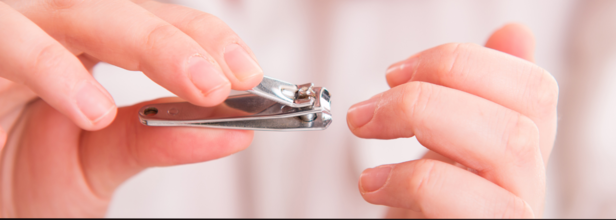
Keeping nails clean (Credit: Canva)
Fingernails are more than just a part of our appearance; they can also harbor a surprising number of microorganisms. A study published in the Journal of American Podiatric Medical Association revealed that fingernails can host 32 different species of bacteria and 28 species of fungi. Alarmingly, about 50% of these organisms are solely bacterial, while 6.3% are solely fungal. The remaining 43.7% consist of mixed communities of bacteria and fungi. This highlights the importance of maintaining nail hygiene to prevent potential infections and promote overall nail health.
Importance Of Nail Hygiene
The presence of bacteria and fungi under the nails can lead to various health issues, including infections and nail disorders. Regularly cleaning and caring for your nails can help minimize the risk of these problems. It's essential to understand that nails can trap dirt, food particles, and microorganisms, making them breeding grounds for harmful agents if not properly maintained.Nutritional Support for Healthy Nails
A well-balanced diet plays a crucial role in keeping nails healthy and strong. Key nutrients that support nail health include:
- Biotin: This B vitamin is known for its role in strengthening nails and preventing brittleness. Foods rich in biotin include eggs, nuts, and whole grains. Biotin supplements are also widely available for those who may not get enough from their diet.
- Vitamins A, B, D, and E: These vitamins contribute to overall nail health. Vitamin A is essential for cell growth, while vitamins D and E help maintain nail moisture and integrity. Leafy greens, carrots, and dairy products are excellent sources.
- Minerals: Iron and zinc are vital for healthy nail growth. A deficiency in these minerals can lead to brittle nails and other nail disorders. Incorporate foods like red meat, legumes, nuts, and seeds into your diet to ensure adequate intake.
Hydration and Moisture Maintenance
Drinking enough water is critical for maintaining nail moisture. Dehydration can lead to brittle nails that are more prone to breaking and splitting. Aim for at least eight glasses of water a day, adjusting based on activity level and climate. Additionally, consider using moisturizing creams on your hands and nails, especially after washing them or using hand sanitizers, which can dry out the skin and nails.
Proper Nail Care Techniques
Caring for your nails involves more than just keeping them clean. Here are some best practices for proper nail care:
1. Regular Trimming: Keep your nails trimmed to a manageable length to prevent snags and breaks. Use a gentle nail clipper or scissors and avoid cutting too close to the skin or trimming the cuticles, as this can lead to painful hangnails or infections.
2. Gentle Cleaning: Clean your nails regularly with soap and water, and consider using a soft brush to scrub underneath the nails gently. Make sure to dry your hands thoroughly afterward to prevent moisture buildup.
3. Protective Measures: When using cleaning chemicals or doing heavy-duty tasks, consider wearing gloves to protect your nails and skin from harsh substances. This is especially important for maintaining both nail and skin health.
4. Avoiding Nail Biting: Nail-biting not only damages your nails but can also introduce bacteria into your mouth, increasing the risk of infections. If you struggle with this habit, consider strategies like keeping your nails trimmed short or using bitter-tasting nail polish.
A Child Dies Every Nine Minutes in India From Drug Resistance, Data Shows
Credit: Canva
One child in India dies every nine minutes from an infection caused by antibiotic-resistant bacteria, as it becomes one of the top 10 global public health threats, experts warn.
Dr HB Veena Kumari of the Department of Neuromicrobiology, National Institute of Mental Health and Neurosciences, claims: "The Covid-19 pandemic has significantly contributed to rising antimicrobial resistance. The World Health Organisation projects that 10 million deaths will occur annually by 2025."
According to the National Foundation for Infectious Diseases, antibiotic resistance occurs when bacteria in the body learns to withstand and remain unaffected by the medicines (antibiotics) meant to kill them.
In such cases, doctors have to switch to different antibiotics, but these backup medicines might not work as well or might cause more side effects. Additionally, infections may also worsen over time as bacteria can become resistant to all available drugs.
Alarmingly is that these tough, drug-resistant bacteria can spread from one person to another, both in hospitals and at home.
According to Dr TS Balganesh, Gangagen Biotechnologies, nearly 36 percent of haemodialysis patients die from fatal infections, which is second only to cardiovascular diseases as a cause of death.
He tells Deccan Herald: "The risk for infective endocarditis in haemodialysis patients is approximately 18 times higher than in the general population and up to 58 percent of these episodes are caused by a bacteria named 'S aureus', with an in-hospital mortality of more than 50 percent."
What Does WHO Say?
One out of every six serious infections confirmed in labs worldwide last year could not be killed by the antibiotics meant to treat them.
Between 2018 and 2023, the problem of antibiotics failing (called resistance) got much worse. For many common types of germs, resistance went up by 5% to 15% every year. The growing inability of these essential medicines to work is a huge threat to people everywhere.
Which Antibiotics Are People Becoming Resistant To?
The WHO's latest report is the most detailed look yet at this issue. It reports on how much resistance exists across 22 different antibiotics, which include common drugs used to treat everyday illnesses. The report focused on eight common types of bacteria that cause things like:
- Urinary tract infections (UTIs)
- Stomach and intestinal infections
- Dangerous blood infections
- Gonorrhoea
Additionally, Dr Obaidur Rahman of Dr Ram Manohar Lohia Hospital has also warned that the country’s casual use of Azithromycin, sold under brand names such as Zithromax, Azee and Zmax, has worsened its effectiveness and pushed India closer to a major public health challenge.
A drug often prescribed for sore throats and upper respiratory tract infections, Dr Rahman noted that Azithromycin was once effective against Mycoplasma Pneumonia, a bacterium responsible for pneumonia in adults and children.
READ MORE: India’s New Antibiotic in 30 Years Offers Hope Against Antibacterial-Resistant Infections
However, this is no longer the case as India now shows an alarming 80 to 90 percent resistance to the drug when treating infections caused by this bacterium. A medicine that once addressed a wide range of respiratory problems is no longer reliable for many patients.
The surgeon has since urged people to avoid taking antibiotics without proper medical advice. Most seasonal respiratory infections resolve on their own, and unnecessary drugs only add to the resistance problem.
Supreme Court Declares Menstrual Hygiene As Part Of Right To Life; Free Sanitary Pads For Girls In All Schools
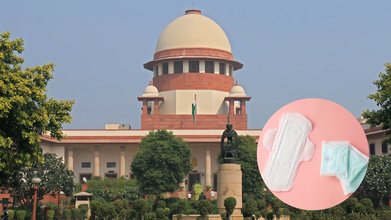
Credits: Britannica and Canva
Supreme Court on Friday declared the right to menstrual health as part of the right to life under Article 21 of the Constitution. The court issued a slew of directions to ensure that every school provides biodegradable sanitary napkins free of cost to adolescent girls. The guidelines also ensured that schools must be equipped with functional and hygienic gender-segregated toilets. The Court directed the pan-India implementation of the Union's national policy, 'Menstrual Hygiene Policy for School-going Girls' in schools for adolescent girl children from Classes 6-12.
Read: Menopause Clinics Explained: Latest Launch By Maharashtra And Kerala Government
Supreme Court Declares Menstrual Hygiene As Part Of Right To Life: Here Are the Directions
A bench comprising Justice JB Pardiwala and Justice R Mahadevan passed the following directions:
- All States/UT must ensure that every school, whether government-run or privately managed, in both urban and rural areas, is provided with functional gender segregated toilets with usable water connectivity.
- All existing or newly constructed toilets in schools shall be designed, constructed and maintained to ensure privacy and accessibility, including by catering to needs of children with disabilities.
- All school toilets must be equipped with functional washing facilities and soap and water available at all times.
- All states/UTs must ensure that every school, whether government-run or privately managed, in both urban and rural areas, provide oxo-biodegradable sanitary napkins manufactured in compliance with the ASTM D-6954 standards free of cost. Such sanitary napkins must be made readily accessible to girl students, preferably within toilet premises through sanitary napkin vending machines or, where not visible, at a designated place.
- All States/UTs must ensure that every school, whether government-run or privately managed, in both urban and rural areas establish menstrual hygiene management corners. It must be equipped with spare innerwears, uniforms, disposable pads and other necessary materials to address menstrual urgency.
The court also issued directions for the disposal of sanitary waste. Justice Pardiwala said, "This pronouncement is not just for stakeholders of the legal system. It is also meant for classrooms where girls hesitate to ask for help. It is for teachers who want to help but are restrained due to a lack of resources. And it is for parents who may not realise the impact of their silence and for society to establish its progress as a measure in how we protect the most vulnerable. We wish to communicate to every girlchild who may have become a victim of absenteeism because her body was perceived as a burden when the fault is not hers."
Read: Menstrual Cups To Replace Sanitary Napkins In Karnataka Government Schools
Why Is This Judgment So Important?
In India, menstruation is still seen as taboo. In fact, there is a lot of shame around it. Menstrual shame is the deeply internalized stigma, embarrassment, and negative perception surrounding menstruation, which causes individuals to feel unclean, or "less than" for a natural biological process. This judgment thus is an effort to do away with the shame rooted in cultural, social, and religious taboos, which is often the reason why many girls drop out, or due to lack of awareness, develop health adversities.
Most Medical Videos Even By Doctors Online Are Factually Incorrect, Finds Study

Representational Image by iStock
Most health videos on YouTube, even those made by doctors are also not reliable medical information, found a new study, published in JAMA Network Open. The researchers reviewed 309 popular YouTube videos on cancer and diabetes and found that fewer than 1 in 5 were supported by high quality scientific evidence. About two-thirds of the view had low, very low or no evidence at all to back up their health claims.
What was more concerning is that weaker evidence often attracted more viewer than those backed with strong science. The study looked at videos which had at least 10,000 views. The lead author of the study Dr EunKyo Kang of South Korea's National Cancer Center, said, "This reveals a substantial credibility-evidence gap in medical content videos, where physician authority frequently legitimizes claims lacking robust empirical support."
"Our findings underscore the necessity for evidence-based content-creation guidelines, enhanced science communication training for health care professionals, and algorithmic reforms prioritizing scientific rigor alongside engagement metrics," Kang added in a news release.
How Was The Study Conducted?
The researchers reviewed videos from June 20 and 21, 2025, focusing on cancer and diabetes content. 75 per cent of them were made by physicians. The videos had a median count of 164,000 views and a median length of 19 minutes.
Researchers also developed a scoring system, called E-GRADE to rate the strength of science backed evidence in each video's claim.
This is how the grading system worked:
- GRADE A: high quality evidence
- GRADE B: standard quality evidence
- GRADE C: low quality evidence
- GRADE D: very low or no evidence
What Were The Results Of The Medical Videos?
- GRADE A: 19.7%
- GRABE B: 14.6%
- GRADE C: 3.2%
- GRADE D: 62.5%
The study also found that videos with the weakest evidence were 35% more likely to get higher views than videos with strong scientific evidence.
Richard Saver, a professor of law at the University of North Carolina at Chapel Hill noted that this issue is not just limited to YouTube. "Physician-spread misinformation is a long-standing problem, dating back well before the internet era," he wrote in an accompanying editorial.
Saver said some doctors continue to lean on personal experience rather than solid data, despite evidence-based medicine being regarded as the gold standard. He noted that EBM can feel like it downplays individual clinical judgment. Still, Saver stressed that more research is needed, adding that the study underscores the importance of examining the evidence behind health professionals’ claims on social media.
How Health And Me Has Helped With Medical Facts
Health and Me has always stayed a step ahead from medical misinformation and ensured that its readers too consume correct information. Health and Me's Fact Check series have consistently ran checks on bizarre medical claims, whether it is about a magical potion for weight loss, fake health news, or un-scientific remedies.
Fact Check By Health And Me:
- Fact Check: Does Circumcision Really Cause Autism As Claimed By RFK Jr.?
- Fact Check: Semen Production Means You Have Healthy Sperms, Here's What The Doctor Says
- Fact Check: Is The COVID-19 'Lab Leak' Theory Correct?
- Fact Check: Are Fewer Childhood Vaccines Really “A Better Thing” Under the New CDC Guidelines?
- Fact Check: Is Weight Lifting Safe for Teens? An Expert Explains the Risks and Safer Alternatives
- Fact Check: Do Heart Attacks Peak in the Early Morning? Here’s What a Doctor Says
- Fact Check: Does Ja Morant Have Lung Cancer?
- Fact Check: Can Cold Morning Showers Trigger Brain Stroke?
- Fact Check: Is The Pink Salt Trick Recipe Effective For Weight Loss?
- Follow Us :


© 2024 Bennett, Coleman & Company Limited