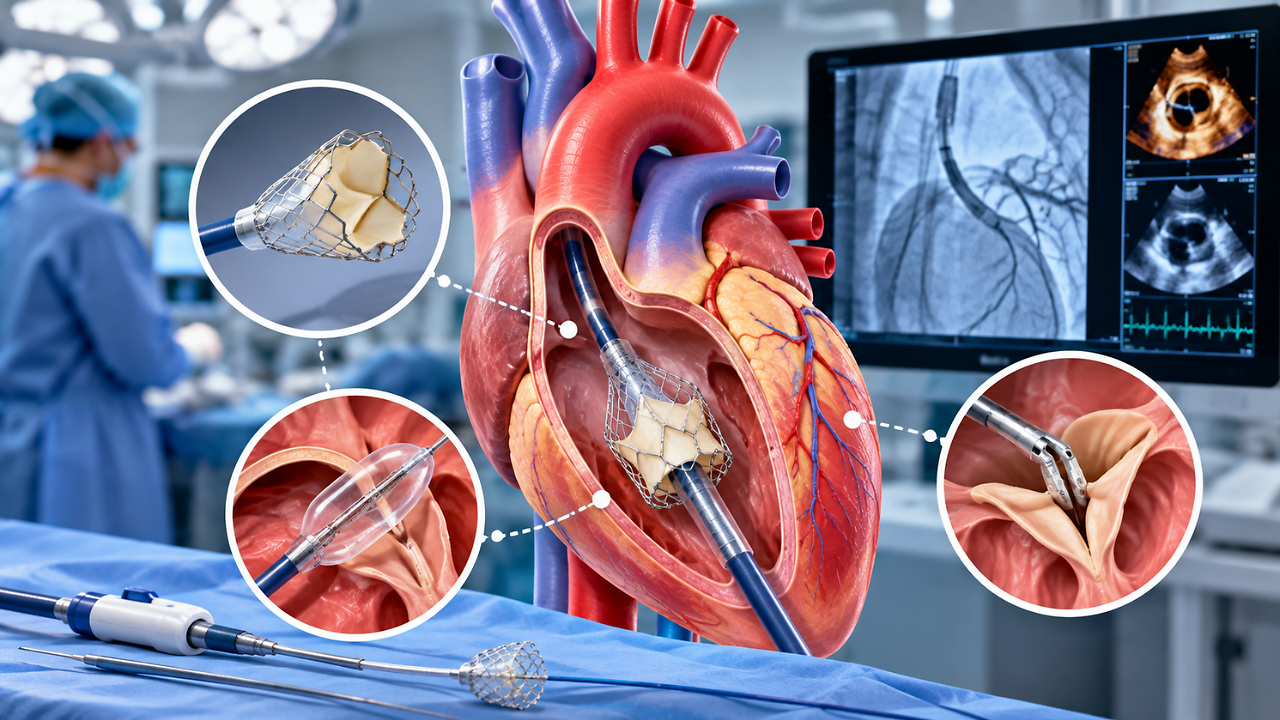
Cardiovascular disease continues to be a major health burden globally, but not all heart conditions receive the same level of attention. While public awareness often centres on heart attacks and blocked arteries, structural heart disease is an increasingly important concern. It encompasses a range of conditions affecting the heart's valves, chambers, walls and blood flow pathways. Some are present from birth, while others develop with ageing or as a result of other cardiovascular conditions. Many structural heart conditions progress silently for years. Symptoms such as breathlessness, fatigue, reduced physical activity, palpitations and swelling are often dismissed as signs of ageing or everyday stress. As a result, patients may seek medical attention only when symptoms become advanced, affecting heart function, independence and overall quality of life. Working Beyond Conventional Treatment Methods For decades, open-heart surgery was the cornerstone of treatment for many structural heart conditions. While surgery remains an effective and important treatment option for numerous patients, advancements in cardiovascular medicine have significantly expanded the range of available therapies. Minimally invasive, catheter-based procedures are reshaping structural heart care by enabling physicians to repair or replace affected heart valves through small entry points rather than traditional open-heart surgery. For appropriately selected patients, these approaches can support shorter recovery times and help individuals return more quickly to daily activities. Most importantly, innovation is transforming care across multiple forms of structural heart disease. In aortic stenosis, where the aortic valve narrows and restricts blood flow from the heart, minimally invasive valve replacement therapies are expanding treatment possibilities. Similarly, advancements in transcatheter repair have created new options for patients with mitral regurgitation and tricuspid regurgitation, conditions in which valves do not close properly, allowing blood to leak backwards. Beyond valve disease, structural heart innovation is also transforming the management of congenital and acquired heart abnormalities. Catheter-based interventions are enabling physicians to close defects such as patent foramen ovale (PFO) and atrial septal defects (ASD), while left atrial appendage closure procedures are emerging as important options for stroke risk reduction in selected patients with atrial fibrillation. Together, these advances reflect the growing breadth of structural heart care and the expanding range of minimally invasive treatment options available to patients.Also read: Mammogram May Spot Hidden Heart Risk That Doctors Miss In Women The Role of Imaging and Precision Medicine The evolution of structural heart care is being driven not only by therapeutic innovation but also by remarkable advances in imaging and procedural planning. Today, technologies such as advanced echocardiography, cardiac computed tomography (CT) and three-dimensional imaging allow clinicians to visualise the heart with exceptional precision. These technologies support earlier and more accurate diagnosis, helping physicians understand the complexity of a patient's anatomy and make more informed treatment decisions. Imaging also plays a critical role during interventions, helping physicians navigate complex procedures with greater accuracy and confidence. As treatment options continue to expand, precision medicine is becoming increasingly important in structural heart care. Not every patient is suited to the same intervention, and successful outcomes depend on careful assessment of anatomy, disease severity, overall health and individual clinical needs. This ability to personalise treatment is helping improve both procedural success and long-term patient outcomes. A New Era in Structural Heart Care The future of structural heart care lies at the intersection of innovation, clinical expertise and precision medicine. Today's structural heart programmes bring together advanced diagnostics, sophisticated imaging, minimally invasive interventions and multidisciplinary expertise to deliver increasingly personalised care. At the same time, a growing body of clinical evidence continues to strengthen confidence in these therapies and support their adoption across a broader range of patients. As awareness increases and treatment options continue to evolve, structural heart care is entering a new era, one defined by earlier diagnosis, more precise interventions and expanded therapeutic possibilities across a wide spectrum of structural heart conditions. Ultimately, the greatest opportunity lies in ensuring that patients are identified and treated before disease progresses. Through continued advances in diagnosis, imaging and minimally invasive therapies, clinicians are increasingly able to improve outcomes while helping patients maintain their quality of life and independence for longer.By Dr. Amjad Sheikh, Consultant, Cardiovascular & Thoracic Surgeon, Dr Amjad’s Heart and Vascular clinic- Ghatkopar West, Mumbai