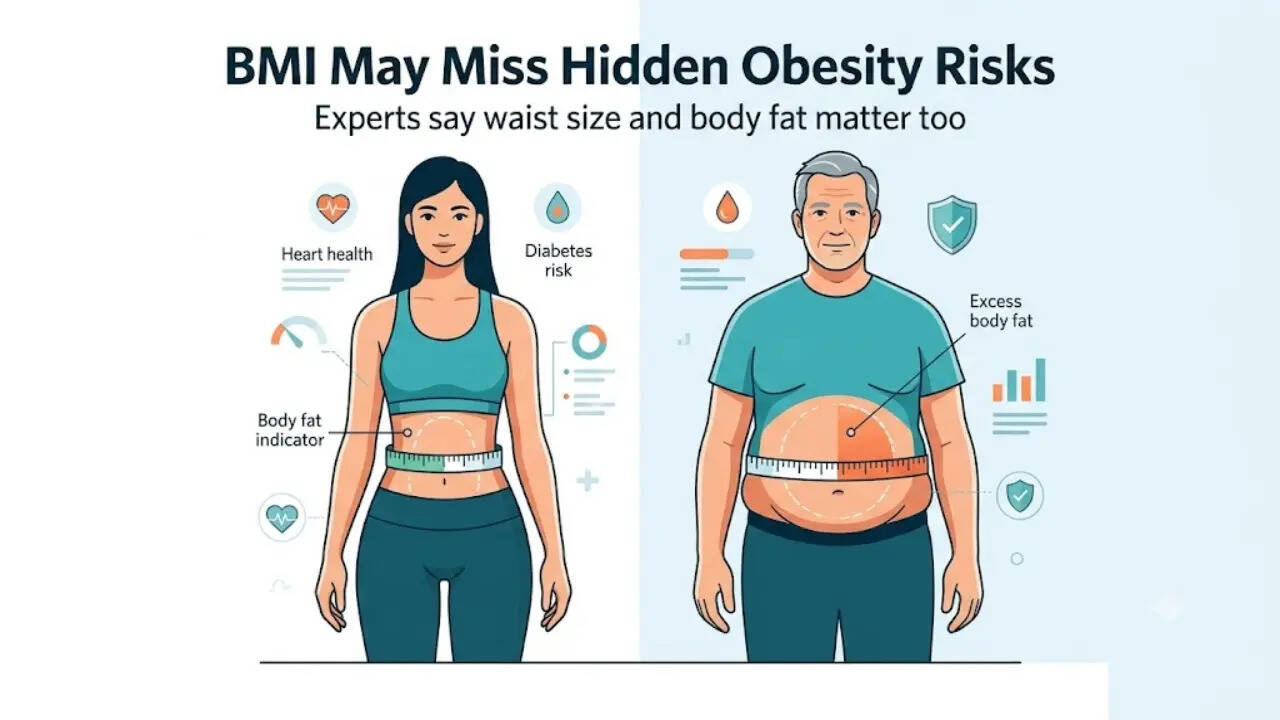
Researchers have found that up to 25 per cent more adults could be classified as obese, even if their body mass index (BMI) score falls under the normal category. As per the current rules, a BMI score of 18.5 to 25 is considered healthy, 25–29 is overweight, and 30 onwards is considered obese. Obesity can contribute to a long-term risk of serious illness, but according to an international team of experts, BMI may not be the most reliable measure for ascertaining obesity levels in an individual.Why is BMI not a reliable parameter?Researchers have found that adding the weight-to-height ratio and waist circumference could be a good way to ascertain unhealthy body fat levels. Fat, according to scientists, builds up in people who are not considered overweight or obese under the current rules, depending on where it is stored. Older bodies have a higher fat build-up around the waist, which, when combined with loss of muscle mass, means that there is no change in total weight. This means that the fat that accumulates, known as "skinny fat," does not always raise an alarm.The new study from scientists at the University of Southern California analysed data from 5,642 adults in the US and discovered that a quarter of them had a normal BMI but actually met the obesity criteria. Furthermore, over 50 per cent of overweight people, according to their BMI, also met the updated obesity criteria. These findings, according to experts, suggest that millions of Americans with obesity-related health complications could be missing much-needed health interventions.BMI is problematic because it does not evaluate body fat but reflects total body weight, including muscle and bone. Therefore, a muscular person is likely to have a high BMI but not much fat. However, a person with a normal BMI can have excess body fat, which can lead to complications later. The good news, experts say, is that these obesity-related issues can be addressed. Either lifestyle changes, medication, or both can be effective in reducing body fat levels and lowering the risk of future health problems. The sooner it is diagnosed, the better it is for long-term well-being.Read more: Why 'Normal Weight' Doesn’t Always Mean HealthyDoes obesity risk increase with age?Researchers estimate that 30 per cent of adults living in England aged 16 years and above are obese. This increases with age, with over 35 per cent of people aged 55 to 74 years living with obesity. Under the new rules, obesity would be defined as a BMI of 30 and above, or at least one elevated measure, such as a high waist circumference, a high waist-to-height ratio, or a BMI of 40 and above. Researchers have labelled these obesity subtypes as BMI-plus-anthropometric obesity.What is an unhealthy waist circumference?According to the NHS, an unhealthy waist circumference is 37 inches in men and 31.5 inches or above in women. An unhealthy waist-to-height ratio occurs when the waist circumference is half or more of a person's height. According to the British Heart Foundation, BMI is calculated by dividing weight by height squared. There are multiple BMI calculators available online. It is classified as follows:Underweight – below 18.5Healthy weight – 18.5 to 24.9Overweight – 25 to 29.9Obese – 30 and aboveIf BMI is in the overweight category, it is linked with a heightened risk of heart disease and incidents such as stroke or heart attack. If it falls within the obese category, the risks are higher. Underweight people are not exempt from risk, as they have a greater likelihood of developing long-term health problems.