
- Health Conditions A-Z
- Health & Wellness
- Nutrition
- Fitness
- Health News
- Ayurveda
- Videos
- Medicine A-Z
- Parenting
Is Your Skin Reacting to Toxic Air? Dermatologists Point to 8 Early Warning Signs

Credits: Canva
Air pollution is now recognised as a major trigger for skin problems. Dust, smoke residues, PM2.5 particles, and heavy metals settle on the skin through the day. They weaken the barrier, disturb the skin’s balance, and speed up signs of ageing. People living in crowded, high-traffic areas often notice dullness, pigmentation, breakouts, and sensitivity more than those in cleaner environments.
Two skin specialists helped us understand the early warning signs you should never overlook.
8 Signs Your Skin Is Reacting to Pollution
1. Sudden Dullness and Loss of Glow
Pollutants oxidise the skin’s natural lipids and damage its protective layer. This makes the face look tired and lifeless even when sleep and nutrition are well balanced. Many people notice a loss of glow on days spent outdoors, especially during peak pollution periods., as per Dr Geeta Grewal, Cosmetologist and Founder of 9Muses Wellness Clinic
2. More Blackheads and Clogged Pores
Dr Grewal notes that PM2.5 particles slip into pores and mix with sweat and sebum. This leads to blackheads, whiteheads, and congested skin. A rough, bumpy texture is one of the most common pollution-related concerns.
3. Frequent Breakouts
Rising pollution levels increase inflammation and oxidative stress, which disrupts the skin’s microbiome. These changes can bring tiny breakouts, fungal acne-like clusters, or painful pimples. Environmental irritants often act as hidden triggers, especially in urban areas.
4. Uneven Skin Tone and Pigmentation
Constant oxidative stress encourages the skin to produce more melanin. According to Dr Grewal, this results in dark spots, sun spots appearing sooner, and patchy pigmentation along the cheeks, nose, and forehead. Many people mistake this for sun damage alone, but pollution plays a major role.
5. Increased Sensitivity
If skincare products that once felt comfortable now sting or cause redness, pollution may be weakening your skin barrier. Warning signs include burning, itching, a warm sensation on the skin, or sudden irritation without a clear cause, as per Dr Ameesha Mahajan, Cosmetic Dermatologist and Founder, Eden Skin Clinic.
6. Early Fine Lines and Premature Ageing
Dr Mahajan explains that pollutants trigger free radical damage. This breaks down collagen and elastin, the proteins that keep skin firm and smooth. Over time, it leads to wrinkles, crow’s feet, and mild sagging around the eyes and mouth.
7. Dry, Rough, or Dehydrated Skin
Pollutants strip moisture and damage the barrier, causing tightness and flakiness even in people with oily skin. When the barrier is compromised, moisturisers stop working as well, which worsens dehydration.
8. Frequent Rashes or Dermatitis Flares
People with sensitive skin conditions such as eczema, psoriasis, or rosacea may notice more flare-ups when pollution rises. Dr Mahajan says that constant exposure can lead to rashes, bumps, and patchy irritation that keeps returning.
Avoiding pollution entirely is difficult, but protecting your skin is possible. Strengthen the barrier with antioxidants, sunscreen, gentle cleansers, and weekly detox habits. Watch for the early warning signs mentioned by the experts and act early. A strong skin barrier remains the most reliable way to maintain clear, healthy, and youthful skin despite rising pollution levels.
Can Thalassemia Affect Brain Health? Experts Explain
Credit: AI generated image
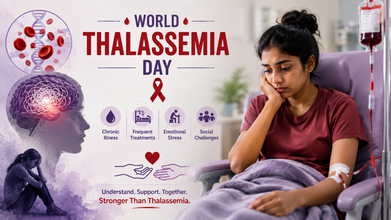
While thalassemia is known widely as a blood disorder, its impact can extend far beyond anemia and transfusions, said experts on World Thalassemia Day today.
World Thalassemia Day is observed every year on May 8 to raise awareness about the inherited blood disorder caused by faulty genes.
The disorder, which often requires blood transfusions every fortnight, affects approximately 1.3 million people living with severe forms of thalassemia worldwide. About 1.5 percent of the global population is carriers, and the disease claims nearly 11,000 lives annually.
Speaking to HealthandMe, health experts raised concerns about the growing mental health and neurological challenges faced by patients, especially children and young adults living with the condition.
Dr. Praveen Gupta, Chairman – Marengo Asia International Institute of Neuro & Spine (MAIINS), Gurugram, shared that repeated blood transfusions are important and save the lives of thalassemia patients, but long-term transfusion therapy can potentially lead to neurological complications if not properly monitored.
“Chronic transfusions can cause iron overload, which is the accumulation of iron in critical organs such as the brain, and may impact cognitive and psychological function, as well as mood,” Dr. Gupta explained.
He added that "changes in oxygen supply and related complications may make patients more vulnerable to headaches, lethargy, or even undetected brain injury".
However, experts stress that most neurological complications can be prevented through multidisciplinary care, iron chelation therapy, and regular monitoring.
Can Thalassemia Affect Brain Development in Children?
The expert stated that thalassemia may also indirectly affect brain development in children, particularly when severe anemia continues for long periods and limits oxygen supply to the growing brain.
Dr. Gupta noted that poor oxygenation, nutritional deficiencies, iron overload from repeated transfusions, and metabolic complications may affect:
- Cognitive function
- Learning ability
- Attention span
- Overall neurodevelopment
- Early warning signs may include:
- Delayed speech
- Difficulty concentrating
- Poor school performance
- Frequent headaches
- Irritability
- Developmental delays
Also read: World Thalassemia Day 2026: Why Screening Before Marriage Or Pregnancy Is Important
Early Signs Parents Should Not Ignore
Dr. Vipin Khandelwal, Sr. Consultant Paediatric Haemato Oncology & BMT at Apollo Hospitals Navi Mumbai, told HealthandMe that thalassemia affects the blood’s ability to carry oxygen, and prolonged disruption can impact growth, immunity, bone health, and learning abilities.
“The early signs of thalassemia are often subtle, which is why many families miss them until anemia becomes severe,” he said.
Parents should watch for persistent symptoms such as:
- Unusual tiredness
- Pale appearance
- Poor appetite
- Difficulty gaining weight
- Delayed growth
- Delayed walking or speech
- Reduced stamina
- Bone pain
- Recurrent weakness
He stressed that while thalassemia is inherited, many serious complications can be prevented with early diagnosis, regular check-ups, timely transfusions, and proper iron monitoring.
Why Depression and Anxiety Are Common Among Thalassemics?
Read More: Hantavirus Updates Of The Day: 8 May 2026 - US CDC Classifies Outbreak As 'Level 3' Emergency
Further, the experts also highlighted risk of anxiety, stress, low self-esteem, and depression among people with thalassemia who face lifelong blood transfusions, frequent hospital visits, leading to physical fatigue, and fear of complications. Over time, these challenges may increase, many often go unnoticed or untreated.
Dr. Roshan Dikshit, Senior Consultant, Haematology & Bone Marrow Transplant at Aakash Healthcare, told HealthandMe that thalassemia is not only a physical health condition, but also an emotional and psychological challenge. He stressed the need to provide mental support to thalassemic patients.
“Frequent hospital visits, lifelong blood transfusions, fear of complications, and social limitations can increase the risk of anxiety, stress, and depression, especially among teenagers and young adults,” said Dr. Roshan Dikshit, Senior Consultant, Haematology & Bone Marrow Transplant at Aakash Healthcare.
According to Dr. Dikshit, many patients struggle with:
- Low self-esteem
- Isolation
- Emotional fatigue.
Importantly, these emotional challenges often go unnoticed.
“Mental health support should be considered an essential part of thalassemia care. Counseling, family support, social acceptance, and open communication can significantly improve a patient’s emotional well-being and quality of life,” he said.
He also emphasized that early psychological intervention can help patients cope better with the disease and reduce the long-term mental health burden associated with chronic illness.
Can Children Develop Eye Infections While Swimming?
Conjunctivitis can spread in shared water. (Photo credit: AI generated)
For most children, a swimming pool is all about fun: summer afternoons, splashing around, and playing with friends. It feels harmless, even healthy, and in many ways, it is. But over time, a small pattern has started to show up. Parents notice it after a swimming session: red eyes, constant rubbing, and sometimes complaints of burning or discomfort that were not there before. It does not always seem serious in the beginning, which is probably why it gets ignored. Still, it keeps happening often enough to be worth paying attention to.
In an interview with Health and Me, Dr Neeraj Sanduja, Director, Viaan Eye & Retina Centre, Gurugram, explained how swimming pool time could be giving your children eye infections.
What’s Really Causing the Problem
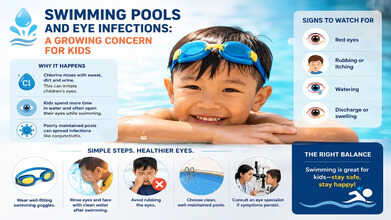
It is easy to assume the water is the issue, but that is only part of it. Most pools are treated with chlorine, which is necessary to keep them clean. The problem starts when chlorine mixes with other things that end up in the water: sweat, dirt, and even small amounts of urine. That mix creates compounds that can irritate the eyes.
Children are more likely to be affected because they spend more time in the water and often open their eyes while swimming. The natural layer that protects the eyes gets disturbed, and that is when the redness or burning starts. In some cases, it is not just irritation. If the pool is not maintained properly, there is also a risk of infections. Conjunctivitis, for example, can spread quite easily in shared water.
What Parents Usually Notice First
The signs are not always dramatic. In fact, they are easy to miss at first. A child may come back with slightly red eyes and say they sting a bit or keep rubbing them without thinking much of it. Sometimes there is watering that does not settle quickly.
If it is just mild irritation, it usually improves within a few hours. But if the redness stays, or there is itching, swelling, or discharge, it is likely to be something more than just chlorine exposure. That is usually the point at which it needs attention.
Small Things That Actually Help
The good part is that this is mostly preventable. Swimming goggles make a difference. Not everyone likes wearing them, especially younger children, but they do help keep the eyes protected. A proper fit matters; otherwise, water still gets in.
Rinsing the face and eyes with clean water after getting out of the pool is another simple step. It helps wash away whatever is left behind. Also, children tend to rub their eyes when they feel discomfort. That only makes things worse. It is a small habit, but one that needs to be corrected gently. And then there is the pool itself. A clean-looking pool is not always a safe one. Maintenance matters more than appearance.
When It Shouldn’t Be Ignored
Most of the time, these issues settle quickly, but not always. If the same problem keeps coming back after every swim, or if the symptoms last beyond a day, it is better to get it checked. Waiting it out does not always help. Children may not always explain clearly what they are feeling. So, small changes, like avoiding light or blinking more than usual, can be signs that something is not right.
Finding the Right Balance
Swimming is still one of the best activities for children. It keeps them active, helps them relax, and is something they genuinely enjoy. The idea is not to stop it, just to be a little more careful. A few small steps can go a long way in preventing discomfort later. And once that becomes part of the routine, the experience stays what it is meant to be: fun, safe, and worry-free.
The 'Cancerism' Crisis: Oncologist Debunks Common Cancer Myths

A balanced diet can help manage cancer risk later. (Photo credit: AI generated)
Every year, millions of people around the world receive a cancer diagnosis—and nearly as many receive a flood of well-meaning but dangerously incorrect advice. From social media posts to family folklore, myths about cancer are pervasive, and they can delay treatment, fuel panic, or give false comfort when vigilance is needed. this crisis of misinformation at the clinical frontline. “Patients sometimes arrive having avoided medical care for months because they believed a natural remedy would suffice.
The World Health Organization estimates that between 30 and 50 percent of all cancers are preventable. Tobacco use, poor diet, physical inactivity, alcohol consumption, and certain infections together account for a large proportion of global cases. Awareness and early action are the most powerful tools available. Cancer is not one disease but over 100 distinct conditions, each with its own biology, risk factors, and treatment pathways. This complexity is part of why myths take hold so easily.
What is cancerism?
Dr Amish Vora, MBBS, MD, DNB, DM- AIIMS Delhi, Medical Oncologist, Director of H.O.P.E. Oncology Clinic, New Delhi, defines "cancerism" as encompassing three deeply interrelated phenomena:
Fear and Stigma: The pervasive fear and social stigma attached to a cancer diagnosis, which can cause patients to conceal their illness, avoid seeking help, and suffer in silence. Dr Vora argues this fear is often as damaging as the disease itself.
Misconceptions and Myths: The widespread false beliefs about cancer—its causes, treatment, and curability—that circulate through communities, social media, and word of mouth, leading patients to delay or abandon proven medical care.
Discrimination: The direct discrimination faced by cancer patients in workplaces, families, and communities—from job loss to social isolation—which compounds their suffering and undermines recovery.
“Cancerism is as real and as harmful as the cancer itself,” says Dr Vora. “Addressing it requires the same urgency we apply to developing new treatments. We cannot cure cancer in a society that is still afraid to say the word.”
Common Myths and Facts About Cancer
Drawing on his clinical experience and the framework of Cancerism, Dr Vora identifies the following as the most dangerous and persistent misconceptions he encounters:
Cancer is always fatal.
Many cancers are treatable. When caught early, 5-year survival rates exceed 90% for several types, including breast, skin, and prostate cancer.
Sugar directly feeds and grows cancer cells.
All cells use glucose for energy, not just cancer cells. Cutting out sugar will not starve a tumour. The science does not support this claim.
Cancer is purely genetic—if it runs in your family, you’ll get it.
Only 5-10% of cancers are hereditary. Lifestyle and environmental factors account for the vast majority of cases.
Biopsies and surgery cause cancer to spread.
There is no credible scientific evidence that biopsies cause cancer to spread. Avoiding or delaying diagnosis is far more dangerous.
A positive attitude alone can cure cancer.
Mental well-being and emotional support are important for quality of life, but they cannot replace evidence-based medical treatments.
Deodorants and antiperspirants cause breast cancer.
Major studies including those by the National Cancer Institute have found no link between antiperspirant use and breast cancer risk.
Cancer is not contagious—you can catch it from someone.
Cancer cannot be transmitted person to person. It is not an infectious disease. You cannot catch it through proximity or contact.
Mobile phones cause brain cancer.
Decades of research have found no conclusive evidence that mobile phone use causes brain tumours. Major health bodies concur on this.
Superfoods can prevent or cure cancer.
No single food has proven cancer-preventing or curative properties. A balanced overall diet reduces risk, but there are no miracle foods.
If you feel fine, you don’t have cancer.
Many cancers are asymptomatic in their early stages. Regular screening is the only reliable way to detect them before symptoms appear.
- Follow Us :


© 2024 Bennett, Coleman & Company Limited