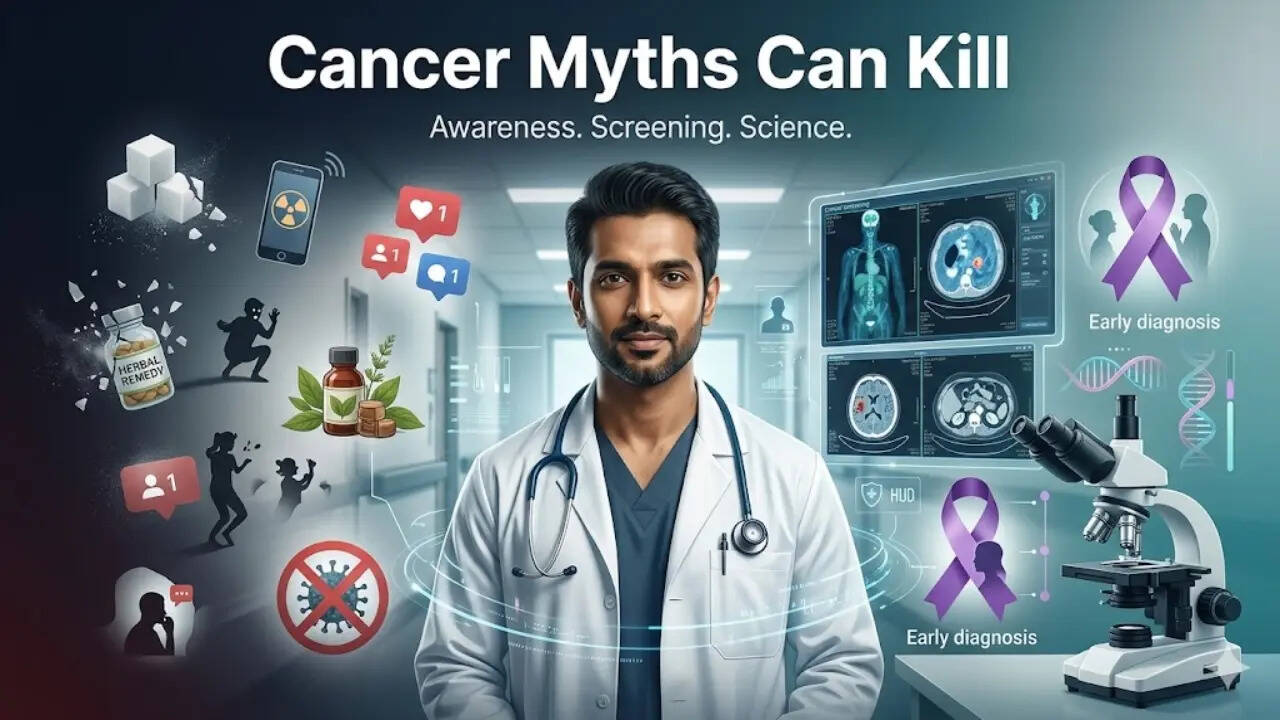
Every year, millions of people around the world receive a cancer diagnosis—and nearly as many receive a flood of well-meaning but dangerously incorrect advice. From social media posts to family folklore, myths about cancer are pervasive, and they can delay treatment, fuel panic, or give false comfort when vigilance is needed. this crisis of misinformation at the clinical frontline. “Patients sometimes arrive having avoided medical care for months because they believed a natural remedy would suffice.The World Health Organization estimates that between 30 and 50 percent of all cancers are preventable. Tobacco use, poor diet, physical inactivity, alcohol consumption, and certain infections together account for a large proportion of global cases. Awareness and early action are the most powerful tools available. Cancer is not one disease but over 100 distinct conditions, each with its own biology, risk factors, and treatment pathways. This complexity is part of why myths take hold so easily. What is cancerism?Dr Amish Vora, MBBS, MD, DNB, DM- AIIMS Delhi, Medical Oncologist, Director of H.O.P.E. Oncology Clinic, New Delhi, defines "cancerism" as encompassing three deeply interrelated phenomena:Fear and Stigma: The pervasive fear and social stigma attached to a cancer diagnosis, which can cause patients to conceal their illness, avoid seeking help, and suffer in silence. Dr Vora argues this fear is often as damaging as the disease itself.Misconceptions and Myths: The widespread false beliefs about cancer—its causes, treatment, and curability—that circulate through communities, social media, and word of mouth, leading patients to delay or abandon proven medical care.Discrimination: The direct discrimination faced by cancer patients in workplaces, families, and communities—from job loss to social isolation—which compounds their suffering and undermines recovery.“Cancerism is as real and as harmful as the cancer itself,” says Dr Vora. “Addressing it requires the same urgency we apply to developing new treatments. We cannot cure cancer in a society that is still afraid to say the word.”Common Myths and Facts About CancerDrawing on his clinical experience and the framework of Cancerism, Dr Vora identifies the following as the most dangerous and persistent misconceptions he encounters: Cancer is always fatal. Many cancers are treatable. When caught early, 5-year survival rates exceed 90% for several types, including breast, skin, and prostate cancer.Sugar directly feeds and grows cancer cells.All cells use glucose for energy, not just cancer cells. Cutting out sugar will not starve a tumour. The science does not support this claim.Cancer is purely genetic—if it runs in your family, you’ll get it. Only 5-10% of cancers are hereditary. Lifestyle and environmental factors account for the vast majority of cases.Biopsies and surgery cause cancer to spread. There is no credible scientific evidence that biopsies cause cancer to spread. Avoiding or delaying diagnosis is far more dangerous.A positive attitude alone can cure cancer. Mental well-being and emotional support are important for quality of life, but they cannot replace evidence-based medical treatments.Deodorants and antiperspirants cause breast cancer. Major studies including those by the National Cancer Institute have found no link between antiperspirant use and breast cancer risk.Cancer is not contagious—you can catch it from someone. Cancer cannot be transmitted person to person. It is not an infectious disease. You cannot catch it through proximity or contact.Mobile phones cause brain cancer. Decades of research have found no conclusive evidence that mobile phone use causes brain tumours. Major health bodies concur on this.Superfoods can prevent or cure cancer. No single food has proven cancer-preventing or curative properties. A balanced overall diet reduces risk, but there are no miracle foods.If you feel fine, you don’t have cancer. Many cancers are asymptomatic in their early stages. Regular screening is the only reliable way to detect them before symptoms appear.