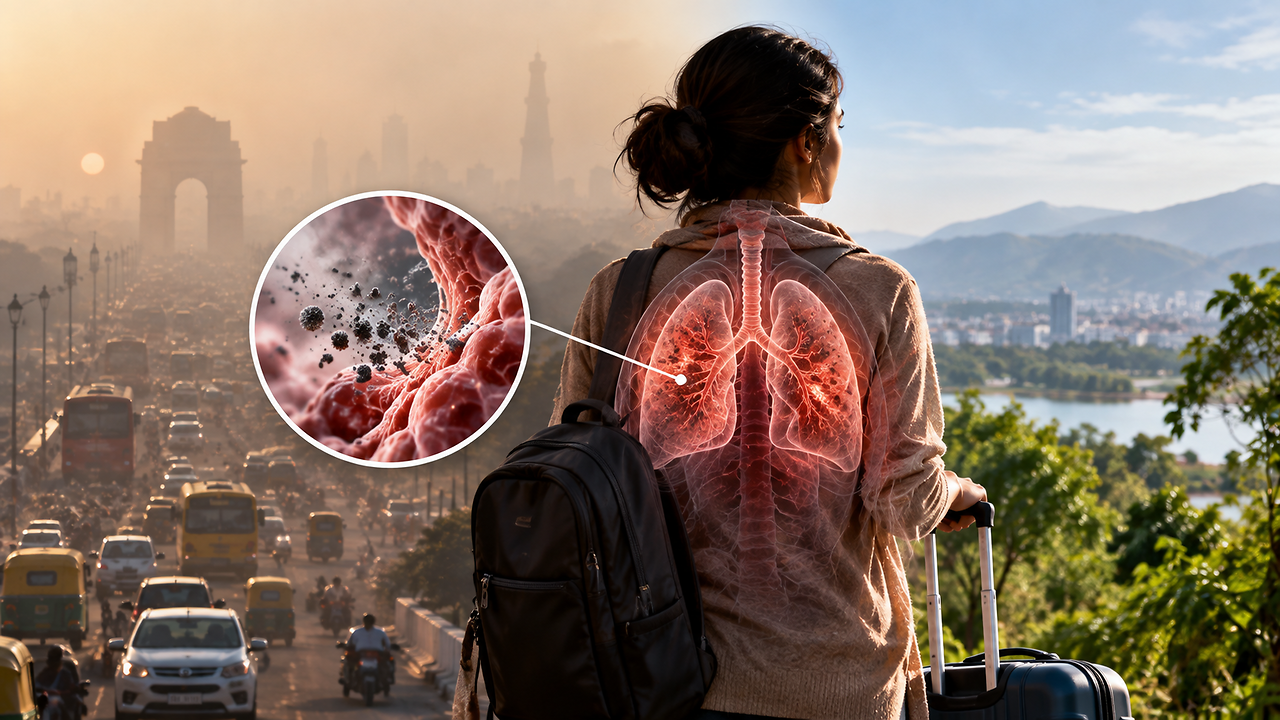
Leaving Delhi for a city with cleaner air could be a health-smart decision as it can reduce your exposure to harmful pollutants. But just because you are away from the smog, it does not mean the health effects from years of inhaling polluted air will recover overnight. That brings us to an important question. How long do lungs take to recover after living in an excessively polluted environment? Air pollution, particularly fine particulate matter known as PM2.5, triggers inflammation and oxidative stress throughout the body. This can directly impact the lungs, heart, blood vessels and even the brain. The World Health Organization says long-term exposure to air pollution increases the risk of serious disorders like heart disease, stroke, chronic obstructive pulmonary disease (COPD) and lung cancer. That is why relocating could be beneficial without necessarily being a complete reset for the body. Exposure Stops But Not EffectsAlso read: Delhi Air Pollution Is Back: What Days Of Poor AQI Can Do to Your LungsThe key difference to note here is between ongoing exposure and the damage that exposure may have contributed to. Once someone moves to a place with cleaner air, they are no longer receiving the same daily dose of pollutants. This can alleviate the ongoing inflammatory burden due to toxic air significantly. But if years of exposure have contributed to changes in lung function, blood vessels or cardiovascular health, those effects may take much longer to recover, and some chronic disease may not even be completely reversible. A recent study examining Delhi’s pollution between 2019 and 2023 found that PM2.5 levels exceeded India’s national daily standard on roughly 60% of measurements and the WHO daily guideline on almost all days. Researchers also found that particles deposited deep in the lungs can be cleared much more slowly than larger particles, sometimes over weeks to years. Lungs May Be Impacted For A Long Time After Moving Also read: Children, Adults & Seniors: How Lung Health Risks Change Across Life StagesPM2.5 particles are small enough to travel deep into the respiratory system. Some particles can reach the alveolar regions of the lungs, where clearance and recovery are slower. Constant exposure can also keep irritating the airways, worsening conditions like asthma and contributing to long-term respiratory disease. WHO notes that short-term exposure can aggravate asthma and increase respiratory infections, while chronic exposure is associated with diseases such as COPD and lung cancer. The consequences of air pollution on health are not just limited to breathing. PM2.5 can contribute to inflammation and oxidative stress, while some particles can enter into the bloodstream. This can affect blood vessels and the cardiovascular system. Long-term exposure has also been associated with atherosclerosis, heart attacks and stroke, among other cardiovascular outcomes. The US Environmental Protection Agency says evidence links both short and long-term PM2.5 exposure with changes in heart and blood-vessel function and with cardiovascular disease. Recovery After Moving Away Reducing exposure could be an excellent health intervention to start the recovery process. Once a person is no longer repeatedly exposed to high concentrations of PM2.5 and other pollutants, the body is no longer subjected to its active effects. But recovery also depends on what has happened during the years of exposure. Temporary inflammation or irritation may improve after exposure falls, while structural changes or chronic diseases may persist for quite a while even after moving away. It is therefore more accurate to think of relocation as reducing future exposure rather than expecting to escape pollution health effects scot-free. Delhi’s pollution crisis is not confined to a few extremely bad winter days. Research analysed five years of AQI data and found persistently high PM2.5 and PM10 concentrations. It also found that pollution generally worsened during post-monsoon and winter months. Evening commuting periods also produced higher particulate deposition than morning periods.