
- Health Conditions A-Z
- Health & Wellness
- Nutrition
- Fitness
- Health News
- Ayurveda
- Videos
- Medicine A-Z
- Parenting
Lights On While Sleeping Could Quietly Damage Heart Health, Study Warns

Credits: Canva
Keeping the television on while falling asleep or leaving a light on in the bedroom may feel reassuring, but new international research suggests it could seriously affect heart health. A recent study has found that exposure to light at night significantly raises the risk of heart disease, even if a person believes they are sleeping well.
Sleeping With Lights On Could Harm Your Heart, Study Warns
The findings come from a large, long-term study carried out by researchers in Australia and the United States. The team followed nearly 90,000 adults in the United Kingdom over a period of nine years. Participants were given light sensors to accurately measure how much light they were exposed to during sleep.
Researchers tracked cases of heart attack, heart failure, and stroke throughout the study period. The results were striking. Compared to people who slept in complete darkness, those exposed to light at night faced a 56 percent higher risk of cardiovascular problems. The risk of heart failure increased by 47 percent, while the likelihood of coronary artery disease rose by 32 percent. The study noted that this risk was particularly higher among women. The risk of stroke was also found to be up to 30 percent higher.
Why Night-Time Light Is Dangerous
According to the research, published in JAMA Network Open, the main reason behind this increased risk is disruption of the body’s circadian rhythm. This internal biological clock regulates sleep, hormone release, metabolism, and other vital functions.
Artificial light at night interferes with this natural rhythm, pushing the body into a state of imbalance. Over time, this ongoing disruption places added strain on the cardiovascular system. Researchers warned that for people over the age of 40, exposure to light during sleep is emerging as a significant risk factor for heart disease.
Professor Frank Scheer, a neuroscientist at Brigham and Women’s Hospital, believes doctors should look beyond sleep duration when assessing patients’ sleep habits. He says physicians should also ask about bedroom conditions, including light exposure.
“There is no harm in keeping the bedroom completely dark,” he explained. “In fact, it is extremely beneficial for overall health.”
Simple Tips For Better, Heart-Healthy Sleep
Experts suggest a few practical steps to reduce light exposure at night:
- Turn off the television, mobile phones, and laptops before going to bed
- If light is needed for safety, keep it below 5 lux, roughly equivalent to the soft glow of a few candles
- Use thick, dark curtains to block out streetlights and outside glare
- Sleeping in darkness may seem like a small change, but researchers say it could play an important role in protecting heart health over time.
Researchers also noted that many people underestimate how much light they are exposed to at night. Even dim sources such as alarm clocks, charging indicators, or light filtering in from nearby buildings can affect the body’s natural night-time processes. Over years, this low-level but constant exposure may quietly increase the risk of high blood pressure, insulin resistance, and weight gain, all of which are closely linked to heart disease. The study reinforces a growing body of evidence that sleep quality is shaped not just by how long we sleep, but by the environment we sleep in.
Harish Rana Case Brings Spotlight On How Passive Euthanasia Has Evolved Over The Years

Credits: Tatva, Facebook, Wikimedia Commons
The Supreme Court of India, in a landmark judgment allowed 32-year-old Harish Rana, who had been living in a vegetative state for last 13 years, the right to die. This means, that the apex court allowed passive euthanasia for Rana. The bench comprising Justice JB Pardiwala an Justice KV Vishwanathan allowed the withdrawal of life support of Rana, who has been in a coma and kept alive on tubes for breathing and nutrition after he sustained severe head injuries following a fall from a building in 2013 in Chandigarh.
The judgment is a win, however, Ashok, Rana's father said that his feelings are mixed. "As a father, this is extremely painful. But on humanitarian grounds, this is the best we can do for my son." He continued, "It is just not a matter of my son, but there are many others in such a state in the country. I think it is the grace of God who guided the Supreme Court judges... I am happy that with this judgments, many others may find a way."
While, this is a landmark judgment, India's conversation on right to die has evolved slowly. What shaped the judgment is also the years old case of Aruna Shanbaugh. This was the case that set the legal framework for right to die, so it could be implemented in practice years later in Rana's case.
Read: Supreme Court Allows 1st Passive Euthanasia For Man In Vegetative State For 13 Years
The Cases That Shaped India's Right To Die
If one could trace the earliest debates that began around the "right to die", one could not overlook Gian Kaur v. State of Punjab (1996). This is where a three-judge bench of the Supreme Court upheld the constitutional validity of the offence of abetment of suicide under the Indian Penal Code. The apex court ruled that right to life under Article 21 does NOT include a right to die.
While the court did not rule on the validity of active or passive Euthanasia, it did make an important observation, which was later used in the coming euthanasia jurisprudence.
The court noted that the right to live with human dignity would also mean the existence of such a right upto the end of natural life. This means the right to a dignified life upto the point of death, which also includes a dignified procedure of death.
Fast forwarding to 2006, the 196th Law Commission of India said that withholding life support or medical treatment of terminally ill patients does not attract criminal liability of attempt to suicide. The court noted that such a action should be done provided it is done in the best interest of the patient.
Aruna Shandbaug Case
In India, euthanasia is allowed under strict guidelines and is only legalized with the withdrawal of life support for terminally ill patients, which means, passive euthanasia. The landmark case if of Aruna Shanbaug, a nurse at King Edward Memorial Hospital who had been kept in a vegetative condition for more then four decades for finally to be granted passive euthanasia, that too "only by legislation", which means the process must be followed until Parliament makes legislation on this subject.
Shanbaug was a victim of a brutal sexual assault in 1973 that deprived oxygen supply to her brain. In 2009, journalist Pinki Virani approach the Supreme Court to seek permission for euthanasia on Shanbaug's behalf. This was met with much criticism, including from the community of nurses who were taking care of Shanbaug since decades. However, many reports show that despite the care, Shanbaug's condition in hospital continued to worsen.
The court in 2011 refused euthanasia largely due to the opposition from hospital staff who cared for her. However, it did deliver a historic ruling and legalized passive euthanasia in India, subject to prescribed safeguards and High Court approval, and made it lawful "only by legislation", as explained above.
The Important Of Living Will And Right To Die With Dignity
Dr Rajeev Jayadevan, a physician with extensive international clinical experience and a strong interest in public health wrote for Health and Me on the importance of living will. He also noted that recent legal developments "have highlighted the importance of advance planning for end-of-life care".
Read: Harish Rana Case Highlights Why Planning For A Living Will Is Important
The doctrine evolved further in Common Cause v. Union of India (2018), when a Constitution Bench of the Supreme Court led by then Chief Justice Dipak Misra recognized that the right to die with dignity is part of Article 21 of the Constitution.
The court ruled that passive euthanasia is legally valid. It said that while the sanctity of life must be respected, in cases of terminal illness or patients in a persistent vegetative state with no hope of recovery, priority should be given to the patient’s advance directive and right to self-determination.
The judgment also introduced the concept of advance medical directives, or “living wills”.
A living will is a written document in which a person can specify in advance the medical treatment they wish to receive if they become terminally ill or are no longer able to give informed consent.
It can also allow family members to withdraw life support if a medical board determines that the patient cannot recover.
The ruling strengthened patient autonomy by allowing people to make decisions about their end-of-life care even when they cannot communicate those wishes later.
What Has Changed Through Judgments?
While the 2018 ruling recognized living wills and passive euthanasia, the process was very complicated. It required approvals and countersigning by a judicial magistrate and multiple procedural steps, which made it difficult for families and hospitals to follow.
In 2019, the Indian Council of Critical Care Medicine told the Supreme Court that these rules were too hard to implement.
Read: Passive Euthanasia: Harish Rana’s Case May Reshape End-of-life Protocols, Say Experts
In 2023, a Constitution Bench simplified the process. Living wills no longer need a magistrate’s signature and can be attested by a notary or gazetted officer. More than one family member can be named as a decision-maker. Hospitals now rely on two medical boards that must give an opinion within 48 hours, and they only need to inform a magistrate rather than seek approval.
The issue came to the forefront in the case of Harish Rana, who suffered severe brain injuries after a fall in 2012 and showed no recovery for 13 years. In 2024, his family approached the Supreme Court seeking permission to withdraw life support.
The court allowed it, saying continuing treatment was not in his best interest.
Legal experts say this marks a major shift in India’s approach to passive euthanasia. Over the years, court rulings have strengthened the idea that the right to die with dignity is part of Article 21, simplified procedures for living wills, and shown greater willingness to balance the sanctity of life with dignity at the end of life.
Colon Cancer Is The Leading Cause Of Death In US For People Under 50
Credits: Canva
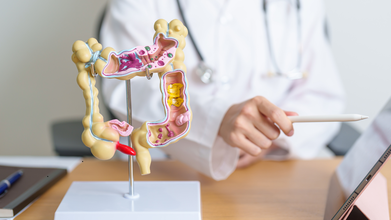
A new analysis by the American Cancer Society observed that colon cancer or colorectal cancer has now become the leading cause of cancer death in US for people under 50. As per the report from the American Cancer Society, adults who are 65 or younger comprise nearly 45 per cent of all new colorectal cancer cases. This is a significant increase from 27 per cent in 1995.
Dr Timothy Cannon, director of the Molecular Tumor Board and co-director of the Gastrointestinal Cancer Program at Inova in Virginia who spoke to Fox News Digital said, "Once considered a disease that primarily affected people over 50, we are now seeing increasing diagnoses in patients in their 20s, 30s and 40s — making it even more important not to dismiss symptoms based on age alone."
How Can You Detect Colorectal Cancer?
Doctors and experts across say that early screenings could help. Health officials recommended screenings to start at the age 45 and continue through age 75 for adults at "average risk".
Other ways could also be stool-based test that are used to detect blood or DNA changes, which could be potential indicators of colorectal cancer.
A colonoscopy is another method, a medical procedure that allows a doctor to examine the inside of a patient's colon and rectum. It uses a thin, flexible tube with a camera on the end. It is typically done every 10 years for adults at average risk.
"Colonoscopy remains the gold standard because it not only detects cancer early but can also prevent it by identifying and removing precancerous polyps," said Cannon.
Dr Michael Martin, who is a California-based physician, however, emphasized that colonoscopy is usually done for younger patients who are at higher risk.
As per Dr Martin, Stool-based tests are appropriate screening options for average-risk adults, but they are not the best choice for people with significant family history, inflammatory bowel disease, hereditary syndromes or alarm symptoms. If symptoms are present, the goal is not screening but diagnosis, and colonoscopy is usually the more appropriate test."
Who Should Get Screened For Colorectal Cancer Before 45?
There are three kinds of people who could get their colon cancer screened before turning 45. Experts suggest these people are as followed:
People With Strong Family History
The American College of Gastroenterology recommends early screening if one first-degree relative is diagnosed with colorectal cancer, or an advanced polyp before age 60, or if two first-degree relatives are diagnosed at any age.
Symptoms That Are Critical
There are red flags which could hint you to get the screening done before 45, they include:
- Rectal bleeding with bright red blood
- Dark or black stools
- Blood in stool
- Persistent changes in bowel habits like constipation or diarrhea
- Unexplained iron deficiency or anemia
- Ongoing abdominal pain or cramping
- Unexplained weight loss
- Persistent sensation that bowel is not emptying fully
Genetic Condition
Some people with certain genetic condition could have an increased risk of colon cancer, this includes people with Lynch syndrome. This is an inherited DNA mutation that increases lifetime risk. People with this condition should get a colonoscopy every one to two years starting from the age 20 to 25 years, or two to five years before the youngest diagnosed family case, note the National Cancer Institute.
World Sleep Day: 6 Daytime Habits That Could Help You Sleep Better

Credits: Canva
Every year, on March 13, World Sleep Day is observed, with this year's theme being "Sleep Well, Live Better". In many ways, it is true, as the National Institutes of Health, US, notes that sleep helps with almost everything in your life. A good sleep helps with learning and the formation of long-term memories. Not getting enough sleep or enough high-quality sleep could lead to problems, affect your mood, immune system and your learning capabilities. So, to be true to the theme of "Sleep Well, Live Better", Health and Me, based on what experts told The New York Times (NYT), came up with six day-time habits that will help you sleep better.
Why is it important? Much conversation that happens around good sleep focuses on nighttime routine, but what you do throughout the day also impacts how well you sleep.
Speaking to NYT, Joseph Dzierzewski, senior vice president of research and scientific affairs at the National Sleep Foundation, noted that daily habits play a critical role in regulating sleep patterns. According to him, the choices people make during the day can be just as important as their bedtime routines.
Morning Sunlight Is Important
As per Dr Indira Gurubhagavatula, a professor of sleep medicine at the University of Pennsylvania Perelman School of Medicine, who also spoke to NYT, getting sunlight within an hour of waking helps suppress sleep-inducing hormones and signals the body to shift into "wake mode". This helps reset body's internal clock so that it naturally becomes tired again by bedtime.
While spending an hour outdoors may not always be feasible, experts say even short bursts of light exposure help. Opening the blinds, sitting by a window, or having morning coffee on a balcony can make a difference. Even about 10 minutes of sunlight is better than none.
Read: Not Boarded Any Flight And Still Monday Feels Like A Jetlag? You Are Not Alone
A Consistent Mealtime
Experts note that the body operates on a 24-hour internal clock known as the circadian rhythm, which regulates sleep and wake cycles. The digestive system also plays a role in this rhythm and responds to cues about when food is consumed.
Eating meals at inconsistent times may disrupt this rhythm and potentially affect sleep quality.
A consistent meal time also helps with healthy habits and helps you to avoid digestive discomfort and acid reflux during sleep.
Caffeine Habits: Is It Time To Rethink It?
Dr. Charlene Gamaldo, a neurologist and sleep medicine specialist at Johns Hopkins Medicine, told NYT that caffeine stays in some people's systems much longer than others. In slow metabolizers, caffeine from a morning coffee could remain in the body for more than 12 hours, potentially interfering with sleep.
Time Your Medication For Early Hours
According to Dr. Gurubhagavatula, certain drugs, including decongestants such as phenylephrine and pseudoephedrine, medications used for ADHD and asthma, some antidepressants, and oral steroids, may have stimulating effects.
This is because some medication could make it harder for you to fall or stay asleep, when taken late in the day.
Be Consistent When You Wake Up
Experts say that frequently changing wake-up times, even on weekends, can disrupt the circadian rhythm and make it harder to maintain a healthy sleep schedule. However, the timing does not need to be exact. Staying within about 30 minutes of the usual wake-up time is generally sufficient to maintain consistency.
Be Attentive Towards Your Workout Timing
Regular exercise is widely associated with better sleep, and health guidelines recommend at least 150 minutes of moderate aerobic activity each week. However, for some people, exercising too close to bedtime may make it harder to fall asleep. Strenuous workouts can temporarily increase body temperature and raise stress hormones and endorphins, which may keep the body alert.
- Follow Us :


© 2024 Bennett, Coleman & Company Limited