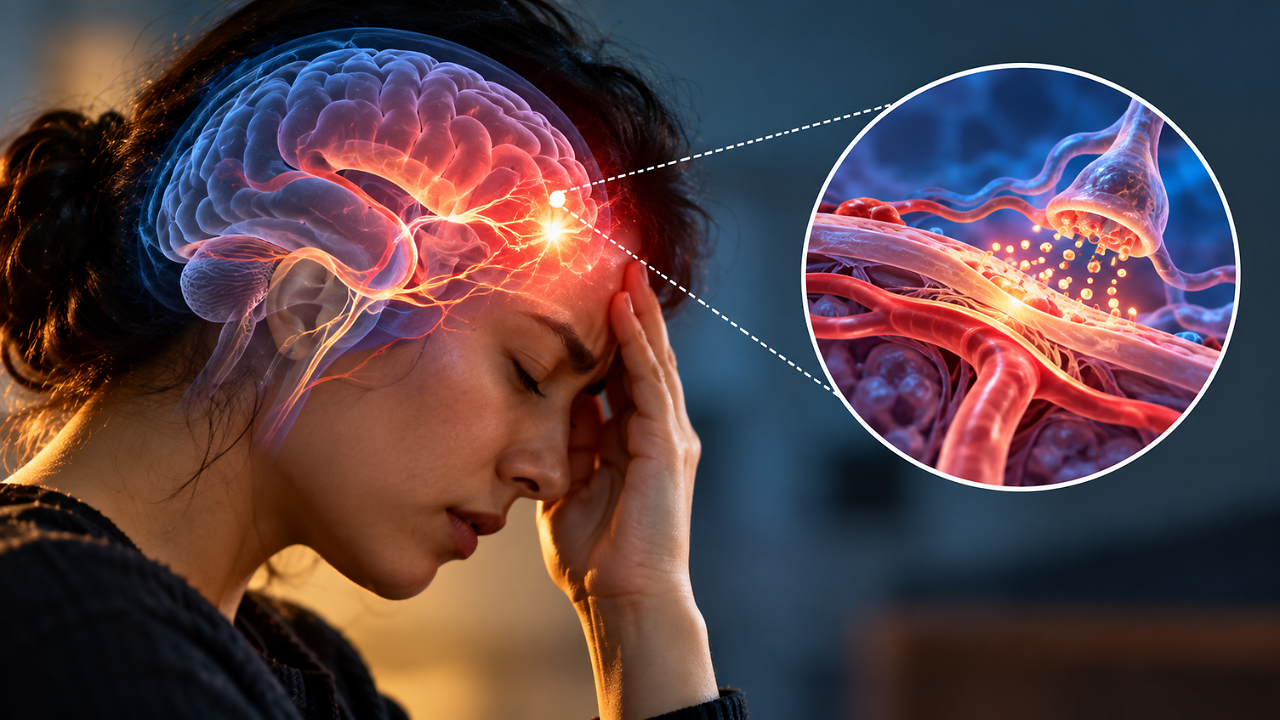
A migraine attack is characterised by nausea, vomiting and sensitivity to light and sound. But early symptoms may surface long before the headache itself. Signs like fatigue, mood changes, food cravings and difficulty focusing may appear hours or even days before the pain. The symptoms that occur during the attack reflect a complex neurological process that involves several interconnected brain networks, rather than just a headache. A new Lancet Seminar review, looks deeper into how migraine develops, why its symptoms extend beyond head pain and how the better understanding of its biology are affecting treatment. The study authors describe migraine as a chronic neurovascular disorder shaped by genetic susceptibility and interactions between the brain’s sensory networks, nerves, and blood vessels. What Happens In The Brain During A Migraine Attack? Also read: These Yoga Asanas Could Cure Your MigraineMigraine is the result of the interaction of multiple systems responsible for processing sensory information and transmitting pain. Researchers are focusing more on other factors that drive migraine rather than just blood vessel narrowing or widening. An important concept is the trigeminovascular system, which is a network involving the trigeminal nerve, tissues sensitive to pain that surrounds the brain and blood vessels. When this system gets activated, the patient experiences the peculiar head ache. Chemical messengers called neuropeptides also play a key role. One of the most important is calcitonin gene-related peptide (CGRP), which participates in pain signalling in migraine. Treatments that target CGRP is an important development in migraine treatment and management. The condition also involves changes in how the brain processes sensory information. This explains why light, sounds or smells can become intolerable during an migraine attack, and why some patients experience nausea, dizziness or difficulty concentrating along with severe headache. Not an isolated abnormality triggering every symptom, migraine involves interactive neurological and vascular processes whose contributions can vary between individuals and across different phases of an attack. Symptoms May Begin Before The HeadacheAlso read: Saba Ali Khan Opens Up About Brain Tumour: Can It Go Unnoticed If You Walk, Talk And Work Normally?Migraine attacks typically occurs through several phases mostly: 1. Prodrome: Hours or days before the pain The earliest phase can involve fatigue, yawning, mood changes, food cravings, neck stiffness and difficulty concentrating. The involvement of brain regions linked with homeostasis, including the hypothalamus, may help explain why an approaching attack can affect sleep, appetite, mood and other bodily functions. 2. Aura: Temporary neurological symptoms Some people experience an aura before or during the headache. This can include flashing lights, zigzag patterns, blind spots, tingling or temporary difficulties with speech. Aura is associated with a phenomenon called cortical spreading depression, a wave of changing electrical activity that moves across the brain’s cortex. 3. Headache: Pain and sensory sensitivity During the headache phase, activation of the trigeminovascular system contributes to pain signalling. Patients may experience moderate-to-severe, often throbbing pain, alongside nausea, vomiting and sensitivity to light, sound or smells. Movement can aggravate the pain, making routine activities difficult. The headache phase can last several hours to as long as 72 hours. 4. Postdrome: After the pain subsides The end of an attack does not necessarily mean the attack is over. Some people experience exhaustion, dizziness, body aches and difficulty concentrating for hours or days afterwards. These phases can overlap, and their timing and severity differ from person to person. The Lancet review also highlights the role of genetic and epigenetic factors that contribute to migraine risk. They interact with complex neurological networks, helping explain why some people experience occasional attacks while others develop frequent or chronic migraine. Episodic migraine is characterised by fewer than 15 headache days per month. Chronic migraine involves headaches on at least 15 days per month for more than three months, including migraine features on at least eight days each month.