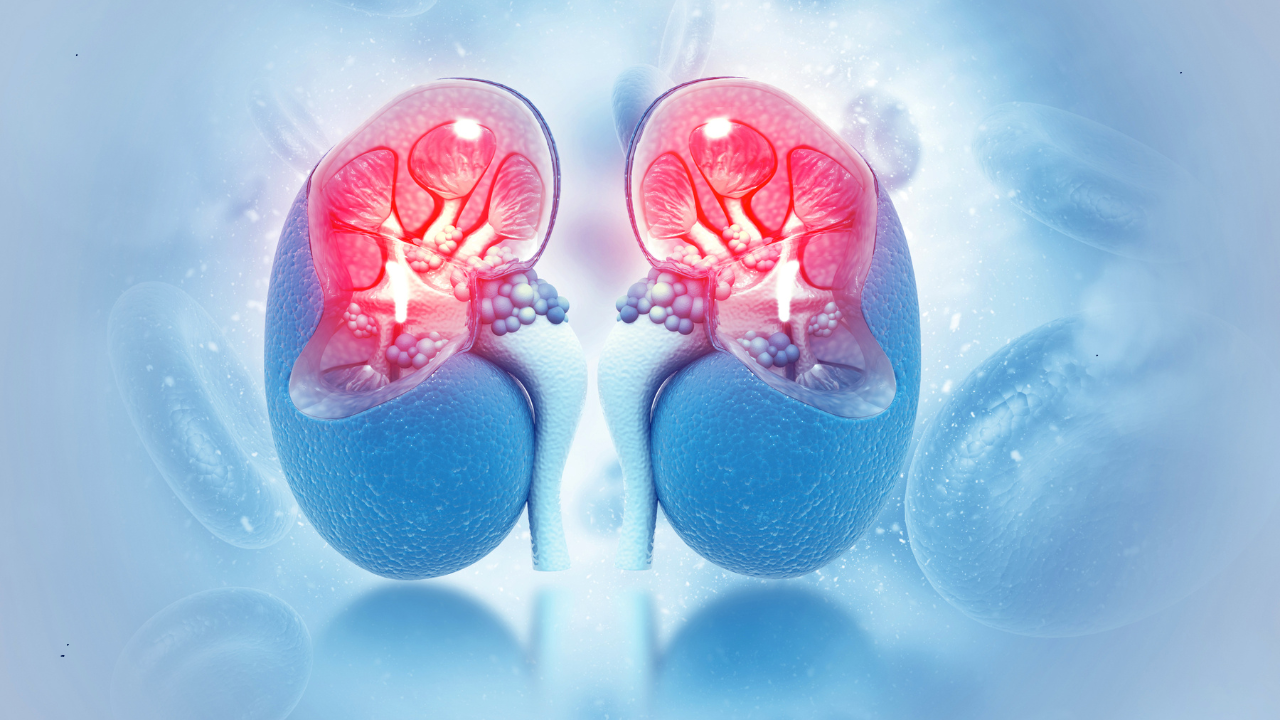
Prime Minister Narendra Modi proposed the idea of a dedicated yoga day during his address to the 69th session of the UN General Assembly in 2014. On December 11, 2014, all 193 UN member states unanimously agreed to observe the International Day of Yoga on June 21. The primary objective of the International Day of Yoga is to raise awareness about yoga as a holistic practice for mental and physical well-being. Yoga originated in India, and it has a history of more than 5000 years. Some people regard it as a fashionable fitness, but it can be beneficial in various chronic diseases, including diabetes, hypertension, and chronic kidney disease.The Challenges Faced by Dialysis PatientsDialysis is a life-saving treatment for stage 5 CKD patients. It has to be done 2- 3 times/week. It has been seen that these patients become physically inactive, which leads to poorer outcomes. They also have a lot of comorbidities like hypertension and diabetes, besides stress. Over the last few years, scientific studies have shown that regular exercise in patients improves outcomes. These patients are a captive audience as they spend 8-12 hours in a dialysis unit every week. Hence, many dialysis units have incorporated exercise into the dialysis sessions. Yoga has been purported to have multiple health benefits. Over the last few years, even Western science is starting to provide some concrete clues as to how yoga works to improve health, heal aches and pains, and keep sickness at bay. Yoga: Benefits For Heart HealthResearch studies have shown that Yoga lowers blood pressure and slows the heart rate. Two studies of people with hypertension, published in the leading scientific journal The Lancet, compared the effects of Savasana (Corpse Pose) with simply lying on a couch. After three months, Savasana was associated with a 26-point drop in systolic blood pressure (the top number) and a 15-point drop in diastolic blood pressure (the bottom number), and the higher the initial blood pressure, the bigger the drop. A slower heart rate can benefit people with high blood pressure or heart disease, and people who've had a stroke. Yoga lowers LDL (“bad”) cholesterol and boosts HDL (“good”) cholesterol.Yoga: Diabetes and Weight ManagementIn people with diabetes, yoga has been found to lower blood sugar in several ways: by lowering cortisol and adrenaline levels, encouraging weight loss, and improving sensitivity to the effects of insulin. If your blood sugar levels improve, there is a reduced risk of diabetic complications such as heart attack, kidney damage, and blindness.Researchers have also found that people who practiced yoga for at least 30 minutes once a week for at least four years gained less weight during middle adulthood. People who were overweight actually lost weight. Overall, those who practiced yoga had a lower body mass index (BMI) compared with those who did not practice yoga. Researchers attributed this to mindfulness. Mindful eating can lead to a more positive relationship with food and eating.Yoga also acts as a stress buster. It quells the fluctuations of the mind, according to it, slows down the mental loops of frustration, regret, anger, fear, and desire that can cause stress. And since stress is implicated in so many health problems—from migraines and insomnia to lupus, MS, eczema, high blood pressure, and heart attacks—if you learn to quiet your mind, you’ll be likely to live longer and healthier.Yoga: Evidence For Dialysis PatientsThere is a lack of good scientific data about the direct benefits of yoga in dialysis patients, but the absence of evidence does not mean evidence of absence. Some people regard it as a fashionable fitness, but it can be beneficial in various chronic diseases, including diabetes and hypertension. Diabetes and high blood pressure are among the commonest comorbidities in Dialysis patients. These patients are under great stress due to their kidney failure.In another study, a 6-month yoga program was found to be a safe and effective measure as adjuvant therapy to conventional treatment modalities in reducing blood pressure, improving renal function, and improving QOL in these patients. For the last 5 years, we have been celebrating World Yoga Day in our Dialysis unit and encouraging our Dialysis patients to regularly practice Yoga. Even after a kidney transplant, the better the blood pressure control, the longer the life of the transplanted kidney. Thus, there is enough indirect evidence that yoga is beneficial in patients with kidney diseases. Yoga: Benefits for Kidney Disease PatientsHowever, it should be done under expert supervision. There are many other poses in yoga; you can choose those that are suitable for you under the guidance of a professional practitioner. In a word, practicing yoga can promote metabolism, blood circulation, and help discharge more metabolic wastes and toxins. It can improve endocrine functions and help repair damaged tissues. It can strengthen physical fitness and enhance immunity. It can make the mind peaceful and ease pressure and chronic pains. They also assist in managing water retention in the body. This enables sound sleep schedules and hence better rest. A well-rested body is better able to perform functions such as regulating water in the body and stabilizing the heartbeat.Precautions Before Practicing YogaThough yoga is safe, not every kidney failure patient can do all the poses. For example, if the patients have polycystic kidney disease, bending and other positions that can cause pressure on the abdomen and back should be avoided. If the patients have high blood pressure or lower back pain, leg lifts should be avoided. It is necessary to practice yoga under the guidance of a professional practitioner if you have kidney disease. Yoga asanas are known to increase relaxation. There are many poses in yoga that are suitable for dialysis patients. Some of these could be done safely during dialysis sessions. However, special care should be taken to ensure that no arm movement on the side has an AV fistula where dialysis is taking place. For those patients who have a permacath (or permanent catheter), these restrictions are not that severe. Of these, I recommend the following, which can be done during the dialysis sessions, preferably before taking snacks and tea.Yoga During Dialysis1. Anulom vilom: A person needs to inhale through the left nostril and exhale through the right nostril, and then inhale through the right nostril and exhale through the left one. These alternate nostril breath exercises can promote blood circulation. All these are best done first thing in the morning 2. Kapaal Bhaarti: In this, the person exhales forcefully and then inhales passively. This is repeated a few times as per convenience, followed by a break and 3 – 5 sessions. 3. Bhastrika: In this, a person inhales deeply, followed by forceful exhalation. This is then reapted 3-5 times maximum.4. Shavasana: In this one lies flat on the couch and is absolutely listless on the couch for a few minutes, with arms and legs lying loosely. Yoga For Non-dialysis Days: 1. Vrikshaaasan: In this one stands straight and then places the right foot on the inner side of the left thigh, joins the hands, and raises them above the head. After a few minutes, the hands are brought down, and now the left foot is placed on the inner side of the left thigh, and the hands are joined and raised above the head. 2. Tada Asaan: In this, a person stands on his toes and stretches his arms above his head, and joins his hands. In this posture, he then breathes freely and holds as long as possible.3. Cobra pose: In this, a person lies on his belly with hands flat on the floor on each side and inhales and extends the spine forward, lifts the chest and head off the floor. One needs to make sure that the legs and feet are parallel and hold this position for several breaths. This can help put mild pressure on the kidneys and revitalize the kidney functions.4. Camel pose: In this asana, the person kneels on the floor, extends the spine, opens the chest, and reaches for the feet. One needs to make sure that the thighs are perpendicular to the floor and the toes are tucked. This posture can help improve blood circulation as well as the body’s circulatory system. 5. Paschimottanasana: In this asana, you bend forward and try to touch your toes.6. Surya Namaskaar: It is one of the best Yogic aasanas as it involves a combination of 11 steps. You can see details on YouTube. 7. Kati chaakra aasan: in this one lies on the floor and stretches the hands on the sides and legs kept 3 feet apart. The head is turned to one side, and the knees are in the opposite direction Thus, yoga keeps the internal organs healthy, balances the various systems in the body, and effectively controls the stress of the body and mind. Some of the yoga asanas and pranayamas facilitate internal cleansing rituals that ensure the flushing out of toxins from the body.