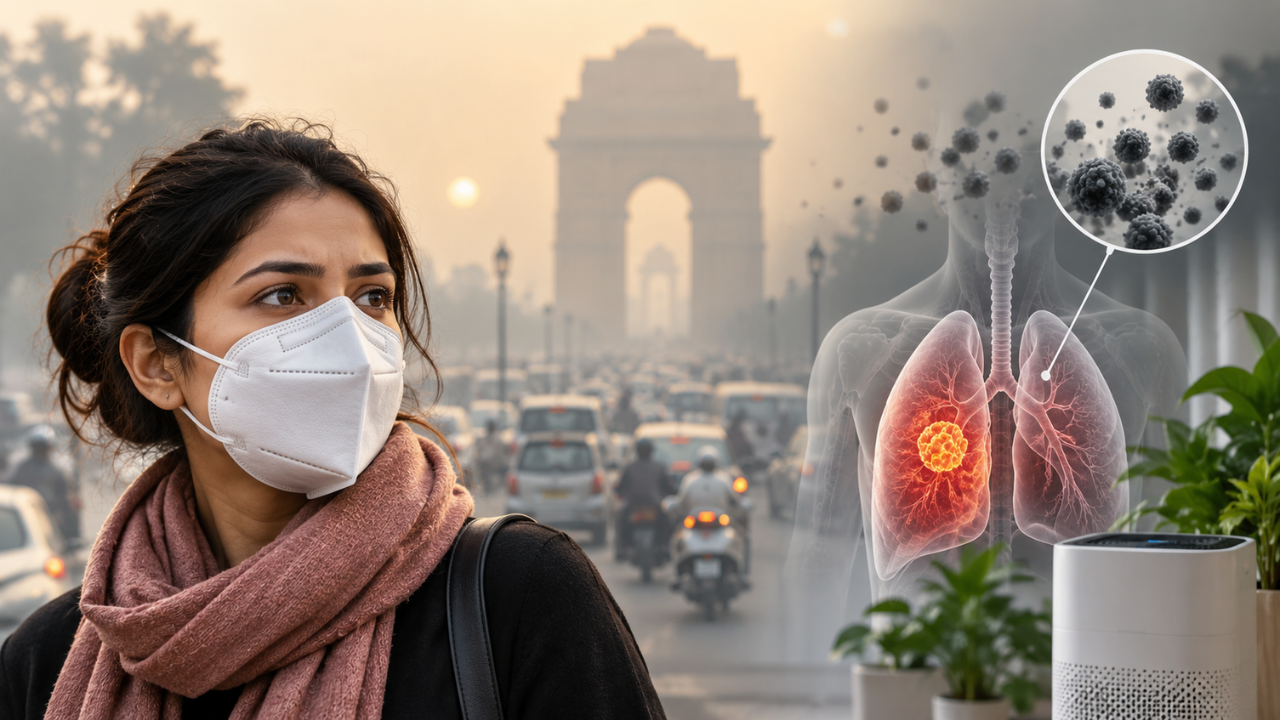
Air pollution has now become an inevitable aspect in many Indian cities, whether it is vehicular emissions, dust from construction activities, industrial pollutants, or smoke from burning crops. Some of the worst pollutants from the health point of view are those comprising PM2.5 (particulate matter 2.5). Particulate matter 2.5 means the fine particulate matter measuring 2.5 microns in diameter or smaller, which is roughly 30 times smaller than the diameter of a human hair. Due to their microscopic size, these particles can enter deep inside the lungs and even the blood stream. The WHO and the IARC have labeled outdoor air pollution and particulate matter as a carcinogen, which implies that it can lead to increased risk of cancer. How does PM2.5 increase cancer risk? Long-term exposure to PM2.5 is responsible for causing inflammation and oxidative stress within the body. Inflammation and oxidative stress will eventually result in DNA damage leading to an abnormal growth of cells. The link between exposure to PM2.5 and cancer is well-documented, with lung cancer being the most established one, while others are still under investigation. According to WHO guidelines, long-term exposure to PM2.5 is linked to higher lung cancer mortality rates, even at lower concentrations. This is highly relevant to India because air pollution in many Indian cities exceeds WHO recommendations.Also read: Exposure To Air Pollution May Harm Male And Female Fertility, Expert Reveals Practical ways to reduce your exposure Even though individual measures may not solve the problem of air pollution completely, they do help to minimize personal exposure. 1. Keep an eye on the daily air quality Monitor the AQI index before engaging in any outdoor physical activity and on polluted days, try to reduce the amount of time you spend outdoors. 2. Avoid pollution peaksEarly morning and late evening are typically times when pollution level is high. Plan your outdoor activities on less polluted days. 3. Use an N95 maskWhen going out, especially commuting, during the days of high pollution use an N95 mask that helps to filter fine particles. 4. Improve indoor air qualityClose windows during heavy air pollution and install a HEPA filter air purifier if needed, especially for kids, elderly people and those who suffer from lungs diseases. 5. Reduce indoor pollution sourcesDo not smoke indoors; use less incense and mosquito coil indoors, and make sure there is a good ventilation system in the kitchen when you cook. 6. Take care of general lung healthNever smoke, keep physically active during the days of decent air quality, and eat nutritious food with lots of fruit and veggies. The bigger picture Protecting yourself from the health risks of PM2.5 can be done by both individual means and also collective efforts. More sustainable modes of transport, better emission control policies, improved waste disposal facilities, and sound urban planning practices will become necessary eventually. In the meantime, we only have our knowledge and preventive steps to safeguard our health. By Dr. Reshma Puranik, Cancer Physician, MOC Pune