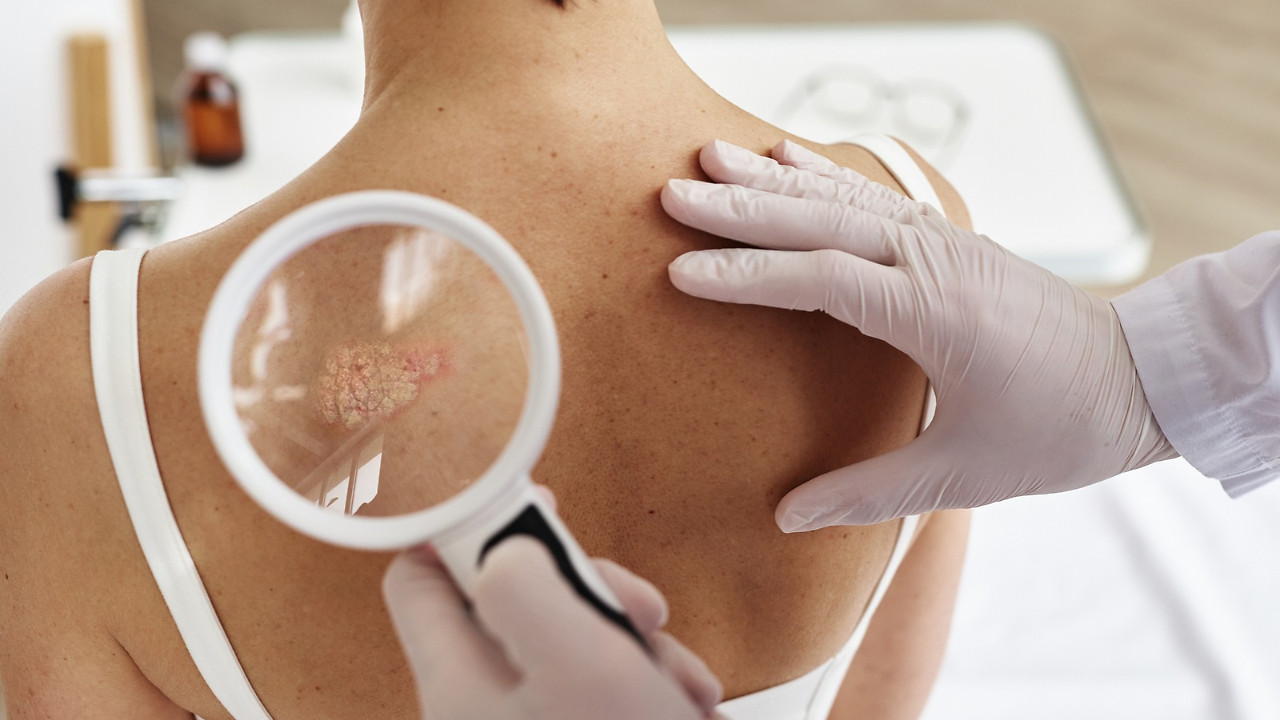
Psoriasis is a long-term inflammatory skin disorder that impacts the immune system. It can cause itchy and unsightly areas of thick, flaky skin that can impact your confidence, relationships and everyday activities. Symptoms can be erratic. Differ among individuals. Although a cure does not exist there are treatments that're effective. It is non-infectious.What Happens In Psoriasis?There is overactivity in the system causing an overproduction of skin cells. This causes a build-up of scaly patches known as plaques. The common form of psoriasis is plaque psoriasis. This type of psoriasis often appears on the scalp. It also often appears on the elbows. It also often appears on the knees. It also often appears on the back. This can cause itching, pain, breaking and bleeding. Nails can become pitted, with holes and can become thickened and lifted off the nail bed. Other forms can cause spots, shiny patches in areas of skin fold and pustules.Depending on your skin colour, you may see /red patches on lighter skin or dark patches with less pink tones on darker skin. Sometimes your skin colour can become temporarily different when the inflammation has subsided.Causes of PsoriasisWhilst we do not fully understand the cause of psoriasis, it is caused by a combination of immune and environmental factors. If you have a family history, then you are more likely to develop psoriasis. Common triggers can vary between individuals, but infection, trauma, stress, smoking, excessive alcohol intake and certain medications can cause psoriasis or make symptoms worse. Strep throat infections are commonly linked to guttate psoriasis (spot-like patches). Knowing your triggers can help; however, there may not always be a trigger.Can We Reduce Flare-ups?Unfortunately, there is no way to prevent psoriasis; however, keeping skin clean, taking medication and knowing your triggers can help reduce symptoms.Have a shower using a cleanser and warm water. Apply a fragrance-free moisturiser to damp skin. Try not to scratch or rub your plaques. Try to avoid causing trauma to your skin and sunburn.Keeping active, maintaining a weight if needed, quitting smoking and reducing alcohol can all improve your general health. Some people find keeping stress to a minimum helps; however, this cannot replace treatment. If your symptoms get worse when starting medication, let your doctor know. Do not stop taking your medication.TreatmentsThis will depend on the type of psoriasis where it's how bad it is and how it is affecting your daily life. Your dermatologist will also take into consideration any medical conditions and if you have any joint symptoms. Mild psoriasis can often be treated using various treatments. These can include steroids, vitamin D analogues and other medications. Steroids should be used at the correct strength and for the correct length of time depending on the area. Long-term steroids should be monitored.Phototherapy uses specialist UV light, narrow-band UVB. This may be suggested if you have widespread psoriasis or topical treatments have not worked well enough. This should be monitored. Monitored. More severe or hard-to-treat psoriasis may need medication or biologicals. This can include Methotrexate, Ciclosporin, acitretin, or Apremilast. Biologicals work by targeting inflammatory pathways such as TNF, IL-17 and IL-23. This should be discussed individually with monitoring.Talk to your doctor about any concerns you have regarding your treatment. This can include side effects, cost and difficulty sticking to a regimen. This will allow your doctor to put together a treatment plan.Further ConsiderationsSome people with psoriasis can develop arthritis. If you have any pain, swelling, stiffness when waking up or heel pain, this should be assessed quickly. If left untreated, the inflammation can cause damage to your joints.Psoriasis can put you at increased risk of developing disease, diabetes and other metabolic issues. This does not mean everyone with psoriasis will develop these conditions, but your doctor can advise what checks you need to do and how to keep your health in check. If your psoriasis is affecting your sleep, confidence, relationships or mood, let your doctor know. Counselling and other mental health support can be an addition to your treatment.When To See A DoctorIf you have scaling changes to your nails or symptoms that are affecting your daily life, you should see a dermatologist. This will usually be diagnosed by looking at your skin and nails. Occasionally a skin biopsy may be needed.If you have inflammation, scaling, pustules and are unwell or have a fever, you should seek urgent medical attention. This can indicate psoriasis and needs treating quickly. Whilst psoriasis can be unpredictable, there are treatments available. You deserve a treatment plan to help your symptoms.