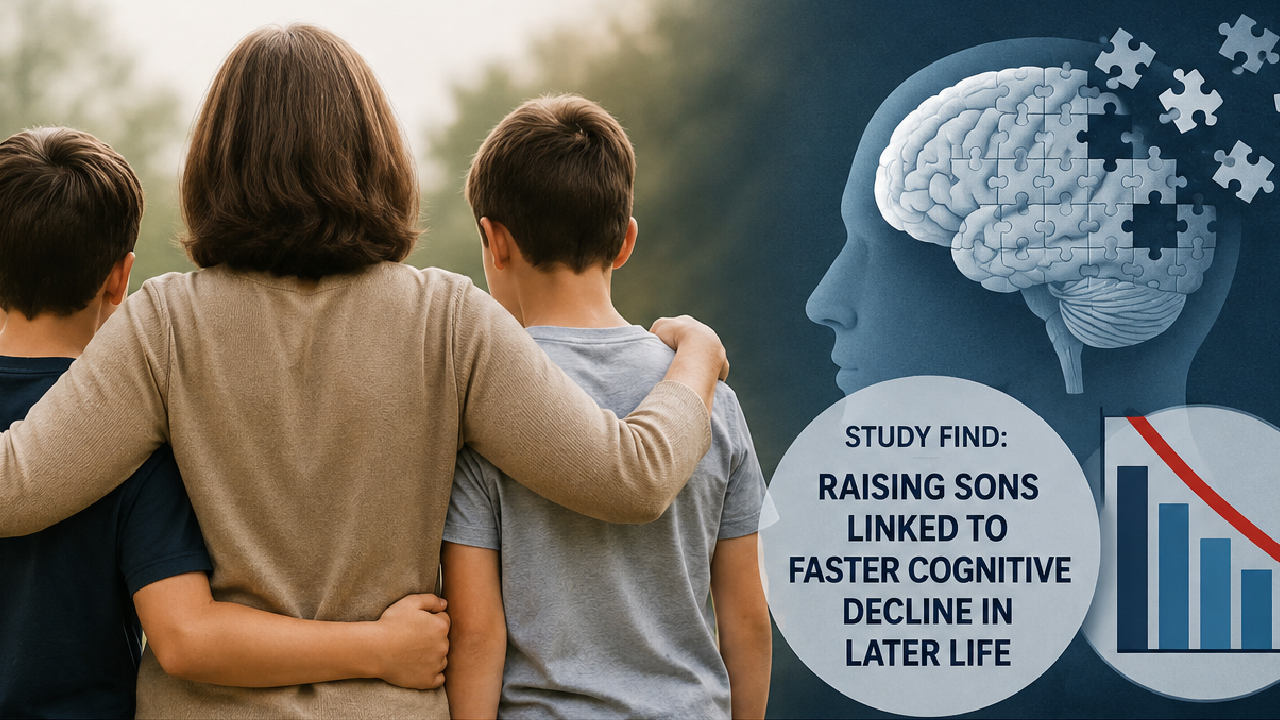
A new study involving more than 13,000 parents suggests that parents who have sons may experience faster cognitive decline in later life compared to parents who only have daughters. While the findings may sound surprising, researchers stress that the results are linked to long-term caregiving and social support—not biology.The research, published in the Journal of Psychiatric Research, explored how family composition might affect cognitive health as people grow older.What Did The Study Find?Researchers from Columbia University and Charles University analyzed data from 13,222 adults aged 50 and above who participated in the US Health and Retirement Study.The team discovered several important patterns:Parents with at least one son showed a faster rate of cognitive decline than parents who had only daughters.The association was observed in both mothers and fathers, suggesting the effect is driven by social and caregiving factors rather than biological differences.Parents with multiple sons experienced an even steeper decline in cognitive function over time compared to parents whose children were all daughters.The researchers concluded that having sons was associated with a faster decline in memory and thinking abilities during older adulthood.Why Might Daughters Make A Difference?The researchers believe the explanation lies in family dynamics rather than genetics.Previous studies have consistently shown that daughters are more likely to provide emotional support, regular communication, and hands-on caregiving as their parents age. This ongoing engagement may help keep parents mentally active and socially connected—two factors that are strongly associated with healthier brain aging.Experts often refer to this as the "daughter effect." Strong emotional bonds and frequent social interactions are known to protect cognitive function and may reduce the risk of age-related mental decline.How Was Cognitive Health Measured?Participants' cognitive abilities were evaluated every two years using several standard mental performance tests, including:Immediate and delayed word recall testsSerial subtraction exercisesBackward counting tasksThese assessments allowed researchers to track changes in memory, attention, and problem-solving skills over several years.Even after adjusting for factors such as age, education, health status, and socioeconomic background, the relationship between having sons and faster cognitive decline remained significant.Previous Research Supports Similar Findings:The study also builds on earlier research that linked having more sons with poorer long-term maternal health outcomes, including an increased risk of dementia.By examining both mothers and fathers, the new research suggests the relationship extends beyond pregnancy-related biological factors and is more likely connected to differences in caregiving and emotional support provided by adult children.Also Read: UK Met Office Warns of 'Pollen Bomb': What Hay Fever Patients Need to KnowWhat Does This Mean For Families?The findings should not be interpreted as a reason to worry about having sons. Instead, they highlight the importance of maintaining strong family relationships, staying socially active, and ensuring older adults receive emotional and practical support regardless of their children's gender.Researchers say that healthy aging depends on many interconnected factors, and supportive relationships can play an important role in preserving cognitive function over time.The study suggests that parents with sons may experience faster cognitive decline than parents with only daughters, with the effect becoming stronger as the number of sons increases. However, experts caution that family composition is just one small piece of the puzzle. Healthy lifestyle habits, social connections, education, and quality caregiving remain the most important factors for maintaining brain health throughout aging.