
- Health Conditions A-Z
- Health & Wellness
- Nutrition
- Fitness
- Health News
- Ayurveda
- Videos
- Medicine A-Z
- Parenting
Selena Gomez Was 'Misdiagnosed' Before Her Bipolar Disorder Diagnosis

Credits: Instagram
Selena Gomez recently opened up about being wrongly diagnosed for her mental health issues. The 33-year-old singer said that she was "misdiagnosed" before she ultimately received her bipolar disorder diagnosis.
She, along with her husband appeared on the podcast Friends Keep Secret, and said that she knew something was wrong with her. "I knew something was wrong, but I think I was misdiagnosed," Gomez said. "People were just assuming, and I would try multiple therapists. And that’s why it’s hard. It’s actually really hard when we’re talking about these things. And for me to go get a therapist, all of it is so f***ing complicated."
Going on to explain that finding the right diagnosis and treatments took going through "multiple different people," Gomez emphasized how important it was to remember that "you can’t just give up." Gomez also said she underwent therapies at four different rehabs, which helped her understand her diagnosis - a chronic mental health condition characterized by severe mood swings, alternating between extreme emotional highs and lows.
Therapy Should Not Be Shamed, Says Gomez
Gomez also slammed people who shame the idea of therapy. She said those people are hypocrites. "That's the problem with misconceptions," she said. "The whole hypocrisy of shaming people for therapy or people not understanding it is that it’s just not for you. That’s completely fine, but for me, it finally allowed me to go, ‘Oh, that’s why I handled things the way I handled them. That’s why all the other people were able to get over things so quickly, and I wasn’t.'”
“I would act out of fear, I would act out of love, I would act out of passion,” she added.
What Is Bipolar Disorder?
As per the American Psychiatric Association (APA), bipolar disorders are mental health conditions characterized by periodic, intense emotional states affecting a person's mood, energy and ability to function. APA notes that these periods, lasting from days to weeks, are called mood episodes.
Mood episodes are categorized as manic/hypomanic episodes when the predominant mood is intensely happy or irritable, or depressive episodes, when there is an intensely sad mood or the ability to experience joy or pleasure disappears. People with bipolar disorder generally have periods of neutral mood as well. When treated, people with bipolar disorder can lead full and productive lives.
But Don't Mood Fluctuations Happen To People Without The Disorder?
APA notes that while people without bipolar disorder could also experiences mood fluctuations, they are part of commonly lived experience and typically last hours rather than days. These mood fluctuations are also not accompanied by extreme changes in behavior or changes in functioning, such as difficulties with daily routines and social interactions. Bipolar disorder could also disrupt a person's relationships with loved ones and cause difficulty in working or going to school.
What Causes Bipolar Disorder?
Bipolar disorder usually runs in families, as 80 to 90 per cent of cases come from a relative with bipolar disorder or depression.
Environmental factors such as stress, sleep disruption, and drugs and alcohol may trigger mood episodes in vulnerable people. Though the specific causes of bipolar disorder are unclear, there are both biological factors, including a family history of mood disorders, psychotic disorders, and substance misuse, and environmental factors that increase the risk for bipolar disorder. The average age of onset is in the mid-20s.
1 In Every 8 School-going Children Is Obese In Kolkata: Study

Credits: LinkedIn; Canva
1 in every 8 child in Kolkata school between the age of 12 to 16 is obese. A new study conducted in Kolkata schools by a global obesity awareness organization revealed this data. Wednesday, the same day as Holi in India, was also the World Obesity Day. In Kolkata, the issue is concerning, especially when children are at the center of it. The Howrah bridge also lit with blue and yellow lights, the colors to symbolize obesity awareness.
What Did The Study Reveal About Obese Children?
An initiative by METTA Dana Foundation, a global academic outreach organization with its focus on childhood obesity revealed the rising case of childhood obesity in Kolkata. "Childhood obesity is rising rapidly, with the prevalence among school-aged children increasing from 4% in 1975 to almost 20% in 2022," said Debashis Basu, endocrinologist and chairman of METTA Dana Foundation. This is seen as a five-fold increase over five decades.
Basu further said, "The rise is sharpest in low-and-middle-income countries like India and Bangladesh. Childhood obesity often continues into adulthood, increasing the risk of serious non-communicable diseases, such as diabetes, heart disease and certain cancers." Basu also said that 13 per cent of such cancers are related to childhood obesity.
He said that early signs of chronic diseases are already appearing in children. He also noted that around "a fourth of Kolkata's children are diabetic or are in a pre-diabetic stage".
Obesity In Young People
Globally, as per a Lancet study, more than half of all adults and a third of children and adolescents will become overweight by 2050. The study also notes that obesity is becoming a bigger concern and it could impact around 21.8 crore men and 23.1 crore women in India.
In fact, India is projected to have world's second highest number of obese kids and adolescents, aged between five and 14 years. This means around 16 million boys and 14 million girls could be overweight.
One of the biggest challenges of being overweight is diabetes, as Basu also noted. In a previous conversation with Health and Me Dr Mayank Lodha Seth, chief pathologist at Redcliffe Labs, noted that diabetes is no longer a disease of aging, young people, including teenagers too are affected.
Also Read: Diabetes No Longer A Disease Of Aging; Four Things Youth Should Know About It, According To Doctor
"We took this initiative to revive it [World Obesity Day] this year with support from National Institute of Nutrition. India is beginning to face the triple burden of malnutrition, stunting and wasting, micronutrient deficiencies, and obesity- often coexisting in the same family or the same person in various stages," said Basu.
Why Is India Facing A Crisis In Youth Obesity?
According to UNICEF’s Child Nutrition Global Report 2025, obesity, for the first time, surpassed underweight globally as the most common form of malnutrition among school-aged children and adolescents.
According to the National Family Health Survey (NFHS) data, India is witnessing a rapid surge in overweight and obesity among under-five children under five, with prevalence rising by 127 per cent (from 1.5 per cent to 3.4 per cent between NFHS 3 (2005-06) and NFHS 5 (2019-21). Similarly, adolescent girls and boys have seen an increase in overweight and obesity of 125 per cent (from 2.4 per cent to 5.4 per cent) and 288 per cent (from 1.7 per cent to 6.6 per cent) respectively.
A recent child nutrition report points to a worrying shift in the way young people in India eat. Fast foods, ultra-processed snacks, and sugary drinks that are high in fat, salt, and sugar are steadily replacing fruits, vegetables, and traditional home-cooked meals. These choices are not always driven by taste alone. Easy availability and aggressive marketing campaigns aimed at children and teenagers are increasingly shaping what they want to eat.
Early-life factors are also playing a role in the rising numbers. Poor maternal nutrition during pregnancy, inadequate infant feeding practices, and low rates of exclusive breastfeeding can influence a child’s long-term health and metabolism. Social and gender norms add another layer to the problem. In many households, adolescent girls and women still eat last and often the least, which can affect nutritional balance early in life and contribute to unhealthy patterns later.
At the same time, lifestyles among young people are rapidly changing. The growing consumption of ultra-processed foods and sugar-sweetened beverages is being combined with lower levels of physical activity. Children and teenagers today spend more time on screens, whether for schoolwork, entertainment, or social media, leaving less time for outdoor play and movement. This shift towards sedentary routines is one of the key reasons obesity is increasing among the younger population.
The environment around food is also changing. Urban areas and even smaller towns are now saturated with packaged and processed food options that are quick, cheap, and heavily promoted. When healthier choices are less visible or less accessible, children and adolescents are more likely to gravitate toward convenient, calorie-dense products.
Data from UNICEF’s U-Report poll, which surveyed adolescents and young adults aged 13 to 24 across 171 countries, highlights the scale of marketing exposure. More than two-thirds of young people said they regularly encounter food advertisements. In the week before the poll, 75 per cent reported seeing ads for sugary drinks, fast food, or packaged snacks. Social media was the biggest source of exposure at 52 per cent, followed by the internet at 46 per cent and television at 43 per cent. Not surprisingly, three in five respondents admitted that these advertisements made them want to try the products they saw.
Experts say this constant exposure is shaping dietary habits from an early age. When young people repeatedly see unhealthy foods promoted as fun, trendy, or aspirational, it normalizes those choices.
This Is Endometriosis, A Short Film On Debilitating Health Condition Wins BAFTA Award 2026, Know More

Credits: Instagram/ IMDb
This Is Endometriosis, a 2024 intimate, expressive film by Georgie Wileman and Matt Houghton won a BAFTA Award 2026 for Best British Short Film. This 19.27 minute long film shows how Georgie was robbed of her time due to endometriosis. The film sets in present-day narrative with memories from her past.
Endometriosis is a condition, that Georgie notes is often dismissed by many doctors as just "painful periods". However, her film portrays how truly disabling this medical condition. It is a condition in which cell similar to the lining of the uterus or the endometrium, grow outside the uterus. It affects 1 in 10 born with a uterus and could cause pain, often "worse than the last stages of child labour", notes thisiseno.com, the official website of the short film. Around 190 million people worldwide are impacted by the condition, however, what the film points out is how "dangerously underfunded, under researched and misinformed" doctors continue to remain despite the condition being so widespread.
Read: A Woman Lost Her Ovary To Endometriosis Surgery After Receiving An Ultimatum From Gynecologist
A Film That Documents Personal Struggle
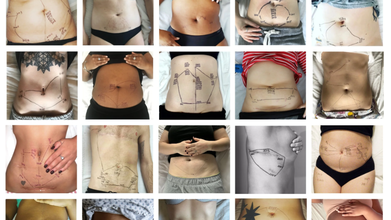
Georgie, while accepting the award wore a symbolic blood-red gown. She said, "It was surreal and beautiful. Knowing how much this win would mean to the [endometriosis] community made it an emotional moment."
She points out that it is more than just a "painful period" and that "It is a full body disease. It important for people to understand the severity of the pain – it’s widely considered to be worse than childbirth." What is shocking is that it takes an average of eight to 10 years to be diagnosed.
She shares being "bed-bound for three months" when she was only 13. She said it first got "really bad" and she was not believed for long time. "It took me a long time to even believe myself. I was just so angry at my body for not working."
While she had been in and out of wheelchair, she was not formally diagnosed with endometriosis until she was 26, and then at 29, she was diagnosed with its 'sister disease' adenomyosis. She has undergone seven surgeries for her endometriosis and a hysterectomy for adenomyosis.
Read: Keltie Knight Was Gaslit By Doctors For Years Before Getting A Hysterectomy
In 2020, after years of feeling dismissed by doctors and watching her condition be misunderstood in the media, she decided she had had enough. That frustration pushed her to tell the story herself.
“It began as a photography project,” Wileman says. “And it meant a lot to people because, for the first time, they felt their experiences were being shown truthfully.”
But she soon realized that still images could only go so far. “There’s only so much a photograph can capture,” she adds.
Why Does It Take So Long For An Endometriosis Diagnosis?
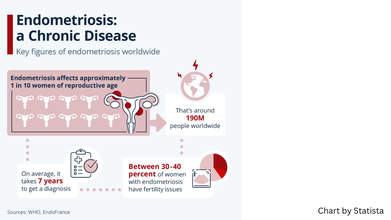
A study published in Obstetrics and Gynecology journal looks at the factors of what leads to such a delay in endometriosis diagnosis. Researchers identified that factors include normalization of menstrual pain, the diversity of symptoms, and a lack of training and prompt referrals among healthcare professionals lead to this delay.
At an individual level, the researchers found that many women struggled to tell the difference between “normal” period pain and something more serious. A common belief was that painful periods were simply part of being a woman and had to be endured. As a result, many relied on self-care measures and delayed seeking medical help, which likely pushed back the timeline for an endometriosis diagnosis.
On an interpersonal level, stigma played a powerful role. Menstrual problems were often seen as too private or embarrassing to talk about. At the same time, society’s tendency to normalize period pain meant that symptoms were minimized, both by those experiencing them and by people around them. This silence and normalization further contributed to delayed diagnoses.
Barriers also existed within the healthcare system itself. Some participants said their general practitioners dismissed their concerns or appeared unfamiliar with endometriosis. Healthcare professionals involved in the study acknowledged gaps in their own training and pointed out the lack of clear clinical guidelines for diagnosing the condition.
Doctors also noted that endometriosis symptoms can overlap with other disorders, making it harder to identify. Diagnosis is particularly challenging because there is no simple, noninvasive test that can confirm the condition with certainty. Delays in referrals were common. One contributing factor was the widespread belief that laparoscopic surgery is the only definitive way to diagnose endometriosis. Some healthcare providers also questioned how useful a formal diagnosis would be, which further slowed the process.
Dr Sophie Davenport, a doctor in England who conducted the research as part of her Master of Public Health dissertation, emphasized that the problem is layered and requires solutions at multiple levels.
“The key highlights of the data are that delays to diagnosis exist throughout the journey,” she explained. “We need to address these at different levels — from society understanding what ‘normal’ menstruation looks like and being open about menstrual problems, to clinicians being well educated, up to date on how endometriosis presents and diagnosed, and truly listening when patients say their periods aren’t normal.”
German Study Shows Squirrels May Be Harboring Mpox Virus
Credit: Canva
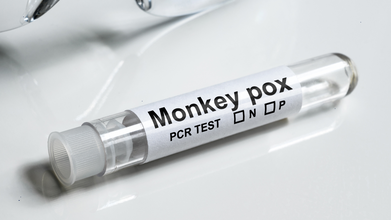
Squirrels could be natural hosts of the mpox virus (MPXV) -- that causes monkeypox disease -- according to a recent study by German researchers.
The team from the Helmholtz Institute for One Health (HIOH) identified the fire-footed rope squirrel (Funisciurus pyrropus) as a likely natural reservoir of the MPXV.
The study published in the journal Nature revealed that sooty mangabeys – a primate found in West Africa -- can contract mpox by eating infected squirrels. The disease may present mild lesions, but it can also cause more severe skin lesions or even be fatal.
"Identifying the animal sources of the virus and the exposure routes that lead to inter-species transmission are key steps towards understanding spillover mechanisms and developing effective prevention measures to mitigate the risk of transmission to humans," said Livia V. Patrono, one of the senior authors at HIOH.
Squirrels Suspected MPXV Hosts
While squirrels have long been suspected as potential reservoirs for MPXV, their role was confirmed after an investigation of an mpox outbreak among wild sooty mangabeys (Cercocebus atys) in Côte d'Ivoire.
During the outbreak, reported in early 2023, nearly one-third of the primates showed clinical signs of disease, and four infants died.
The team conducted viral genome sequencing and found that the infected monkeys carried a virus that was nearly identical to an MPXV strain identified in a fire-footed rope squirrel found dead 12 weeks earlier nearby.
Further, the team analyzed fecal samples from the mangabeys. A sample collected eight weeks before the outbreak's onset contained DNA from both the virus and the rope squirrel. This provided strong evidence of interspecies transmission at that moment.
Sooty mangabeys have been previously observed catching and eating fire-footed rope squirrels, which provide a direct route for the transmission of viruses.
Mpox Continues To Spread Globally
Although mpox is no longer a public health emergency, outbreaks of clade I and clade II strains of the mpox virus are continuing in many countries around the world, especially in Africa.
Last week, Madagascar announced the country's first death from mpox, a 3-year-old girl from the island nation’s eastern city of Toamasina.
The WHO has also confirmed that two cases of the recombinant strain – combining genomic elements of clades Ib and IIb of the monkeypox virus (MPXV) – have been identified to date: one in the United Kingdom and one in India.
Mpox is an infectious disease caused by the monkeypox virus (MPXV), part of the Orthopoxvirus genus, which also includes the virus that causes smallpox.
It spreads through close physical contact, including sexual contact, and in some cases through contaminated materials or respiratory droplets.
Symptoms typically include fever, swollen lymph nodes, rash, and/or lesions.
The global health body has also urged all countries to “remain alert to the possibility of MPXV genetic recombination.” It has also urged for continued epidemiological surveillance, sequencing, vaccination of at-risk groups, and infection prevention and control measures.
- Follow Us :


© 2024 Bennett, Coleman & Company Limited