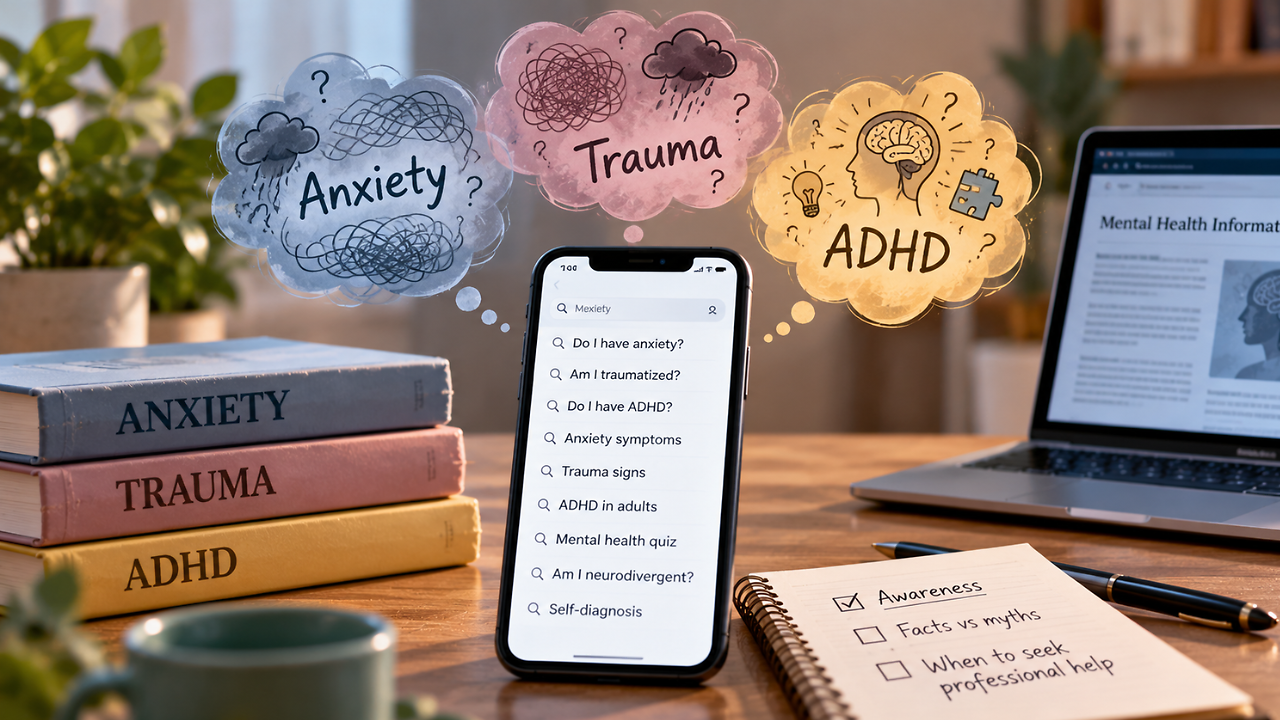
The beauty of todays times is that people now have language for experiences that earlier generations were often expected to hide. However, awareness can become confusing when clinical terms are used to describe every uncomfortable emotion or difficult day. On World Mental Health Day, let's decode why self-diagnosis could go wrong. Anxiety, for example, is not always an anxiety disorder. Anxiety is a normal human response to uncertainty, threat or pressure. Feeling nervous before an examination, interview or important conversation does not necessarily indicate a disorder. Clinically, we become more concerned when anxiety is persistent, disproportionate, difficult to control and significantly interferes with work, relationships, sleep or daily functioning.Not Every Painful Experience Is TraumaSimilarly, “trauma” is sometimes used to describe any unpleasant experience. Painful events deserve acknowledgement, but trauma-related conditions involve more than feeling hurt or disappointed. Post-traumatic stress disorder, or PTSD, has specific patterns, including intrusive memories, avoidance, changes in mood and thinking, and heightened reactivity following exposure to trauma. These symptoms must persist and cause meaningful distress or impairment. Not everyone who experiences adversity develops PTSD, and not every strong emotional reaction is evidence of trauma.Also read: Childhood Fitness Linked To Lower Risk Of Depression In Adulthood: 30-Year StudyADHD Is More Than Occasional DistractibilityADHD is also frequently reduced to distractibility. Saying “I am so ADHD” because one misplaced a phone or struggled through a boring meeting overlooks the complexity of this neurodevelopmental condition. ADHD involves a persistent pattern of inattention and/or hyperactivity-impulsivity that begins in childhood, appears across more than one setting and affects functioning. Poor concentration can also result from anxiety, depression, trauma, inadequate sleep, grief, substance use, hormonal changes or physical-health conditions.This symptom overlap is where self-diagnosis often goes wrong. A short video may accurately describe one experience but cannot assess its duration, severity, developmental history or context. Once we identify with a label, confirmation bias may lead us to notice information that supports it while overlooking alternative explanations.This does not mean people should stop researching their experiences. Self-recognition can be validating and may be the first step towards seeking help particularly when professional care has previously been inaccessible or dismissive. The difficulty arises when an online checklist becomes a final conclusion rather than the beginning of an enquiry. Why Professional Assessment MattersA responsible assessment is not simply about matching symptoms. A trained professional explores when they began, how frequently they occur, where they appear, what affects them and whether another condition could explain them better. Diagnosis should guide appropriate understanding and support, not become an identity imposed by an algorithm.We can use psychological language more carefully by saying, “I feel anxious,” “That experience affected me deeply,” or “I am struggling to concentrate,” without immediately assigning a disorder. If patterns persist or disrupt daily life, consulting a qualified mental-health professional can provide clarity.Language can open the door to healing, but careful assessment helps us walk through the right one.By Ms Arouba Kabir, Psychologist & Mental Health Professional, Founder - Enso Wellness