
- Health Conditions A-Z
- Health & Wellness
- Nutrition
- Fitness
- Health News
- Ayurveda
- Videos
- Medicine A-Z
- Parenting
Simple Brain Training Exercise Cuts Dementia Risk For 20 Years, Study Finds

Credit: Canva
Adults aged 65 and older who completed five to six weeks of cognitive speed training, known as speed of processing training, are less likely to develop dementia over 20 years, according to a Alzheimer’s & Dementia: Translational Research and Clinical Interventions study.
In this NIH-funded study, researchers examined 2,802 adults from 1998–99 and compared three types of cognitive training including memory, reasoning, and speed of processing.
Participants in the training groups completed up to 10 sessions lasting 60 to 75 minutes over five to six weeks. About half also received up to four additional booster sessions at 11 and 35 months after the initial training.
After 20 years, 40 percent of participants in the speed training group who received boosters were diagnosed with dementia, compared to 49 percent in the control group. This represents a 25 percent lower risk and was the only intervention that showed a statistically meaningful difference.
Marilyn Albert, Ph.D., the corresponding study author and director of the Alzheimer’s Disease Research Center at Johns Hopkins Medicine: "Seeing that boosted speed training was linked to lower dementia risk two decades later is remarkable because it suggests that a fairly modest nonpharmacological intervention can have long-term effects.
"Even small delays in the onset of dementia may have a large impact on public health and help reduce rising health care costs."
Albert explained that additional studies are needed to understand underlying mechanisms that may help explain these associations and to understand why the reasoning and memory interventions didn’t have the same 20-year associations
READ MORE: High Brain Age May Increase Dementia Risk, Study Shows
What Is Dementia?
Dementia is an umbrella term used to describe a significant decline in mental function that is serious enough to affect everyday life. It commonly impacts memory, thinking, and reasoning skills.
Dementia itself is not a single disease but a collection of symptoms caused by underlying conditions such as Alzheimer’s disease or vascular dementia.
Common signs include memory problems, confusion, difficulty finding words, changes in mood or behaviour and trouble completing familiar tasks.
These symptoms usually worsen over time and are not considered a normal part of ageing. Although there is no cure, treatment options can help manage symptoms, and early diagnosis plays an important role in care planning.
Alzheimer’s Disease: The Leading Cause of Dementia
Alzheimer's disease is one of the most common forms of dementia and mostly affects adults over the age of 65.
About 8.8 million Indians aged 60 and above are estimated to be living with Alzheimer's disease. Over seven million people in the US 65 and older live with the condition and over 100,00 die from it annually.
Alzheimer's disease is believed to be caused by the development of toxic amyloid and beta proteins in the brain, which can accumulate in the brain and damage cells responsible for memory.
Amyloid protein molecules stick together in brain cells, forming clumps called plaques. At the same time, tau proteins twist together in fiber-like strands called tangles. The plaques and tangles block the brain's neurons from sending electrical and chemical signals back and forth.
Over time, this disruption causes permanent damage in the brain that leads to Alzheimer's disease and dementia, causing patients to lose their ability to speak, care for themselves or even respond to the world around them.
While there is no clear cause of Alzheimer's disease, experts believe it can develop due to genetic mutations and lifestyle choices, such as physical inactivity, unhealthy diet and social isolation.
Early symptoms of Alzheimer's disease include forgetting recent events or conversations. Over time, Alzheimer's disease leads to serious memory loss and affects a person's ability to do everyday tasks.
There is no cure for this progressive brain disorder and in advanced stages, loss of brain function can cause dehydration, poor nutrition or infection. These complications can result in death.
This Blood Type Carries The Highest Risk of Type 2 Diabetes, Scientists Find
Credit: Canva
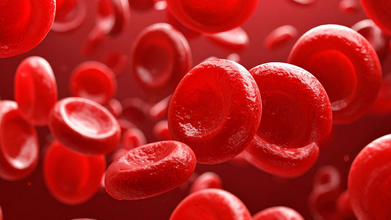
People with blood type B, either positive or negative, are 28 percent more likely to develop Type 2 diabetes, according to a 2024 BMC Medicine study.
Human blood is categorized into eight main groups based on the sugars and proteins, or lack thereof, present on the surface of your red blood cells.
A, B, and AB types are based on the presence of antigens, sugar molecules that can trigger an immune response. O-type blood has no A or B antigens. Meanwhile, Rhesus (Rh) factors are proteins that determine blood compatibility and give your blood its positive or negative designation.
According to a group of Chinese researchers, who conducted a thorough umbrella review of 270 studies, the strongest link between a blood group and Type 2 diabetes was between those with a B blood group.
The researchers also didn't examine what might drive this increased risk. A 2025 study suggests that the gut microbiome may be involved; however, further investigation is needed.
However, the results do suggest that there's a real, tangible association between blood type and Type 2 diabetes – one that people can factor into how they think about their own risk.
What is Type 2 Diabetes?
Type 2 diabetes (T2D) occurs when blood sugar (glucose) remains consistently high. Normal blood sugar levels fall between 70 and 99 milligrams per deciliter (mg/dL). If undiagnosed, Type 2 diabetes often shows levels of 126 mg/dL or more.
T2D happens because the pancreas doesn’t produce enough insulin, the body can’t use insulin effectively, or a combination of both. This differs from Type 1 diabetes, which arises when the immune system attacks the pancreas, leaving the body unable to produce insulin at all.
How Common Is Type 2 Diabetes?
Type 2 diabetes is widespread. Over 37 million people in the US have diabetes (around 1 in 10), with 90–95 percent of cases being T2D. Globally, it affects roughly 6.3 percent of the population. While it’s most common in adults over 45, younger adults and even children can develop it.
Blood Sugar Range For Adults And Children With Type 2 Diabetes
The American Diabetes Association recommends the following ranges for adults with type 1 or type 2 diabetes and children with type 2 diabetes:
Recommended Blood Sugar Range
Fasting (before eating): 80 to 130 mg/dL
1 to 2 hours after meal: Lower than 180 mg/dL
Is Type 2 Diabetes Genetic?
T2D has complex causes, but genes play a significant role. If one biological parent has T2D, your lifetime risk is around 40 percent, and if both parents do, it rises to 70%. Scientists have identified over 150 DNA variations linked to T2D risk, some increase the chance of insulin resistance or reduced insulin production, while others influence obesity risk. These genetic factors interact with lifestyle and health habits to determine overall risk.
How is Type 2 Diabetes Diagnosed?
Doctors use several blood tests to confirm T2D:
- Fasting plasma glucose test: Measures blood sugar after an eight-hour fast. A result of 126 mg/dL or higher indicates diabetes.
- Random plasma glucose test: Measures blood sugar at any time without fasting. A reading of 200 mg/dL or higher signals diabetes.
- A1C test: Reflects average blood sugar over the past 2–3 months. A level of 6.5% or higher indicates diabetes.
Scientists Find New Drug That Slashes Alzheimer’s Buildup And Damage
Credit: Eisai Co.
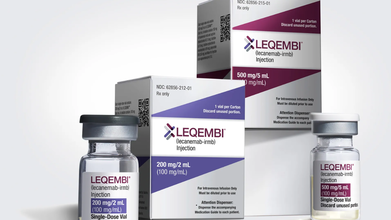
Scientists have found a new potential way to treat Alzheimer’s disease and it's already approved by the US Food and Drug Administration.
Researchers at the the Indiana University School of Medicine have found that removing or reducing a specific brain cell enzyme, known as IDOL, can significantly lower the buildup of amyloid plaques while also helping the brain resist further damage.
As of now, Lecanemab and Donanemab drugs can help achieve this as they work by clearing these plaques from the brain and can help slow the progression of symptoms.
However, the researchers' new theory focuses on preventing plaque buildup in the first place, while also improving how brain cells communicate and process fats.
The scientists claim that enzymes such as IDOL are easier to target with drugs due to their well-defined structures, allowing them to design treatments that are more precise and potentially have fewer side effects.
Kim, the P. Michael Conneally Professor of Medical and Molecular Genetics: "What makes this exciting is that we now have a specific target that could lead to a new type of treatment.
"We believe that IDOL will provide us with an alternative strategy to treat Alzheimer’s disease. Targeting enzymes in drug development offers key advantages due to their well-defined active sites or ‘pockets’ where drugs can attach and block their activity. This precision means we can design molecules that hit the right target with minimal side effects."
Kim notes that the team now plans to explore several approaches to target IDOL as part of new Alzheimer’s treatments including testing the safety and effectiveness of potential compounds in preclinical models.
The researchers will also study whether blocking IDOL can help preserve synaptic connections and reduce tau pathology, another key feature of the disease.
READ MORE: The One Critical Thing You Should Do To Prevent Alzheimer's Disease
What Is Alzheimer’s Disease?
Alzheimer's disease is one of the most common forms of dementia and mostly affects adults over the age of 65.
About 8.8 million Indians aged 60 and above are estimated to be living with Alzheimer's disease. Over seven million people in the US 65 and older live with the condition and over 100,00 die from it annually.
Alzheimer's disease is believed to be caused by the development of toxic amyloid and beta proteins in the brain, which can accumulate in the brain and damage cells responsible for memory.
Amyloid protein molecules stick together in brain cells, forming clumps called plaques. At the same time, tau proteins twist together in fiber-like strands called tangles. The plaques and tangles block the brain's neurons from sending electrical and chemical signals back and forth.
Over time, this disruption causes permanent damage in the brain that leads to Alzheimer's disease and dementia, causing patients to lose their ability to speak, care for themselves or even respond to the world around them.
While there is no clear cause of Alzheimer's disease, experts believe it can develop due to genetic mutations and lifestyle choices, such as physical inactivity, unhealthy diet and social isolation.
Early symptoms of Alzheimer's disease include forgetting recent events or conversations. Over time, Alzheimer's disease leads to serious memory loss and affects a person's ability to do everyday tasks.
There is no cure for this progressive brain disorder and in advanced stages, loss of brain function can cause dehydration, poor nutrition or infection. These complications can result in death.
Can You Detect Alzheimer's Early On?
The US Food and Drug Administration has approved the use of a blood test which can help diagnose Alzheimer’s disease in adults aged 55 and above.
The blood test, known as Lumipulse, can detect amyloid plaques associated with Alzheimer’s disease and has proven to be a “less invasive option” that “reduces reliance on PET scans and increases diagnosis accessibility.”
FDA Commissioner Martin A. Makary said of the landmark decision, "Alzheimer’s disease impacts too many people, more than breast cancer and prostate cancer combined.
"Knowing that 10 percent of people aged 65 and older have Alzheimer's, and that by 2050 that number is expected to double, I am hopeful that new medical products such as this one will help patients."
It remains unclear when this test will be available for commercial use across the world.
Varun Dhawan Reveals Daughter’s Struggle with Hip Dysplasia, Says It Impacted Her Walking

Credit: Instagram
Bollywood actor Varun Dhawan recently opened up about the diagnosis of his 2-year-old daughter with Developmental Dysplasia of the Hip.
Varun, who welcomed his daughter Lara in 2024 along with his wife, Natasha Dalal, shared that the condition affected her ability to walk and run normally.
In a recent episode of Be A Man, Yaar!, Varun noted that the toddler’s condition was diagnosed when she was around one-and-a-half years old.
"My daughter was diagnosed with DDH, in which the hip slips out of the hip socket. Ek pair lamba chota hojaata hai jiski wajah se walk tedi hojaati hai (One leg becomes shorter than the other, which causes an uneven limp while walking). You can't walk or run properly," he said.
The Badrinath Ki Dulhania actor noted that Lara did not need surgery, but underwent a procedure that put her hip back.
“But she had to be in a spica cast. That means she had to be in a cast for 2.5 months. Which is extremely difficult. To put her under anesthesia, and then she woke up in a cast. Now the cast is out,” he said, adding that the baby is now in recovery.
The Border 2 actor said he chose to speak about Lara’s diagnosis to raise awareness among parents. He urged them to closely observe their children’s movements and consult a paediatrician if they notice anything unusual.
Also read: US FDA Approves Drug To Treat Rare Childhood Syndrome
What Is DDH? How Can It Be Diagnosed?
The UK NHS explains that Developmental dysplasia of the hip (DDH) is a condition where the "ball and socket" joint of the hip does not properly form in babies and young children.
The congenital multifactoral disease has about a 30 per cent increased risk if a family member is affected.
The hip joint typically connects the thigh bone (femur) to the pelvis. Its upper end, called the femoral head, is shaped like a ball and fits into a cup-like socket in the hip.
However, in children born with DDH, this socket is not deep enough to securely hold the femoral head, resulting in an unstable joint.
Also read: Child Deaths Fall In India Since 2000 But Progress Slows, Says UN Report
In more severe cases, the ball can slip out of the socket completely, leading to dislocation.
DDH may affect 1 or both hips, and is more common in:
- girls
- firstborn children
- families where there have been childhood hip problems
- babies born in the breech position
While some babies born with a dislocated hip will show no outward signs, common signs to look includes:
- Legs of different lengths
- Uneven skin folds on the thigh
- Less mobility or flexibility on one side
- Limping, toe walking, or a waddling gait
DDH: Is The Condition Treatable
Early detection is helpful and boosts treatment. When detected at birth, DDH can usually be corrected with the use of a harness or brace.
In cases where the hip is not dislocated at birth, the condition may not be noticed until the child begins walking. In such cases, treatment may be more complicated, with less predictable results.
- Follow Us :


© 2024 Bennett, Coleman & Company Limited