
- Health Conditions A-Z
- Health & Wellness
- Nutrition
- Fitness
- Health News
- Ayurveda
- Videos
- Medicine A-Z
- Parenting
Team USA Transformed Mental Health Support For Olympics, This Is How

Credits: iStock
The Olympic Games are often seen as the ultimate celebration of human endurance, discipline and perfection. But behind the glittering medals, roaring crowds and emotional national anthems lies a quieter, more personal struggle many athletes carry with them, their mental health.
As the 2026 Winter Olympics in Milano Cortina draw closer, officials from the United States Olympic & Paralympic Committee (USOPC) are acknowledging a reality that has long remained in the shadows. According to the organization’s chief medical officer, Jonathan Finnoff, nearly half of U.S. Olympic athletes and 60 percent of Paralympic athletes are expected to experience symptoms linked to mental health concerns while preparing for or competing in the Games. These numbers highlight how elite sports, despite its glamour, can place enormous emotional and psychological pressure on athletes.
The Growing Recognition Of Mental Health In Elite Sports
Over the years, conversations around athlete well-being have shifted significantly. Earlier, the focus remained heavily on physical fitness and performance, while emotional struggles were often dismissed as signs of weakness. Today, sports bodies are beginning to understand that mental fitness is just as important as physical conditioning.
In response, the USOPC has introduced a wide range of support systems. These include hiring specialized professionals trained in both mental health care and performance psychology, creating virtual consultation services, and introducing structured screening programmes to identify athletes who may require additional support. Officials claim that the programme has grown into a comprehensive support network designed to assist athletes before, during and after competitions.
However, these initiatives have not emerged without criticism. Reports and athlete testimonies over the years have pointed towards gaps in earlier mental health care systems within competitive sports. The issue gained global attention when several high-profile athletes openly spoke about their struggles.
Simone Biles And The Turning Point
One of the most defining moments in this conversation occurred during the Tokyo Olympics in 2021, when American gymnast Simone Biles withdrew from the individual all-around final after experiencing what gymnasts refer to as “the twisties”, a dangerous mental block that disrupts spatial awareness mid-performance.
Her decision sparked global debate and encouraged many athletes to speak openly about psychological challenges. Prominent sportspersons from different disciplines followed suit, helping dismantle long-standing stigma around mental health in professional sports.
Following these developments, the USOPC significantly expanded its psychological services, increasing the number of licensed professionals and strengthening its support infrastructure. Additional funding from private foundations further helped expand mental health resources available to athletes.
Life After The Spotlight: The Emotional Void Athletes Face
For many athletes, the psychological strain does not end with the competition. Olympic freestyle skier Nick Goepper has spoken openly about his personal struggles with depression, substance abuse and feelings of purposelessness after major sporting events.
Athletes often dedicate their entire lives to reaching the Olympic stage. Once the event concludes, many find themselves grappling with identity crises and emotional emptiness. The sudden transition from global recognition to everyday routine can be deeply unsettling, especially when athletes begin questioning their purpose beyond sport.
Mental health professionals working with Olympic teams now recognize that athletes are not only dealing with performance pressure but also navigating personal life challenges, grief, injuries and major life transitions during their careers.
Balancing Performance And Well-being
While global sponsors and sporting organizations continue to prioritize medal tallies, there is growing acknowledgement that long-term athletic success cannot be separated from mental well-being. Psychological services within Olympic teams now focus not only on improving performance but also on helping athletes manage stress, trauma and life challenges.
Experts working with Olympic teams note that mental health support often extends beyond competition preparation. Athletes may seek counselling for personal losses, relationship struggles or major life changes, all of which can affect performance and overall well-being.
A Cultural Shift In Sports
The evolving approach toward athlete mental health reflects a broader cultural change in competitive sports. Open conversations, improved medical support and athlete-led advocacy are slowly transforming how mental health is perceived in elite sporting environments.
As the Milano Cortina Games approach, the spotlight will undoubtedly remain on record-breaking performances and medal counts. Yet, an equally important story will unfold behind the scenes — one where athletes, coaches and sports organizations work together to ensure that champions are supported not just physically, but emotionally as well.
Can Screens Rewire Your Toddler's Brain? Virtual Autism Explained

Virtual autism must not be confused with autism spectrum disorder (ASD). (Photo credit: iStock)
In today’s digital age, screens have become almost inseparable from daily life—even for very young children. While technology offers convenience and learning opportunities, increasing clinical observations have raised concerns about a phenomenon often referred to as “virtual autism." In an interview with Health and Me, Dr Aarti Javeri Manek, Paediatric Neurologist at Sir HN Reliance Foundation Hospital, explained what virtual autism is and the impact of screen time on children's brain health.
What is “virtual autism”?
Virtual autism is not a formally recognised medical diagnosis but rather a descriptive term used for children—typically toddlers—who exhibit autism-like features in the context of excessive screen exposure, particularly during critical periods of brain development. These children may show reduced eye contact, delayed speech, poor social interaction, and limited responsiveness to their environment.
Also Read: Cancer Is The 10th Leading Cause Of Death In Indian Children: Study
However, it is crucial to distinguish this entity from clinical Autism Spectrum Disorder (ASD). ASD is a neurodevelopmental condition, often with a strong underlying genetic and biological basis, present in addition to exogenous influences. External stimulus exposure may not even be apparent. In contrast, children with virtual autism often demonstrate significant improvement when screen time is reduced and replaced with real-world, interactive experiences. This reversibility is a key differentiating factor.
Read more: Is My Child Shy Or Autistic? Psychiatrist Shares Tips To Help Parents Spot Early Signs
What early signs should parents watch for?
From a neurological perspective, early childhood is a period of rapid synaptic growth, heavily influenced by sensory and social input. When screens replace human interaction, this can impact language acquisition, attention, and social interaction.
Some red flags that may suggest screen-related developmental delays include:
- Limited or absent eye contact
- Reduced response to name
- Delayed speech or loss of previously acquired words
- Preference for screens over people
- Decreased or limited gestures (not pointing, showing, or sharing interest)
- Repetitive behaviours such as watching the same videos excessively or viewing the same rhyme persistently
- Irritability or meltdowns when screens are removed
While these signs overlap with autism, the context is important. A history of prolonged, unsupervised screen exposure, often exceeding 3–4 hours per day in toddlers, should prompt consideration of environmental impact.
Read more: Can Cell Therapy Be The Future Of Autism Treatment?
Are toddlers at greater risk compared to older children?
Yes, significantly so. The first three years of life are critical for brain development, particularly for language, social bonding, and emotional regulation. During this period, the brain relies heavily on serve-and-return interactions—a child babbles, a caregiver responds; a child points, and a parent names the object. These exchanges build neural circuits essential for communication and cognition.
Screens, even educational ones, are inherently passive. They do not adapt in real time to a child’s cues in the same way a human does. Excessive exposure during this sensitive window can therefore displace meaningful interactions, leading to significant developmental delays.
Older children, while not immune, are generally more resilient, as they have already established foundational social and language skills. However, excessive screen time in this group may still contribute to attention difficulties, behavioural issues, and reduced social engagement.
What can parents do?
The encouraging aspect of virtual autism is its potential reversibility if it is identified early. Reducing screen exposure, especially in children under 2 years, and reintroducing interactive play, storytelling, and face-to-face communication may lead to noticeable improvements. Ultimately, screens are tools and not substitutes for relationships. In early childhood, it is these relationships that shape the developing brain most profoundly.
Shocking! Man Gets A Tattoo On His Neck; Months Later, Flesh Turns Black And Rots Away

Getting a tattoo is a form of self-expression, but one must take extra care while getting one. (Photo credit: iStock)
For some people, getting inked is more than a passion—it is a form of self-expression. And tattoos are nothing short of an addiction; it is not easy to stop at one. Despite being a painful procedure that requires a great deal of caution—using fresh needles and safe ink, for instance—several incidents come to light where getting a tattoo goes wrong in irreversible ways. In a recent case, a man developed a weeping, black ulcer of dead flesh on his neck months after getting a tattoo. In this case, doctors blamed this reaction on the colour of the tattoo ink—it may have triggered inflammation that caused the skin to blacken and die.
A reaction from the tattoo ink
A 20-year-old man had a red cross tattoo on the base of his neck. After three months, it faded away spontaneously and was replaced by scars and bumps on either side of the neck, accompanied by a necrotic ulcer. In this case, when the tissue blackens and dies, it results in a painful wound. The unnamed man was hospitalised five months after getting his first tattoo. Doctors examining the patient found that the lymph nodes, which help fight infections, were swollen and hard. Doctors also examined a large crusted ulcer, which had spread across the base of the neck and had seeped into deeper layers of skin.
Read more: Tattoos May Increase Cancer Risk, Study Suggests
Doctors also performed an MRI and found large lumps around the ulcer that measured up to 5 cm. There were two blood clots in the jugular vein as well. Two biopsies were taken of the necrotic ulcer, but they did not reveal what may have triggered the necrosis. The team was then concerned about the scan results and how fast the patient's condition was progressing. He was then rushed into surgery, where doctors removed the ulcer along with masses on the neck. His neck was then reconstructed using fat from the thighs. The patient was then diagnosed with necrotising granulomatous lymphadenitis.
What is necrotising granulomatous lymphadenitis?
Necrotising granulomatous lymphadenitis is an inflammatory condition wherein the lymph node tissues die and form clumps of immune cells known as granulomas. This can develop in response to an injury, and in this case, doctors said that the tattoo was to blame.
Doctors said that heavy metals like cadmium and mercury in organic tattoo ink can result in an immune response. From surgery to recovery, the patient's case is published in the journal JAMA Otolaryngology. Experts say that this is only the second known case of necrosis after a tattoo.
What are the riskiest spots for a tattoo?
Getting a tattoo can be painful, but for some people, the pain is worth it. However, according to experts, there are some spots that are not ideal for getting a tattoo. These are:
- Eyes—can lead to partial or complete blindness
- Genitals – heightened risk of contracting sexually transmitted diseases and infections
- Spine – a tattoo on the spine is extremely painful, and if it goes wrong, there could be irreversible repercussions
From Winter Dryness To Summer Sweat: How to Prevent Seasonal Dandruff Flare-Ups
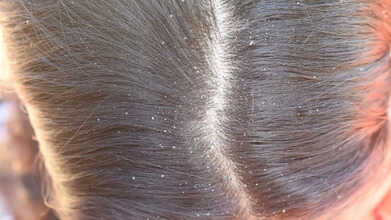
Seasonal factors can aggravate dandruff. (Photo credit: iStock)
As winter transitions into warmer summer months, many people notice a sudden worsening of dandruff. During colder months, dandruff often appears as dry, fine flakes due to scalp dryness. However, as temperatures rise and humidity increases, dandruff can become oily and sticky because of increased sweating and sebum production. This seasonal shift highlights that dandruff is not limited to a particular time of year; rather, changes in climate can disrupt scalp balance and trigger flare-ups. Dr. Anupriya Goel, MBBS, MD, DPD (UK) – Dermatology, answered this for us.
Why does dandruff recur?
Many people struggle to understand why dandruff keeps recurring. It is often treated as a temporary cosmetic concern, but in reality, dandruff is a chronic scalp condition that requires consistent care and appropriate treatment. The primary cause of dandruff is a yeast called Malassezia globosa, which naturally resides on the scalp. This microorganism feeds on sebum (the natural oils produced by the scalp). As it breaks down these oils, it releases by-products that can irritate the scalp, leading to inflammation, itching, and visible flaking.
Seasonal factors further aggravate this process. In winter, cold air, low humidity, indoor heating, and frequent hot showers can strip the scalp of its natural moisture and weaken the skin barrier, resulting in dryness and flaking. In contrast, summer brings increased sweat and oil production. The combination of humidity, sweat, and sebum creates an ideal environment for Malassezia to multiply, which can worsen dandruff symptoms.
Read here: Simple Secrets To Establishing The Right Winter Hair Care Routine
What are the external factors responsible for dandruff?
Environmental factors such as pollution can also settle on the scalp and contribute to irritation. In addition, daily habits like wearing helmets for long hours, tying up damp hair, or not cleansing the scalp regularly can further disrupt scalp health. The transition period between seasons is often the most challenging, as the scalp has limited time to adapt to changing environmental conditions.
Because dandruff is often mistaken for a temporary issue, many people rely on occasional treatments or home remedies. However, effective management typically requires regular scalp-focused care using clinically proven active ingredients.
Treating dandruff
One such ingredient commonly used in anti-dandruff formulations is Piroctone Olamine, an antifungal agent that helps control the growth of Malassezia on the scalp. By reducing fungal proliferation, it helps address the underlying cause of dandruff and can assist in decreasing flaking, itching, and scalp irritation. It also helps cleanse the scalp by removing excess oil and buildup while being relatively gentle on the hair and scalp.
Read more: 7 Ayurvedic Hair Health Tips You Should Try For Healthy Locks
For optimal results, individuals experiencing recurrent dandruff may benefit from incorporating an anti-dandruff shampoo containing Piroctone Olamine into their regular hair care routine. Consistent use is important for maintaining scalp balance. During periods of increased sweating, such as in hot and humid weather, washing frequency may be increased as needed. Maintaining hygiene practices such as regularly cleaning helmets, pillowcases, and hair accessories can also help minimise recurrence.
In addition to controlling dandruff, well-formulated shampoos containing Piroctone Olamine are often combined with conditioning and moisturising ingredients that help maintain hair softness and scalp comfort while supporting long-term scalp balance.
- Follow Us :


© 2024 Bennett, Coleman & Company Limited