
- Health Conditions A-Z
- Health & Wellness
- Nutrition
- Fitness
- Health News
- Ayurveda
- Videos
- Medicine A-Z
- Parenting
This Natural Amino Acid In Your Mouth Can Prevent Tooth Decay And Cavities
Credit: Canva
While doctors across the world recommend ensuring that fluoride and other protective minerals make up your toothpaste, your body produces its very own amino acid that protect your entire dental cavity.
Arginine, an amino acid that is already present in saliva, can turn bacteria from damaging to protective in your mouth, a study has found.
When sugars from food are broken down by the many bacteria living in the mouth, acids are produced that gradually damage tooth enamel and lead to cavities. This is known as dental caries. Over time, this acid dissolves tooth enamel and causes cavities.
However, researchers at Aarhus University in Denmark have discovered that regular arginine treatment can significantly reduced the overall acidity levels in the mouth and prevent tooth decay.
Yumi Del Rey, microbiologist at Aarhus, said: ""Our results revealed differences in acidity of the biofilms, with the ones treated with arginine being significantly more protected against acidification caused by sugar metabolism."
How Did The Study Take Place?
The Danish scientists recruited 12 participants with active caries and prepared specialized dentures for the collection of intact biofilms, spanning both sides of the jaw.Volunteers were then asked to instructed to dip the dentures in a sugar solution for 5 minutes, immediately followed by distilled water (as placebo) or arginine for 30 minutes, one on each side. This was to be repeated three times a day, with arginine treatment done on the same side each time.
Sebastian Schlafer, professor at the Department of Dentistry and Oral Health, explained: "The aim was to investigate the impact of arginine treatment on the acidity, type of bacteria, and the carbohydrate matrix of biofilms from patients with active caries."
After 4 days of this process, the biofilms were developed and the dentures were removed for detailed analysis. The researchers compared dental plaques grown on customized dentures on both sides of each participant's mouth using a special pH-sensitive dye called C-SNARF-4.
How Does Arginine Work?
Biofilms treated with arginine showed a significantly higher pH (lower acidity), altered biofilm structure and reduced harmful bacteria, highlighting the amino acid's potential in preventing dental caries.Additionally, the team also began to look into how arginine might be reducing acidity, by taking stock of which bacteria and sugars were present in each sample.
Biofilms treated with arginine showed lower levels of a sugar called fucose, while another sugar, galactose, was concentrated towards the outer surface of the biofilm, meaning both sugars were away from the tooth enamel.
After analyzing the DNA of bacteria present, the researchers found that arginine treatment significantly reduced a specific population of Streptococcus bacteria known to produce acid, while slightly increasing other bacterial strains that can metabolize arginine.
The scientists noted that while more research is needed into the arginine's effectiveness, the amino acid could be a promising new addition to oral hygiene products such as toothpaste or mouthwash.
COVID Symptoms In 2026: NHS Warns Of A 'Bounce Back'
Credits: Canva
Covid is returning, as the National Health Service, NHS UK warned that there has been a "bounce back" in respiratory viruses this winter, along with COVID too on the rise. While UK was already struggling with flu and norovirus on the rise, cases of COVID have also risen. The latest data from the UK Health and Security Agency (UKHSA) show that the number of patients in hospital beds with COVID per day has risen from 0.87 per 100,000, as compared with 0.77 per 100,000 the previous week.
NHS national medical director Professor Meghana Pandit said: “It’s clear that the worst is far from over for the NHS this winter, with hospitals again experiencing a rise in patients admitted with flu and other respiratory virus cases last week.”
What New COVID Variants Are We Dealing With In 2026?
Since the pandemic, there have been many variants of COVID. The virus has continued to evolve. Two new variants that caused the spike in cases in autumn were XFG, known as Stratus, and NB.1.1, known as Nimbus.
Stratus: It is a subvariant of Omicron variant and made of previous variants LF.7 and LP.8.1.2. It was first detected in a sample on January 27, 2025. Whereas, Nimbus was first detected on January 22, 2025. It also originated from the same omicron variant, which was the reason for spike in 2023.
The World Health Organization (WHO) describes stratus as a "variant under monitoring" after several countries in South East Asia reported a rise in new cases and hospitalizations with this variant being detected.
COVID Symptoms 2026: Fatigue Emerges As The Most Common Symptom
Among studies that focused on how symptoms appear together, fatigue stood out as the most consistently reported issue. It often occurred alone or alongside problems such as muscle and joint pain, brain fog, or breathlessness. Other symptom pairings that appeared frequently included loss of smell and taste, anxiety with depression, and various forms of musculoskeletal pain.
When researchers classified patients based on affected organ systems, respiratory problems were the most widespread, seen in about 47% of long COVID patients. Neurological symptoms followed at 31%, while gastrointestinal issues were reported by 28%. The authors stressed that these percentages reflect how often these clusters appeared within long COVID cases studied, not how common they are in the general population.
A smaller number of studies sorted patients by how severe their symptoms were, dividing them into mild, moderate, or severe categories using symptom scores, symptom counts, or quality-of-life measures. Three studies used clinical indicators for classification, including abnormal triglyceride levels and signs of restricted lung function on imaging.
As per the Centers for Disease Control and Prevention (CDC), here are the common COVID symptoms:
- Fever or chills
- Cough
- Shortness of breath or difficulty breathing
- Sore throat
- Congestion or runny nose
- New loss of taste or smell
- Fatigue
- Muscle or body aches
- Headache
- Nausea or vomiting
- Diarrhea
How To Know If You Have COVID?
CDC says, look out for these signs:
- Trouble breathing
- Persistent pain or pressure in the chest
- New confusion
- Inability to wake or stay awake
- Lips and nail beds may appear pale, grey or blue
Explained: What Are Smog-Eating Surface And How Is Delhi Using It To Beat Air Pollution

Credits: Canva
While the National Capital is dealing with cold wave, the air quality also continues to worsen. In several parts of Delhi, the air quality reached severe category. The Indian Meteorological Department (IMD) also issued an Orange alert on Tuesday for cold wave. Dense fog also engulfed the city, with air pollution or the particulate matter being trapped in the air, turning the fog into smog.
The condition of air pollution in Delhi has remained concerning and the levels have spiked to 20 to 30 times above the safety levels recommended by the World Health Organization or the WHO. Many studies, including the official website of the Environmental Protection Agency (EPA), US notes that the small particulate matter found in the air pollution is directly linked to health problems. "Small particles less than 10 micrometers in diameter pose the greatest problems, because they can get deep into your lungs, and some may even get into your bloodstream," notes EPA.
The particulate matter could lead to:
- premature death in people with heart or lung disease
- nonfatal heart attacks
- aggravated asthma
- irregular heartbeat
- decreased lung function
- increases respiratory symptoms like irritation of the airways, coughing, or difficulty breathing
What Are Smog-Eating Surfaces And How Do They Help?
The government is pursuing "smog eating" surfaces to deal with the pollution problem in Delhi. While it may sound like a strange thing in India, not to the world. In fact, in the Netherlands these were used to reduce local nitrogen oxide or the NO concentrations in the air, rather than greenhouse gas concentrations.
Smog usually contains a mixture of hydrocarbons, ozone, oxides of nitrogen and sulphur, and particulates. The pollution is caused by both photochemical reactions that involve sunlight, unburned hydrocarbons and nitrogen oxides, along with high concentrations of particulate matter, especially from vehicle exhaust, construction dust and biomass burning.
Environment Minister Manjinder Singh Sirsa announced "smog eating" surface as part of its pollution control plan, for which the government has also signed an MoU with IIT Madras.
The smog eating surfaces will be public surfaces coated with photocatalytic materials like titanium dioxide or TiO2 that is used to degrade pollutants.
The Deccan Herald quoted Dr Pradeep Singh, professor and head at the School of Advanced Chemical Sciences, Shoolini University, who explained: Photocatalytic materials are basically semiconductors. Substances like TiO2₂or zinc oxide are typically used as photocatalysts. When light falls on these semiconductor catalysts, electrons within them jump from one energy level to another, creating a hole. These photocatalytic holes and electrons subsequently form free radicals, which have strong oxidizing properties and can break down certain air pollutants with which they interact."
How Do Smog Eating Surfaces Work?
Smog contains mainly nitric oxide, nitrogen dioxide, sulphur dioxide, ozone, and particulate matter. When all of these interact with photocatalytic materials, gaseous pollutants convert into less harmful compounds, such as nitrogen oxides become nitrates or decompose into ions. This process is also known as pollutant mineralization.
Fun Fact: It was in 2017, when scientists in Italy developed a type of photocatalytic cement that could absorb pollutants and convert it into harmless salts. Palazzo Italia in Milan, opened in 2015, was the first building to use the cement.
How Effective Are These Smog Eating Surfaces?
As per Dr Ashish Moon, Head of the Civil Department at Smt Radhikatai Pandav College of Engineering, Nagpur, the impact depends on environmental conditions. He explained that titanium dioxide can locally reduce certain gaseous pollutants like nitrogen oxides under ideal conditions, rather than absorbing up to 50 percent of all harmful gases.
He also co-authored a paper in 2021, titled: Detailed Case Study on Smog Eating Tile, where he noted, "It is better to use it in liquid form than a powder. I have not come across any harmful interactions between TiO2 and particles or gases in the air." However, he also points out that how it will work in Delhi will depend on its weather conditions and atmosphere. "There should be enough UV light for the nanoparticles to activate," he said.
Will this arrangement really work? That is yet to see, although a 2023 Spanish study found that although this measure showed some improvement, but it only yielded a modest reduction in ambient NO2. We are yet to see how well it will work in Delhi and its neighboring city's pollution problem.
Shingles Rashes Surge By 50% In The UK: 5 Warning Signs Doctors Say Not To Ignore
Credits: Canva
As temperatures fall, a growing number of people are seeking medical advice for sudden, painful rashes and nerve-related discomfort. Superdrug Online Doctor has reported a 50% rise in patients requesting consultations for shingles over recent weeks. Shingles develops when the chickenpox virus, which stays dormant in the body after childhood infection, becomes active again later in life.
What Is Shingles?
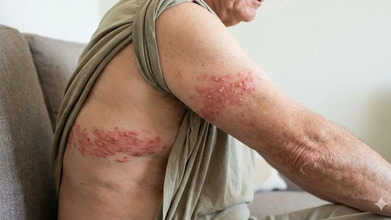
Shingles, also known as herpes zoster, is a viral illness that causes a painful, blistering rash, usually appearing on one side of the body. It occurs when the varicella-zoster virus, which causes chickenpox, becomes active again after lying dormant in the nerves for many years. This reactivation is more likely when the immune system is weakened.
Symptoms often begin with burning, tingling, or itching in a specific area, followed by clusters of fluid-filled blisters that eventually dry out and form scabs. Starting antiviral treatment early can help reduce the severity and length of the infection. A shingles vaccine is also available and is recommended, particularly for people over the age of 50, to lower the risk of developing shingles and to prevent complications such as long-lasting nerve pain, known as postherpetic neuralgia.
Who Is Most At Risk Of Shingles?
The condition is more likely to affect older adults and people with weakened immune systems. Dr Babak Ashrafi, Superdrug’s Online Doctor, explained that many patients are caught off guard by how quickly symptoms appear. “Shingles often begins unexpectedly,” he said. “People may wake up with a burning or tingling sensation, followed by a rash that rapidly becomes more painful. We typically see higher numbers during colder months, when immune defences are under greater pressure.”
Winter-related factors such as stress, poor sleep, and seasonal infections can all take a toll on the immune system. When immunity dips, the virus responsible for shingles has a greater chance of reactivating, increasing the likelihood of flare-ups during colder periods.
Shingles Early Warning Signs To Watch For
According to the NHS, early symptoms of shingles often include a tingling, itching, or painful sensation on one side of the body. Some people may also experience headaches or feel generally unwell before a rash appears. The rash usually develops a few days later and is most commonly seen on the chest or abdomen, although it can occur anywhere on the body.
Superdrug Online Doctor has outlined five situations where people should seek prompt medical advice rather than rely on self-care. These include cases where:
- the rash appears on or near the eye
- pain is severe or spreading
- the person has a weakened immune system
- the individual is pregnant
- symptoms are worsening quickly
Shingles Treatment
Superdrug Online Doctor provides an online assessment and photo-diagnosis service, allowing clinicians to review symptoms remotely. Where appropriate, patients can be prescribed antiviral medication without needing to wait for a GP appointment.
Dr Ashrafi stressed the importance of acting quickly, adding: “The most important advice is not to wait and see. Starting treatment early can make a significant difference to recovery and long-term outcomes.”
- Follow Us :


© 2024 Bennett, Coleman & Company Limited