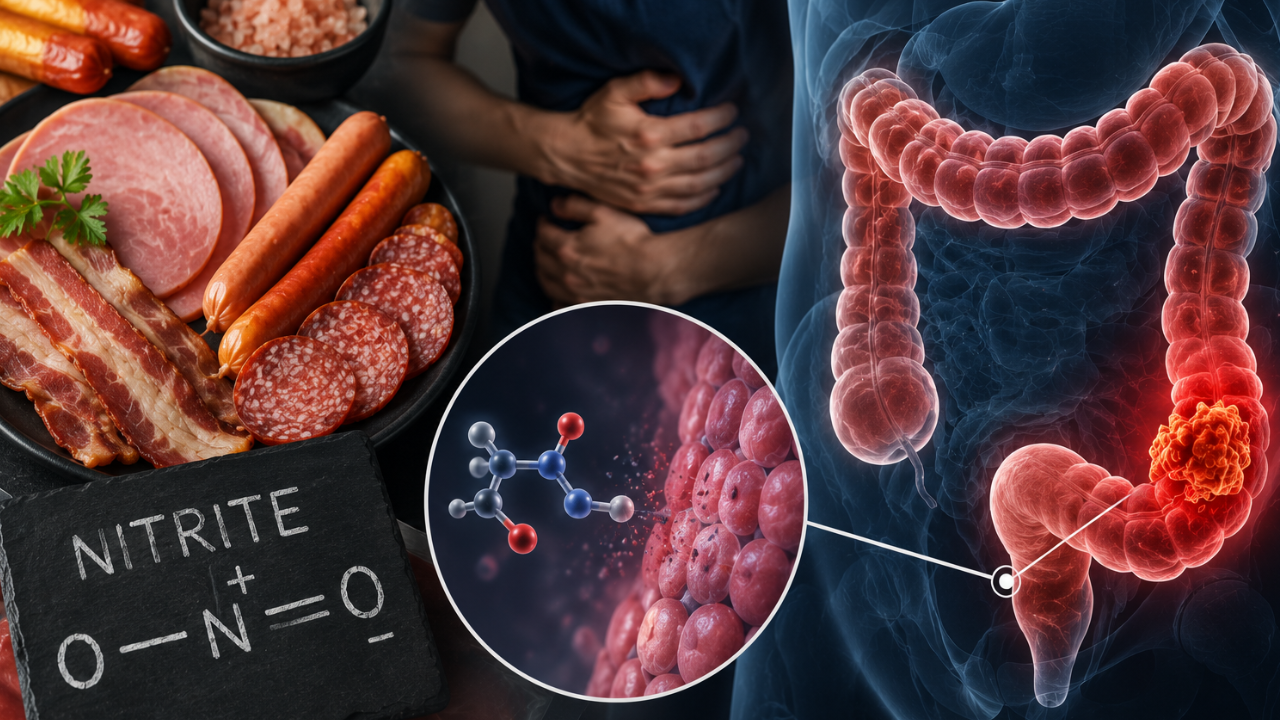
Men who consume higher amounts of dietary nitrite may have a greater risk of colorectal cancer, particularly the type affecting the distal colon, according to a new study published in the Journal of the National Cancer Institute. The study followed 82,009 middle-aged and older adults in Sweden for more than two decades and identified 3,170 cases of colorectal cancer. Researchers found that men in the highest category of nitrite intake had a 23% higher risk of colorectal cancer overall compared with those in the lowest category. The strongest association was for for distal colon cancer, where the risk was 50% higher. The findings were not seen in women, and dietary nitrate was not associated with colorectal cancer in either men or women. More About The Study Researchers from Karolinska Institutet in Sweden used dietary information collected in 1997 and updated in 2009 and 2019. They linked this information with Sweden's cancer registry to identify colorectal cancer cases through 2022. Rather than relying only on participants' diet at the beginning of the study, researchers used repeated measurements to capture changes in nitrite and nitrate intake over time. Among men, the highest versus lowest levels of nitrite consumption were associated with a hazard ratio of 1.23 for colorectal cancer. For distal colon cancer, the hazard ratio rose to 1.50.Also read: How Genetic and Genomic Testing Can Help Women Make Smarter Cancer DecisionsDifference Between Nitrite And Nitrate Nitrite and nitrate are related compounds, but they are found in different foods and behave differently in the body. Nitrate occurs naturally in vegetables, particularly leafy greens, as well as drinking water. Nitrite is also naturally present in some foods but is commonly used as a preservative in processed meat and other animal products. The researchers found no association between dietary nitrate and colorectal cancer, making the distinction particularly important.Also read: Moderna-Merck’s Personalized mRNA Vaccine: Ushering In A New Era In Cancer Care?Why Nitrite Could Be A Concern For Cancer Risk? A possible explanation involves N-nitroso compounds, which can form when nitrate and nitrite undergo chemical reactions in the body. Some N-nitroso compounds are known to be carcinogenic in animals. The researchers saw that previous studies have also investigated possible links between nitrite exposure and cancers of the gastrointestinal tract. However, the exact biological mechanism behind the association observed in this study remains uncertain. The researchers also found that the association was specific to men, and they said the reason for this difference is unclear. Sex Difference Needs More Investigation The authors noted that the higher risk associated with nitrite intake was confined to men and suggested several possible biological explanations, including differences in oxidative stress and other sex-specific factors. But they stressed that these mechanisms have not been established as the reason for the finding. The study concludes that further research should examine nitrite and colorectal cancer separately in men and women and. The study was observational, meaning researchers identified an association between dietary nitrite intake and cancer risk but could not prove a direct cause and effect relationship.