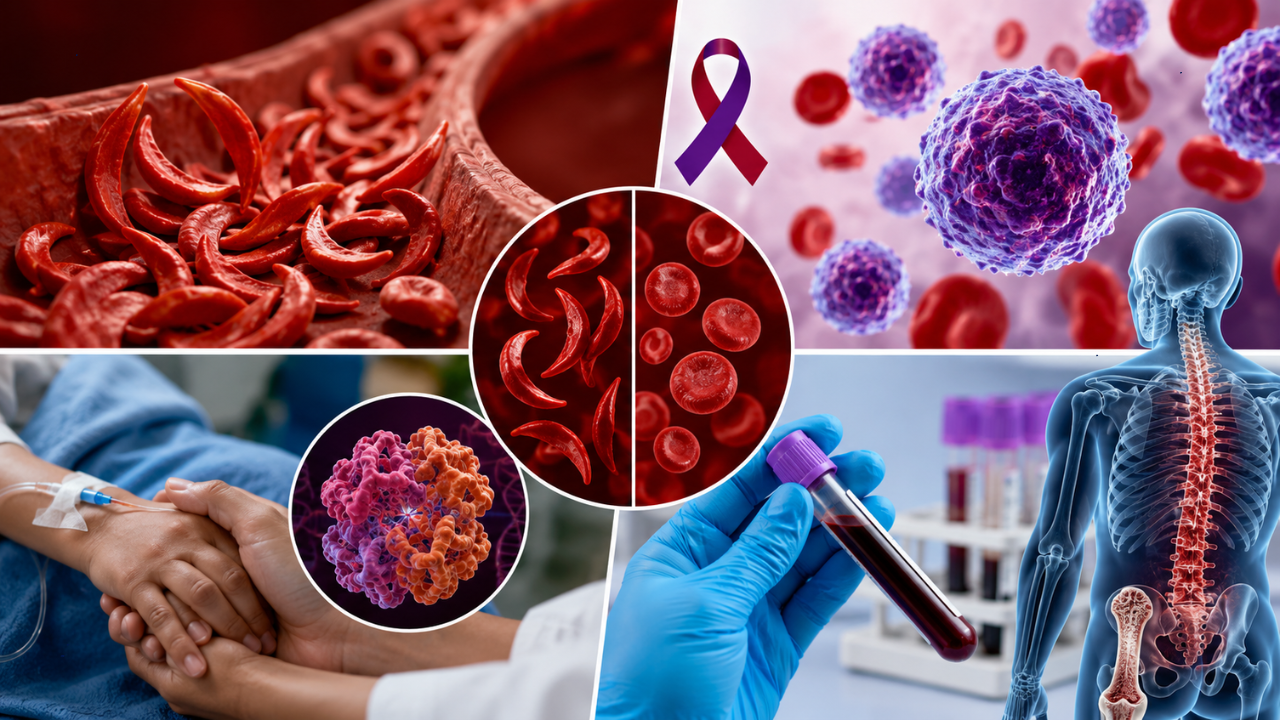
Blood disorders are often misunderstood; many people think that all serious blood-related conditions are a form of cancer. This misunderstanding is particularly common when it comes to sickle cell disease. Both sickle cell disease and blood cancers affect blood cells and can lead to significant health complications, but they are fundamentally different, with distinct causes, treatment approaches, and long-term outcomes. Understanding these differences is important not only for patients and their families but also for awareness and ensuring timely medical care.Sickle cell disease is an inherited genetic disorder that develops in a person who inherits abnormal hemoglobin genes from both parents. Hemoglobin is the protein in red blood cells responsible for carrying oxygen throughout the body. People with sickle cell disease have red blood cells that become rigid and crescent or "sickle" shaped instead of their normal round structure. These abnormal cells can block blood vessels, reduce oxygen delivery to tissues, and break down more rapidly than healthy red blood cells. As a result, patients may experience chronic anemia, episodes of severe pain, recurrent infections, organ damage, and other complications.How Blood Cancers Differ From Sickle Cell DiseaseBlood cancers are cancers that originate in the blood-forming tissues, such as the bone marrow and lymphatic system. The most common types include leukemia, lymphoma, and multiple myeloma. Unlike sickle cell disease, blood cancers are generally not inherited and are caused by DNA mutations that occur during a person's lifetime. These mutations cause abnormal blood cells to grow, crowding out healthy cells and interfering with the body's ability to fight infections, carry oxygen, or control bleeding.The two conditions are different, but some symptoms may overlap. For instance, tiredness, weakness, recurrent infections, and anemia can occur in both sickle cell disease and certain blood cancers. However, the underlying reasons are entirely different. In sickle cell disease, symptoms arise because of abnormal hemoglobin and sickling of red blood cells. In blood cancers, symptoms result from the uncontrolled growth of malignant cells within the bone marrow or lymphatic system.Difference in Diagnosis And TreatmentDiagnoses for both diseases differ. Sickle cell disease is usually identified through specialized blood tests that detect abnormal hemoglobin. In many cases, it can be diagnosed early in childhood. Blood cancers require a combination of blood investigations, bone marrow examinations, imaging studies, and specialized laboratory tests to establish the diagnosis and determine the specific cancer subtype.The treatment approaches for these disorders reflect these differences. Management of sickle cell disease focuses on preventing complications, controlling symptoms, reducing pain crises, preventing infections, and improving quality of life. Certain patients may benefit from advanced therapies, including stem cell transplantation and emerging gene-based treatments.Why Awareness MattersBlood cancer treatment depends on the type and stage of disease and may require chemotherapy, targeted therapy, immunotherapy, stem cell transplantation, radiation therapy, or newer cellular therapies such as CAR-T cell therapy. The treatment plan is individual-based, depending on factors such as the specific cancer subtype, disease burden, patient age, pre-existing conditions, and overall health.While medical advances are transforming outcomes for both conditions, improved screening infrastructure and programs, better care, advances in transplantation, targeted therapies and innovative cellular treatments are helping patients live longer and healthier than ever before. That said, awareness remains the first step towards better outcomes. Knowing the differences between sickle cell disease and blood cancers can help reduce confusion, support early diagnosis, and timely intervention.(By Dr. Narendra Agrawal, Sr. Consultant – Hemato Oncology & Bone Marrow Transplant, Rajiv Gandhi Cancer Institute & Research Centre (RGCIRC), New Delhi)