
- Health Conditions A-Z
- Health & Wellness
- Nutrition
- Fitness
- Health News
- Ayurveda
- Videos
- Medicine A-Z
- Parenting
Unique Symptoms Of Alzheimer's Disease And How It Can Be Managed

Credits: iStock
Over 2 million Americans have Alzheimer's. It is the most common cause of dementia and is a progressive disease. This means the disease will get worse, however, it could be managed, though cure is not available. It is the biological process that begins with the appearance of a buildup protein in the form of amyloid plaques and neurofibrillary tangles in the brain. This causes brain cells to die over time and the brain to shrink.
What Makes Alzheimer's So Unique?
The fact that there is no cure for Alzheimer's disease is one of the most unique part of the condition. In advanced stages, loss of brain function can cause dehydration, poor nutrition or infection.
The symptoms of Alzheimer's are unique because the signs are easily miss-able. These signs could seem like a day to day problem and not anything serious. At first, it starts with trouble in remembering recent events or conversations. Over time, memory gets worse and other symptoms occur.
While everyone could have trouble with memory at times, the memory loss that happens with Alzheimer's is lasting. The signs could be:
- Repeat statements
- Repeating questions over and over
- Forgetting conversations, appointments and events
- Misplacing items, and putting the in odd places
- Getting lost in places you know very well
- Forgetting names of family members
- Forgetting names of everyday objects
- Have trouble finding the right words, expressing thoughts or having conversations
Unique Symptoms Of Alzheimer's: Cannot Recognize Numbers
Alzheimer's could also lead to trouble in concentrating, thinking, especially about abstract concepts like number. Your thinking and reasoning abilities take a hit. In fact, in many cases, people with Alzheimer's are not able to recognize numbers.
Unique Symptoms Of Alzheimer's: Cannot Perform Everyday Tasks
There are many tasks that you do in your day to day life, which come easy to you, could become difficult over time. As Alzheimer's advances, people forget how to do basic tasks such as dressing or bathing.
Read: What A Finger-Prick Blood Test Could Mean for Alzheimer’s Diagnosis
Your Personality Changes
With Alzheimer's, your personality too can change, as the disease could affect moods and behaviors. Symptoms include:
- Depression.
- Loss of interest in activities.
- Social withdrawal.
- Mood swings.
- Not trusting others.
- Anger or aggression.
- Changes in sleeping habits.
- Wandering.
- Loss of inhibitions.
- Delusions, such as believing something has been stolen when it hasn't.
Are There Any Treatments Or Cures?
UK researchers say fruit flies could help unlock why devastating brain and nerve conditions such as Alzheimer’s, Parkinson’s and motor neurone disease develop, despite decades of medical research. Scientists have known for years that many neurodegenerative disorders are linked to genetic mutations. What has remained unclear is how those mutations actually trigger disease inside the nervous system.
According to the Mirror, new findings published in the journal Current Biology suggest a breakthrough may lie in studying fruit flies, insects whose genes behave in strikingly similar ways to those in humans.
The Hidden Glaucoma Warning Signs Every Middle-Aged Adult Should Know
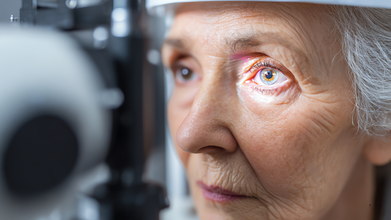
Credit: Canva
Glaucoma is an umbrella term for a group of eye diseases that create pressure inside your eyeball, which can damage delicate, critical parts at the back of your eye, including the optic nerve.
While most of the diseases are progressive, meaning they gradually get worse and eventually cause permanent vision loss and blindness. In fact, glaucoma is the second-leading cause of blindness worldwide and is the leading cause of blindness for people over 60 years old.
Dr Niteen Dedhia, Medical Director, Ojas Maxivision Eye Hospital tells Business Standard: "Glaucoma slowly and quietly causes damage to the optic nerve. Changes in eye pressure, blood flow and nerve fibres occur over time, while the brain often compensates for the loss.
"As a result, symptoms go unnoticed, and by the time vision loss becomes apparent, the damage is usually permanent."
Many forms of glaucoma have no warning signs and the effect is extremely gradual, to the point that you may not notice a change in vision until the condition is in its late stages.
Here are some symptoms that mid-age people need to keep an eye out for:
1. Gradual loss of circumferential vision
One of the earliest symptoms of glaucoma is damage and subsequent loss of peripheral vision. Dr Dedhia noted: “Glaucoma starts by damaging the peripheral vision but doesn’t affect the centre (front) vision."
If you seem to struggle with spotting objects approaching from the side or bump into things more often, you may be experiencing early stages of the disease and not merely experiencing normal ageing.
2. Difficulty seeing or reading in the dark or low light settings
Difficulty adjusting to darkness, discomfort in dimly lit spaces or having trouble navigating at night can be early warning signs may point to reduced contrast sensitivity linked to glaucoma rather than simple eye strain.3. Frequent changes in eye power
Dr Neeraj Sanduja, Ophthalmologist, Eye Surgeon at Viaan Eye Centre, Gurgaon told the publication: "Needing frequent prescription changes or feeling that glasses 'never feel quite right' may reflect subtle visual field changes caused by glaucoma rather than simple refractive error progression."
4. Eye pressure or unusual discomfort
Open-angle glaucoma, the most common form of the condition that causes patchy blind spots in your side vision, is often painless or limited to a mild sense of pressure or heaviness in the eyes.
Those suffering from open-angle glaucoma may notice a dull ache after prolonged screen time or reading that improves with rest. Frequently mistaken as regular eye strain, it is often ignored, however, may indicate subtle increases in eye pressure that require professional evaluation.
5. Frequent headaches with eye strain
Frequent headaches, especially when accompanied by eye strain or blurred vision, should not be ignored as migraine pain as it may signal rising eye pressure or early glaucoma changes, Dr Dedhia warns.
Who Is at Risk for Glaucoma?
Certain groups of people have a higher than normal risk of getting glaucoma which includes those who:
- have high eye pressure
- are farsighted or nearsighted
- have had an eye injury
- use long-term steroid medications
- have corneas that are thin in the center
- have thinning of the optic nerve
- have diabetes, migraines, high blood pressure, poor blood circulation or other health problems affecting the whole body
- are over age 40
- have family members with glaucoma
- are of African, Hispanic, or Asian heritage
Sleeping Too Much or Too Little Raises Liver Disease Risk, Study Finds

Credit: Canva
Abnormal sleeping patterns, whether excessive or brief, can significantly increase your risk of developing chronic liver disease, an EMJ study suggests.
Sleep duration has previously been linked to worsening your chances of Type 2 diabetes; obesity; cardiovascular diseases including hypertension, stroke, heart attack; mental disorders such as depression, anxiety; weakened immune system and potentially contributing to neurological conditions such as dementia.
However, researchers have now also found that sleep disruption may intensify existing stress on the liver which can worsen metabolism and pave the way for disease progression.
The authors noted that poor sleeping habits may influence liver health for multiple reasons including by altering glucose metabolism, increasing inflammation and disrupt circadian rhythms that regulate liver function.
"Participants who reported consistently short sleep duration were more likely to have elevated liver enzymes and higher fibrosis risk scores compared with those reporting moderate sleep duration. Long sleep duration was also associated with adverse liver markers, though the relationship was weaker than that observed for short sleep," the study noted.
Despite discovering links, the involved researchers noted that the study only highlighted sleep as a potential factor that could worsen liver function along with other lifestyle reasons and did not act as a clear cause.
Why Is Chronic Liver Disease A Concern?
Once a rare condition, non-alcoholic fatty liver disease (NAFLD) now affects one in three Indians. A JAMA study has now found that about 40 percent of the global population is now suffering from NAFLD, with abdominal obesity identified as its single biggest risk factor.
Researchers found that nearly 70 percent of people with Type 2 diabetes and about 80 percent of those with obesity are affected by NAFLD. They also discovered that NAFLD prevalence is higher in men than in women, with rates of 15,731 per 100,000 population in men compared with 14,310 in women.
READ MORE: This Deadly Liver Disease Is Affecting People In Their 20s And This One Symptom Is The Red Flag
Between 2010 and 2021, India recorded a 13.2 percent increase in age-standardized prevalence, ranking just behind China at 16.9 percent and Sudan at 13.3 percent. Additionally, the disease peaks earlier in men, between 45 and 49 years of age, while women show the highest prevalence between 50 and 54 years.
NAFLD, now called as metabolic dysfunction-associated steatotic liver disease (MASLD), is when excess fat builds up in the liver, unrelated to heavy alcohol use, due to obesity, Type 2 diabetes, high blood pressure and cholesterol.
It ranges from simple fat accumulation to inflammation and damage, which can progress to fibrosis, cirrhosis or liver cancer, The disease often has no symptoms and is managed with lifestyle changes such as diet and weight loss.
Why Is NAFLD on the rise?
Poor diets (high carbs/sugar), sedentary habits and rising obesity are some of the key reasons why an uptick in NAFLD cases has been seen pan-India. Increased intake of refined carbs, sugary drinks, processed foods and unhealthy fats can increase the risk of obesity, diabetes, hypertension and high cholesterol which can pave the way for this liver disease.
Experts also note that working long hours at desks without any proper physical activity can lead to weight gain and fat accumulation in the liver.
According to the Union Health Ministry, the prevalence of the condition could be in the range of 9-53 percent. Multiple other health studies also suggest nearly 40 percent of urban Indians may have some form of fatty liver disease
Hepatologist Dr Cyriac Abby Philips, popularly known as LiverDoc on social media, noted on X that many patients do not realize that timely lifestyle changes can completely reverse the condition. “All it takes is being in charge of your body and health. No shortcuts—go slow and steady,” he wrote.
If left untreated, NAFLD can progress to Non-Alcoholic Steatohepatitis (NASH), where liver inflammation begins. Over time, this inflammation can lead to scarring of the liver, known as fibrosis. Advanced fibrosis results in cirrhosis, which severely affects liver function.
NAFLD can also increase the risk of chronic liver disease, liver failure and hepatocellular carcinoma. Many patients diagnosed with liver cancer have a history of untreated fatty liver.
Can Fabric Softeners Pollute Indoor Air? Pulmonologist Explains the Health Impact

Credits: iStock
While India already is battling with pollution, and several studies have also shown the increase in indoor pollution, with the National Institute of Health linking over four million deaths across the world due to this. Now, social media is buzzed with the claims that fabric softeners are causing indoor pollution.
Dr Manas Mengar, consultant in pulmonology at KIMS Hospital, Thane, told The Indian Express that there is growing evidence that volatile organic compounds (VOCs) in scented fabric softeners can irritate the airways. “Chemicals like acetaldehyde or benzene can trigger coughing, watery eyes, headaches, or shortness of breath in sensitive individuals. Long-term exposure, especially in closed spaces, may increase the risk of chronic respiratory irritation. People with asthma, allergies, or chemical sensitivities are particularly at risk,” said Dr Mengar.
VOCs released during the rinse and drying process can accumulate in indoor air and can cause subtle, but noticeable reactions. The doctor explained: "While most people overlook these symptoms, repeated exposure can worsen respiratory conditions or trigger allergies over time."
What Could Be The Alternative?
Dr Mengar explains: “Adding a half-cup of white vinegar or baking soda during the rinse cycle can soften clothes naturally. Wool dryer balls or homemade dryer sheets also work well. Choosing fragrance-free detergents and keeping laundry areas well-ventilated can help lower indoor air pollution."
Doctor points out that families with children and pets need to be more careful, as they have smaller lung capacity and breathe faster. This means they are inhaling more VOCs as compared to the adults. "Families with asthma or other respiratory issues should be cautious and consider avoiding scented products altogether," the doctor explains.
He also suggests switching to natural and fragrance-free laundry options to ensure good ventilation while washing and drying.
Also Read: Apart From Rising AQI, Indoor Pollution Could Also Be Quietly Damaging Your Lungs- Here's How
What Are Volatile Organic Compounds (VOCs)?
As per the US Environmental Protection Agency (EPA), VOC are compounds that have a high vapor pressure and low water solubility. Many VOCs are human made chemicals that are used and produced in the manufacture of paints, pharmaceuticals, and refrigerants. They are also industrial solvents, or by-products produced by chlorination in water treatment.
US EPA notes on the adverse health impacts by VOCs: "Volatile organic compounds (VOCs) are emitted as gases from certain solids or liquids. VOCs include a variety of chemicals, some of which may have short- and long-term adverse health effects. Concentrations of many VOCs are consistently higher indoors (up to ten times higher) than outdoors. VOCs are emitted by a wide array of products numbering in the thousands. Examples include: paints and lacquers, paint strippers, cleaning supplies, pesticides, building materials and furnishings, office equipment such as copiers and printers, correction fluids and carbonless copy paper, graphics and craft materials including glues and adhesives, permanent markers, and photographic solutions."
- Follow Us :


© 2024 Bennett, Coleman & Company Limited