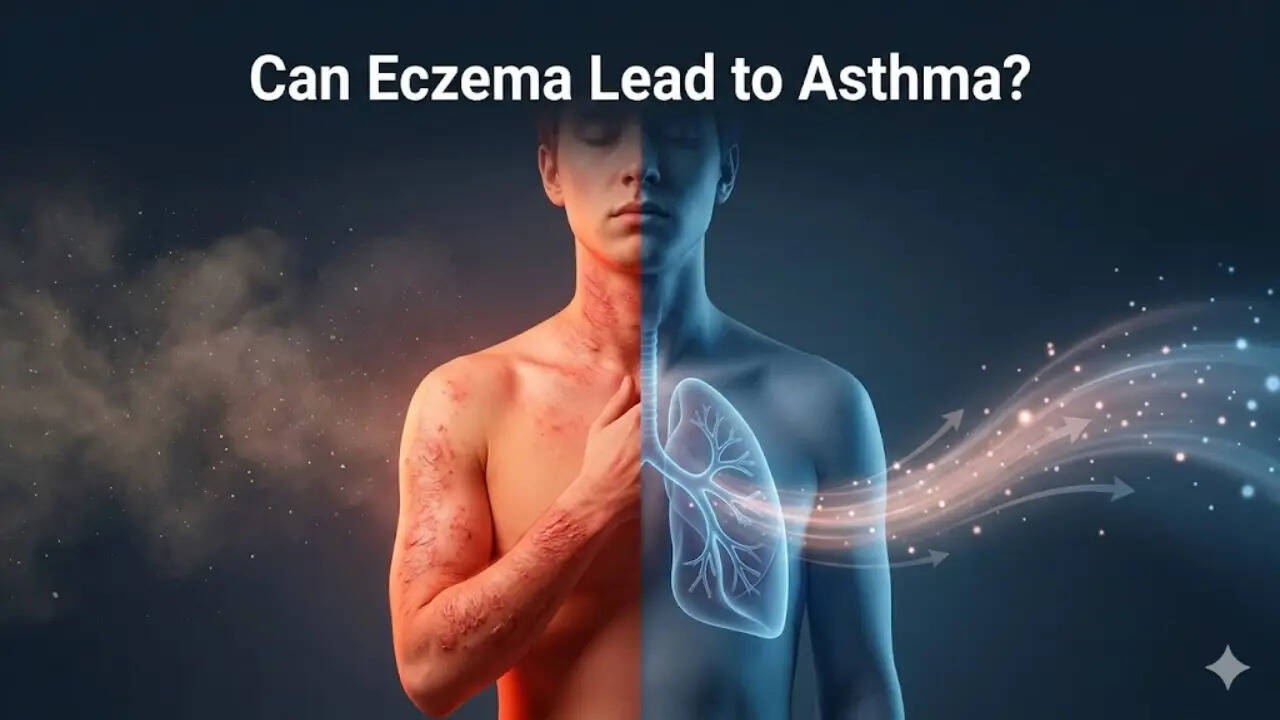
Every year on May 5, World Asthma Day is observed, an event that aims at spreading awareness about the respiratory disorders. While asthma is becoming a common occurrence in India, citing excessive pollution and unhealthy lifestyle choices. But in a shocking revelation on the occasion, Dr. Gitika Sanodia, Consultant Dermatologist at Dr L H Hiranandani Hospital, Powai, revealed that leaving eczema untreated could lead to chronic asthma. Talking about it, Dr Sanodia answered some common FAQs about eczema and asthma.Can untreated eczema cause asthma?Yes, especially for those suffering from early childhood onset of moderate/severe atopic dermatitis. Eczema is not always limited to being solely a skin condition. In many cases, patients who suffer from eczema actually have one part of the atopic triad, which means the patient's skin barrier is dysfunctional, allowing for allergens to enter and sensitize the immune system. With time, the same tendency can impact other organs, causing allergic rhinitis or asthma. However, it must be noted that not all children with eczema develop asthma. Why does everybody treat eczema as merely a skin problem?Because of symptoms including itching, dryness, redness, scaling, and oozing from the skin. The families take care to control the acute phase of eczema while ignoring the patient's predisposition to allergies. Furthermore, atopic dermatitis is an inflammatory skin condition that is accompanied by impaired skin barrier function, immune dysfunction, and environmental factors. Moreover, according to DermNet, atopy is a term used for conditions where eczema, rhinitis, and asthma happen together.Early signs for which parents and adults should be vigilantParents should worry if their children with eczema exhibit recurrent coughs, wheezing, noisy breathing, difficulties breathing during playtime, nighttime coughing, chest tightness, frequent sneezing, nasal blockage, allergic rhinitis, or exacerbation of symptoms following exposure to dust, animal dander, pollens, airborne particles, or fluctuating environmental conditions.Is eczema therapy sufficient to prevent the development of asthma?Successful treatment of eczema can help minimize the chances of allergens penetrating the skin barrier and allergic inflammation. Nonetheless, it would not be accurate to predict with certainty that eczema therapy will effectively prevent the onset of asthma. Literature recommends the prompt restoration of the skin barrier function, regular application of moisturizing agents, avoiding triggers such as fragrances and harsh soaps, managing flare-ups with prescription corticosteroid creams, controlling infections, and referring patients with severe eczema cases.Is it a significant public health concern?Yes. This condition is becoming more common, especially among children. If not controlled effectively, eczema will result in poor sleeping habits, difficulties with academic performance, reduced quality of life, greater susceptibility to infections, and potentially even links to other allergies. People lack sufficient information regarding the condition because they normally medicate themselves by applying whatever ointment or steroid to their skin.